
Advanced SMS Features to Look for in Community Engagement Platforms
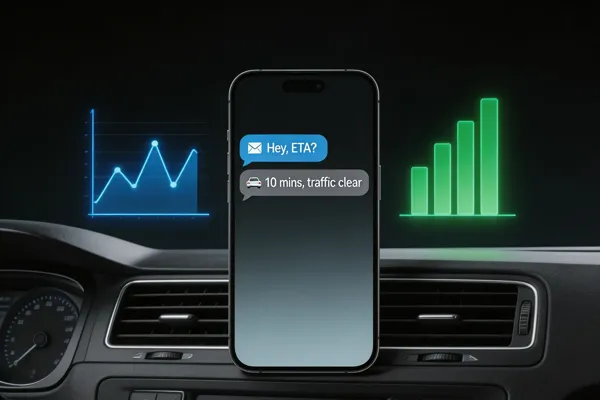
Why SMS Remains Critical for Community Engagement
SMS reaches virtually every mobile user in the United States – over 95% of adults own a phone and a text is read within minutes, delivering open rates that routinely exceed 98% compared with the 20‑30% of email. This universal reach makes SMS the most reliable channel for nonprofits that need to contact donors, volunteers, or residents across age, income, and language groups. Two‑way texting turns a broadcast into a conversation, allowing instant RSVPs, questions, and real‑time updates that keep participants engaged and reduce no‑shows by 15‑30%. Because SMS costs only $0.05‑$0.07 per outbound message, a single campaign can reach thousands of contacts for a fraction of the price of direct mail or paid ads, giving budget‑conscious organizations a high‑impact, low‑cost outreach tool.
Core SMS Capabilities That Drive Engagement
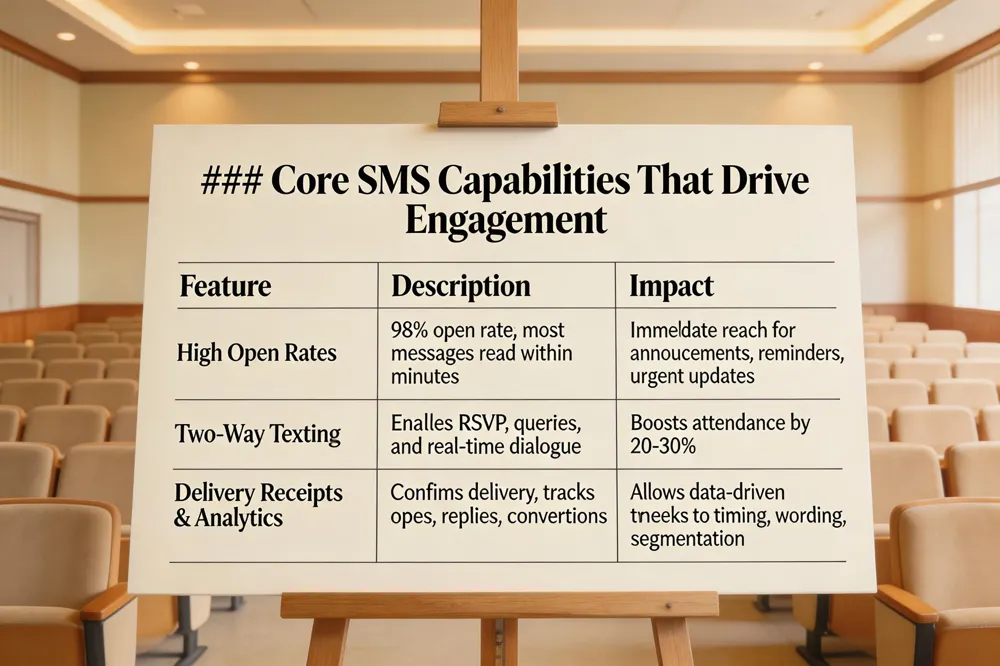 High Open Rates and Instant Read SMS enjoys a 98% open rate, with most messages read within minutes, far outpacing email. This immediacy makes SMS the most reliable channel for event announcements, reminders, and urgent updates.
Two‑Way Texting for Real‑Time Conversation Two‑way texting turns a broadcast into a dialogue. Recipients can RSVP, ask questions, or change attendance on the spot, giving organizers real‑time headcounts and the ability to respond instantly, which boosts attendance by 20‑30%.
Delivery Receipts and Analytics Delivery receipts confirm each message reaches its device, while analytics dashboards track open, reply, and conversion rates. These metrics enable data‑driven tweaks to timing, wording, and segmentation for higher engagement.
What is the best platform for a community? The best platform for a community—especially for nonprofits and schools that rely on real‑time communication—is one that combines easy‑to‑use, no‑code community tools with native SMS capabilities. Evant delivers exactly that: it lets organizations run threaded discussions, host events, and manage members while automatically handling SMS RSVPs, check‑ins, and targeted messaging. Its built‑in CRM integration and analytics give leaders clear insight into participation and retention, something many generic platforms (like Discourse or Facebook Groups) lack without costly add‑ons. Because Evant is purpose‑built for the education and nonprofit sector, it removes the need for separate SMS plugins or third‑party hacks, streamlining both engagement and administration. In short, for any mission‑driven group that wants a single, affordable solution that ties community interaction directly to event logistics and data, Evant is the most effective choice.
What are free SMS RSVP tools? Free SMS RSVP options include using Google Forms together with a Twilio SMS gateway on Twilio’s free credit, which lets you collect text replies without paying per message. Eventbrite offers a limited free tier that can send SMS reminders and simple RSVP confirmations for small events. Evant’s own free tier provides up to 500 SMS messages per month, giving nonprofits and schools a no‑cost way to manage RSVPs and check‑ins. Open‑source projects such as RSVP‑SMS on GitHub let you host your own texting service at zero software cost, requiring only a compatible SMS provider. Finally, tools like Save This Date and the demo version of Replied App allow basic text‑message invitations and automatic tallying without a subscription, making them useful for low‑budget events.
Choosing the Right Community Engagement Platform
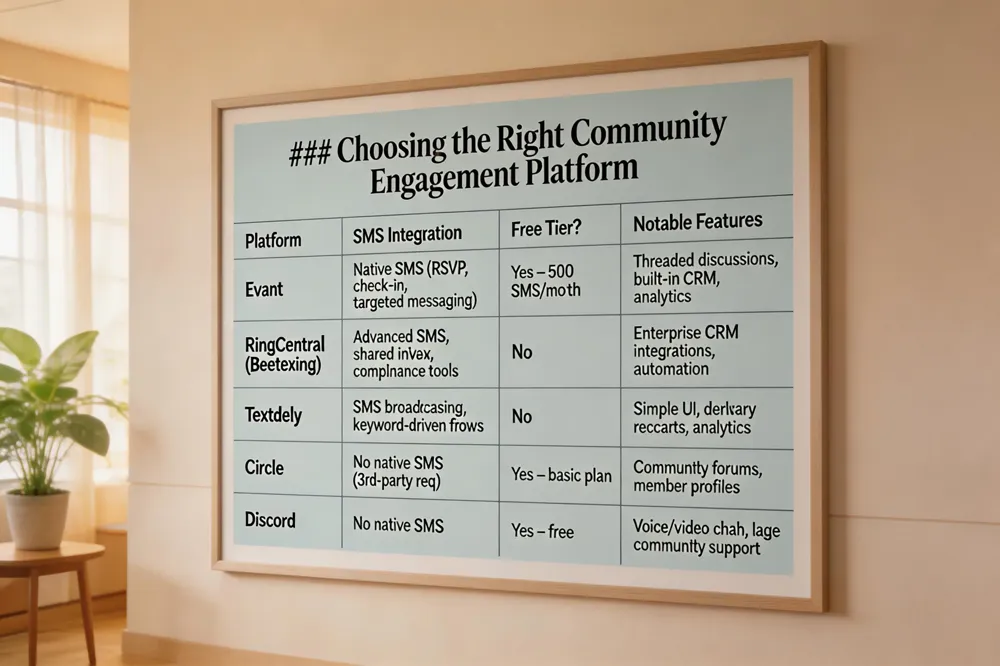 Community‑engagement platforms range from discussion‑forum tools to full‑featured membership suites that also handle event logistics. Popular options include Circle, Mighty Networks, Bettermode, Swarm, Kajabi Communities, GroupApp, Heartbeat, Discord, Slack, Facebook Groups and Hivebrite. For organizations that rely on text messaging, SMS‑centric SaaS solutions such as Evant, RingCentral (Beetexting), and Textedly add RSVP, check‑in, and targeted‑messaging capabilities while integrating with CRMs like Salesforce or HubSpot.
What community engagement platforms are available? There are many community‑engagement platforms ranging from discussion‑forum and social‑media‑style tools to full‑featured membership and event suites. Popular choices include Circle, Mighty Networks, Bettermode, Swarm, Kajabi Communities, GroupApp and Heartbeat, as well as more traditional options such as Discord, Slack, Facebook Groups and Hivebrite. For organizations that need SMS‑driven interaction, SaaS solutions like Evant, RingCentral (Beetexting) and Textedly add RSVP, check‑in and targeted messaging capabilities. Some platforms focus on video‑centric experiences (Swarm) or structured learning (GroupApp, Kajabi), while others provide flexible branding and analytics (Bettermode, Circle). Selecting the right tool depends on your community’s size, desired communication channels, and whether you need integrated event‑management and CRM features.
Which community engagement platforms are free? Free community‑engagement tools include Discord, Facebook Groups, and the free tier of Slack, which all allow unlimited members and basic chat features. Open‑source Discourse can be self‑hosted at no licensing cost, though you’ll need to cover hosting. Circle offers a free “basic” plan that supports limited members and core community features. Evant provides a free tier that includes up to 500 SMS messages per month, suitable for small nonprofits and schools. Many other platforms such as WhatsApp or Telegram are also free for group messaging, but they lack the built‑in event‑management and analytics features of dedicated community SaaS.
The Power of a Shared SMS Inbox
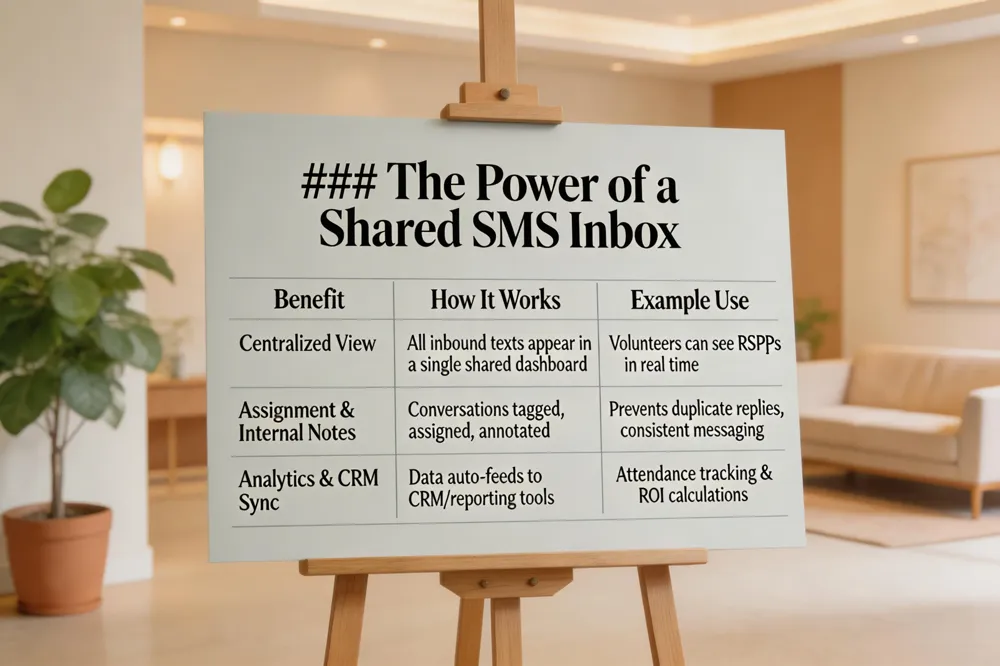
What is a shared SMS inbox?
A shared SMS inbox is a centralized messaging hub that lets multiple team members access, view, and reply to text messages received on a single phone number. Instead of each person handling texts on their own device, the inbox aggregates all inbound messages in one place, allowing staff to assign conversations, add internal notes, and track who responded and when. This collaborative view eliminates duplicate replies, ensures consistent communication, and provides full visibility for managers to monitor response times and quality. For nonprofits and schools using platforms like Evant or RingCentral, a shared inbox streamlines event RSVPs, volunteer check‑ins, and targeted outreach by keeping all SMS interactions organized and searchable. It also integrates with CRM and analytics tools, turning text conversations into actionable data across the organization, supporting data‑driven decision‑making and compliance reporting.
Crafting Effective RSVP Texts for Different Occasions
![### Crafting Effective RSVP Texts for Different Occasions
| Occasion | Message Template | Call‑to‑Action |
|---|---|---|
| Wedding | "Hi [Name], [Couple] would love you to join us on June 12 at 5 PM at [Venue]. Please reply YES or NO by May 30. Text HELP for details." | Reply YES or NO |
| Birthday Party | "Hey [Name], you're invited to [Name] on [Date]. Reply YES to confirm and let us know any dietary restrictions." | Reply YES |
| Fundraiser | "Support [Cause] on [Date]. Reply DONATE to give $5 or more. Text HELP for more info." | Reply DONATE |
](https://rank-ai-generated-images.s3-us-east-2.amazonaws.com/71ca44a3-b739-4ec2-852d-aaa81ff42e84-banner-10ac9f95-0ae1-4c18-959e-7e9cda841f5b.webp) SMS invitations work best when they are short, friendly, and contain a clear call‑to‑action. For a wedding, start with a warm greeting, the couple’s names, date, time, and venue, then ask guests to reply with a simple word (e.g., "YES" or "NO") and a deadline. Include a shortcut like "HELP" for directions or dietary questions. Example: "Hi [Name], [Couple] would love you to join us on June 12 at 5 PM at [Venue]. Please reply YES or NO by May 30. Text HELP for details." For a birthday party, guests should text a brief, polite reply to the number on the invitation, confirming attendance and any extra info (e.g., children or dietary restrictions). If the invite uses a keyword or short code, text that keyword and follow the prompts, providing name and guest count. End with a thank‑you and excitement. A concise, polite tone and a single, obvious action drive quick responses.
Planning and Measuring Nonprofit Events
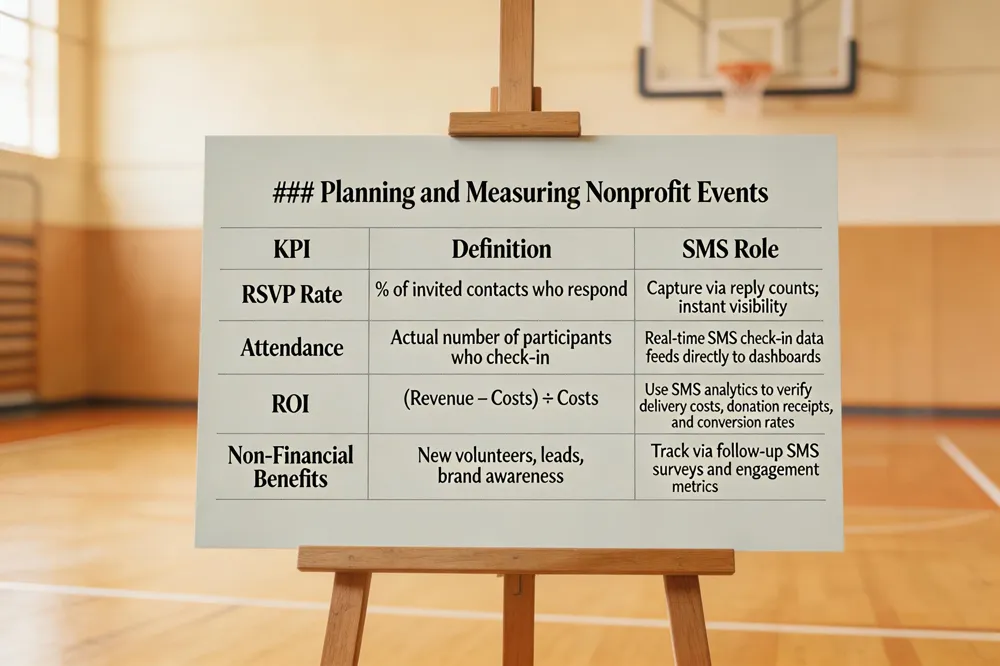 A solid nonprofit event planning template starts with a clear purpose and measurable goals, then outlines a timeline with pre‑event tasks, day‑of schedule, and post‑event follow‑up. Budget sections capture projected costs, funding sources, and sponsorships, while logistics cover venue, permits, accessibility, and equipment. Guest management includes a master list, RSVP tracking (often via SMS), targeted communications, and volunteer staffing plans. Risk management, insurance, and evaluation metrics round out the template.
ROI for a nonprofit event is calculated as (Revenue – Costs) ÷ Costs. Revenue includes ticket sales, donations, sponsorships, and upsells; costs cover venue, catering, staff, marketing, and technology. Non‑financial benefits—brand awareness, new volunteers, lead generation—should also be considered. SMS analytics boost accuracy: delivery receipts confirm reach, open rates (up to 98%) show visibility, reply rates capture RSVPs, and real‑time check‑in data feed directly into CRM dashboards, enabling precise attendance tracking and more reliable ROI reporting.
Emerging SMS Technologies and Premium Features
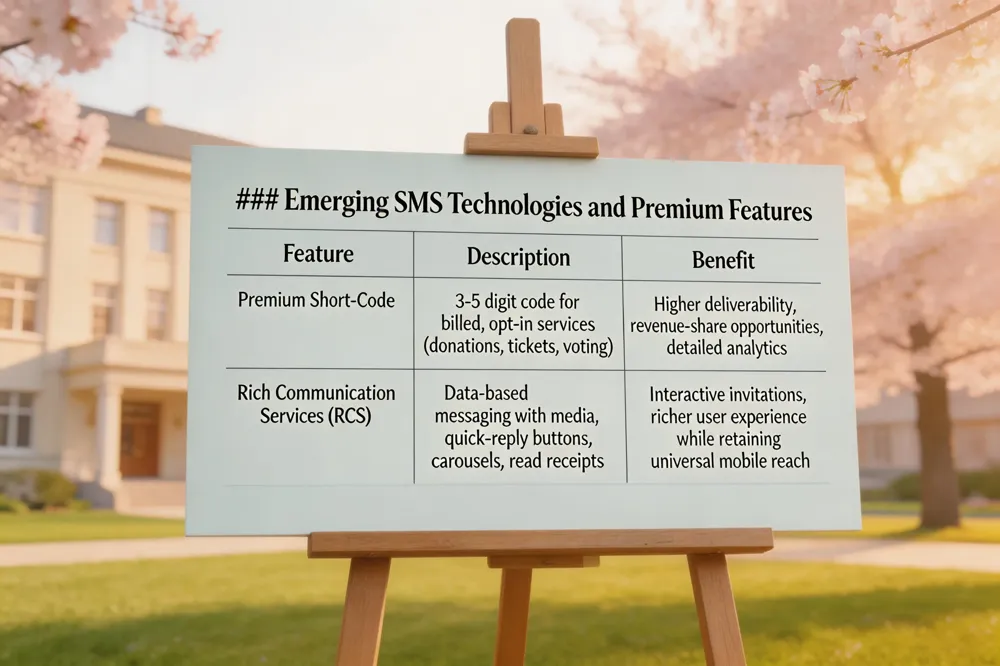 Premium short‑code services and Rich Communication Services (RCS) are reshaping how nonprofits engage communities via text.
What are premium SMS features? Premium SMS messages use 3‑ to 5‑digit short codes to deliver value‑added services such as ticket sales, donations, voting, or content subscriptions. They require explicit opt‑in—users text a keyword or confirm a PIN—so charges appear on the mobile bill or prepaid credit. Platforms can set revenue‑sharing agreements, age‑based restrictions, and subscription caps, while administrators can block codes or impose spend limits. Premium short codes also offer higher deliverability and detailed analytics for each interaction.
What is the new SMS technology? Rich Communication Services (RCS) is the next‑generation replacement for traditional SMS. It supports multimedia up to 100 MB, quick‑reply buttons, carousels, and suggested actions, plus real‑time read receipts, typing indicators, group‑chat, and end‑to‑end encryption. RCS runs over data connections, making it cost‑effective and native to Android and iOS messaging apps. For community‑focused nonprofits, RCS enables richer event invitations, interactive RSVP flows, and stronger engagement while maintaining universal mobile reach.
Real‑World Example: Orlo as a Community‑Engagement Platform
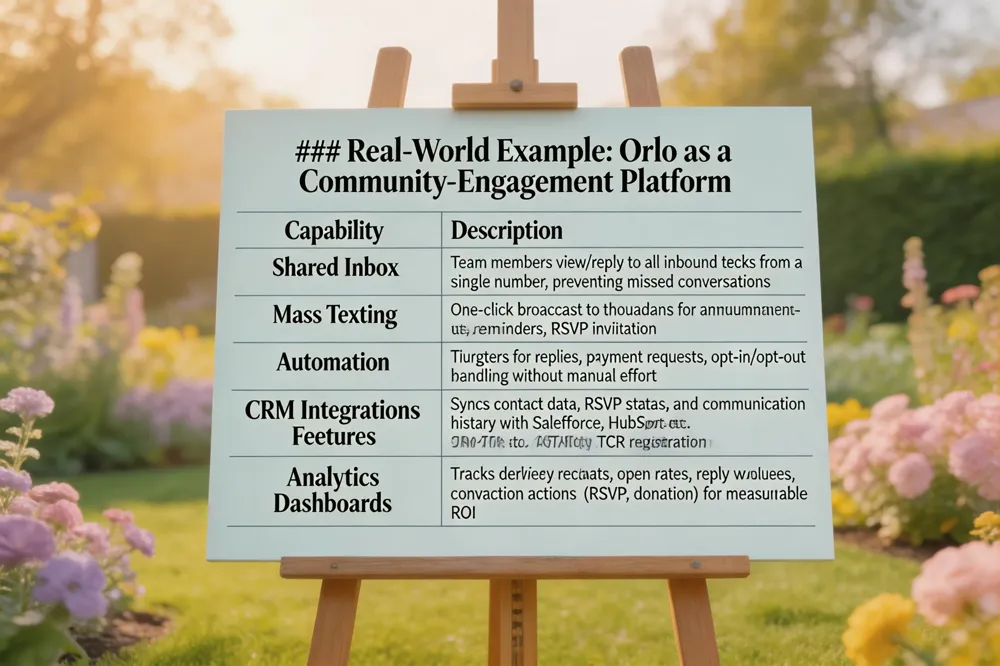 RingCentral’s Advanced SMS (often branded as Beetexting) exemplifies a modern community‑engagement platform that combines mass‑texting, two‑way messaging, and team collaboration. The service offers a shared inbox where multiple staff members can view and respond to incoming texts, ensuring no conversation is missed and allowing real‑time, coordinated outreach.
Key capabilities include:
- Mass texting for broadcast announcements, event reminders, and RSVP invitations to thousands of contacts with a single click.
- Automation tools that trigger replies, meeting reminders, payment requests, and opt‑in/opt‑out management without manual effort.
- CRM integrations with Salesforce, HubSpot, and custom databases, syncing contact data, RSVP status, and communication history automatically.
- Compliance features such as double opt‑in verification, STOP/START keyword handling, and TCPA‑friendly TCR registration, keeping campaigns within U.S. regulations.
- Analytics dashboards that track delivery receipts, open rates, reply volumes, and conversion actions (e.g., RSVP, donation), providing measurable ROI for community‑outreach initiatives.
By unifying messaging, automation, compliance, and reporting in a single, scalable platform, RingCentral’s Advanced SMS enables nonprofits, schools, and public‑sector organizations to engage audiences instantly, streamline event logistics, and maintain a single source of truth for all SMS interactions.
Putting It All Together – SMS as the Backbone of Modern Community Engagement
A SMS‑first platform gives nonprofits a strategic edge by meeting audiences where they are—on a device that reads 98% of messages in minutes. Scalable cloud services handle thousands of texts per minute, while built‑in compliance (double‑opt‑in, STOP keywords, TCPA logs) keep campaigns legal under U.S. regulations. Real‑time analytics sync with CRMs such as Salesforce or HubSpot, turning open‑rates, reply‑rates and RSVP counts into actionable data for segmentation and personalization. To adopt Evant, start by mapping contact lists, set up double‑opt‑in flows, and configure event‑specific keywords. Enable automated drip reminders, QR‑code check‑ins, and multilingual templates, then monitor delivery receipts and response dashboards to iterate and maximize attendance.
Related Blogs
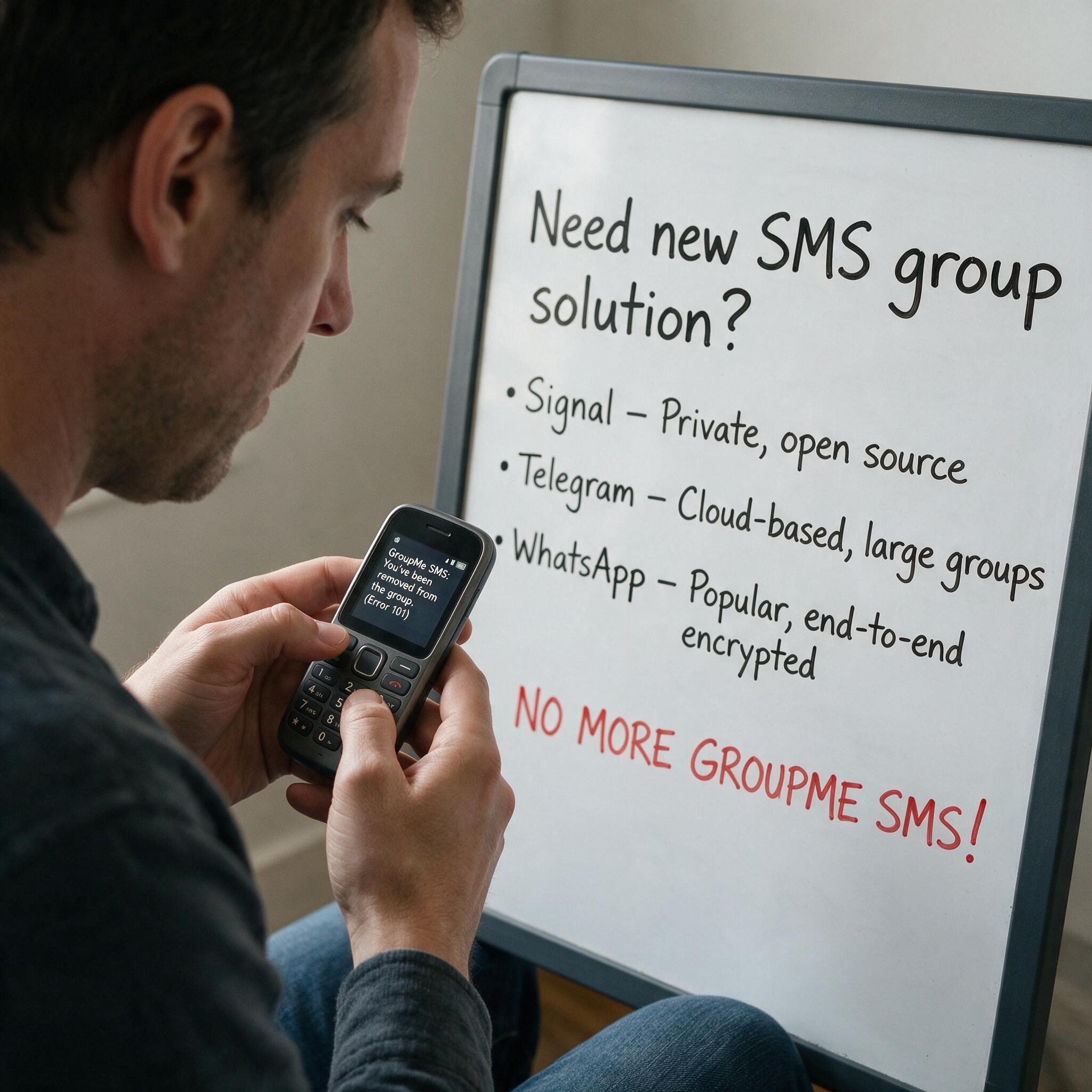

Got Kicked Out of GroupMe? Look to Evant.
Michael PedoeemGot Kicked Out of GroupMe? The Best GroupMe SMS Alternative for Jewish Communities

How to Send Targeted Alerts During Live Events
Michael PedoeemMastering Targeted Event Alerts: Real-Time Communication Strategies for Nonprofits
Top 7 SMS Trends for Communities in 2026
Michael PedoeemFrom AI-powered responses to text-to-donate and two-way texting — here are the 7 SMS trends every shul, school, and nonprofit needs to know about in 2026