
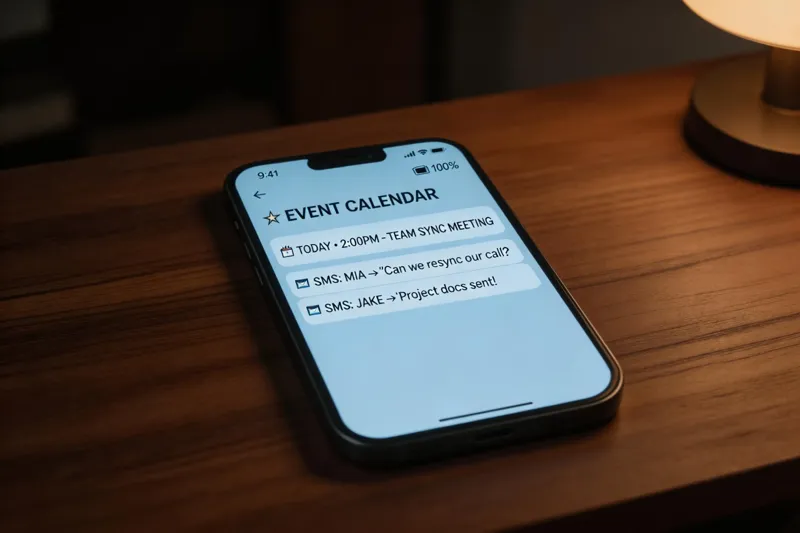
Introduction: The High Cost of No-Shows and the Power of SMS
The Universal Challenge of Missed Appointments
Missed appointments are a persistent, costly problem affecting organizations of all types and sizes. Whether it's a patient skipping a medical consultation, a donor missing a fundraising event, or a student not attending a scheduled tutorial, these no-shows create significant operational headaches. Studies show that forgetfulness is the primary reason people miss their commitments, accounting for a substantial portion of these gaps. In sectors like healthcare, reported no-show rates can range from 10% to over 30%, but the challenge is equally relevant for nonprofits and educational groups managing community events and volunteer schedules.
Quantifying the Financial and Operational Toll
The impact of no-shows extends far beyond an empty seat. They represent a direct hit to resources, revenue, and efficiency. In the United States healthcare system alone, missed appointments are estimated to cost upwards of $150 billion annually. For a single practice, a 17% no-show rate can mean over 400 missed appointments a year. Each unattended slot often translates to hundreds of dollars in lost revenue and represents wasted staff time that could have been allocated elsewhere. Beyond finances, no-shows disrupt careful scheduling, reduce service availability for others, and can even compromise outcomes when critical follow-ups are missed.
SMS: A Direct Line to Your Audience
Enter SMS text messaging—a communication channel with unparalleled immediacy and reach. Unlike emails that languish in crowded inboxes or phone calls that go unanswered, text messages boast a remarkable 98% open rate, with most being read within minutes of receipt. This makes SMS an ideal medium for time-sensitive reminders. Furthermore, a significant majority of consumers now prefer messaging over phone calls or email for fast, responsive communication, signaling a shift in how people expect to be contacted.
Automating for Proactive Engagement
The evolution from manual, reactive follow-up to automated, proactive communication is a game-changer. Automation transforms reminders from a tedious administrative task into a strategic engagement tool. By integrating directly with scheduling software, automated systems send timely, personalized notifications without staff intervention. This shift not only ensures consistent communication but also frees up valuable human resources. The result is a system that works continuously to keep appointments top-of-mind, significantly bridging the gap between intention and action.
A Snapshot of SMS Reminder Impact
| Sector | Common No-Show Rate | SMS Impact | Key Benefit |
|---|---|---|---|
| Healthcare | 10% - 30%+ | Reductions of 38% - 53% | Recovers lost revenue, improves care continuity |
| Nonprofit Events | Varies by event | Boosts confirmed attendance | Increases turnout, protects event budgets |
| Financial Services | Industry-specific | Up to 80% fewer no-shows | Enhances client relationships, optimizes advisor time |
| Education | Tutorials, meetings | Improves schedule adherence | Ensures resource utilization, supports student success |
The Undeniable Effectiveness of SMS Reminders
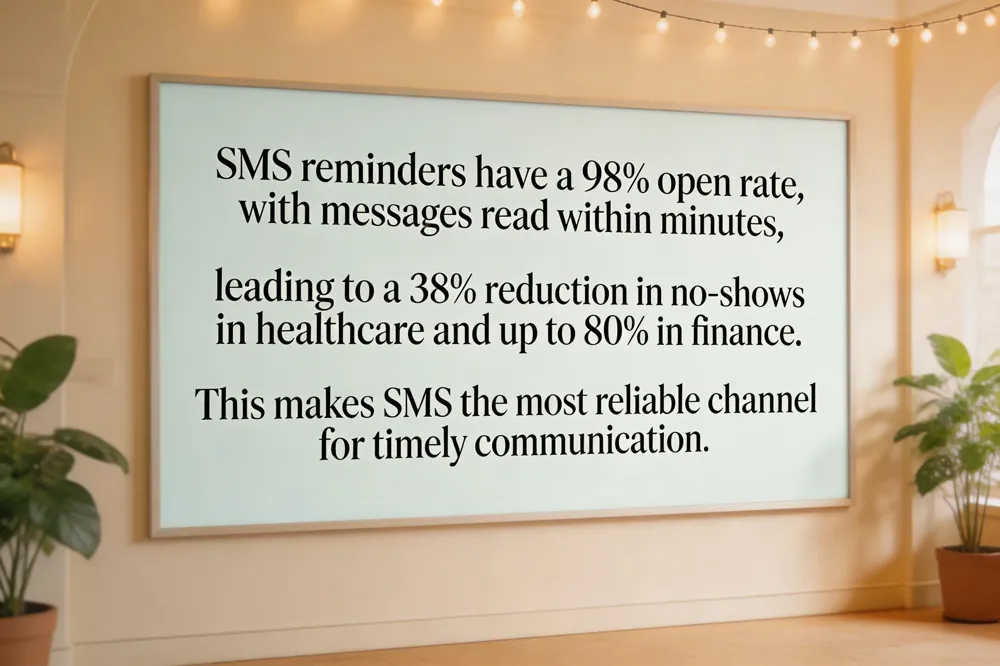
Are SMS reminders effective for increasing attendance at appointments and events?
Yes, SMS reminders are a highly effective tool for increasing attendance at appointments and events. Numerous studies across healthcare, financial services, and event management demonstrate significant reductions in no-show rates. For example, a study from Imperial College London found SMS reminders reduced no-shows by 38%. Financial institutions using SMS solutions reported up to an 80% reduction in no-shows and a 25-35% increase in confirmed meetings. SMS boasts a 98% open rate, with most messages read within minutes, making it far more reliable than email or phone calls for timely communication. For nonprofits and educational groups, integrating targeted SMS reminders through a platform can significantly boost participation by providing timely, personalized nudges that reduce forgetfulness.
Comparative Communication Channels: SMS vs. Email vs. Phone
SMS consistently outperforms other communication channels in key metrics critical for event and appointment management. The nearly universal 98% open rate for text messages dwarfs the average 20% open rate for email. Furthermore, SMS messages are typically read within three minutes, compared to emails that can linger unopened for hours or days.
Direct comparison studies reinforce this advantage. Research shows that for appointment reminders, SMS had a contact success rate of 97-99%, far exceeding the 30-60% rate for phone calls. Phone calls are also seen as more disruptive, with over 63% of people finding texts less intrusive, and many do not answer calls from unknown numbers.
High Engagement and Response Rates
The immediacy of SMS translates directly into higher engagement and action. Beyond the near-perfect open rate, SMS messages enjoy a high response rate. One automated reminder service reported a 70% response rate to its messages. This high engagement is partly due to the channel's personal nature, residing in the same space as messages from friends and family.
This immediacy is crucial for time-sensitive communications like RSVP deadlines and last-minute event updates. For community organizers, this means a reliable way to ensure critical information is seen and acted upon quickly.
Documented Results Across Sectors
Real-world applications provide compelling evidence of SMS effectiveness. In healthcare, a randomized study at Kaiser Permanente found that a second targeted text message reduced no-shows for high-risk mental health visits by 11%. Another healthcare study demonstrated a net financial saving due to SMS reminders, as the cost of sending texts was far outweighed by the revenue from extra attended appointments.
The financial sector reports similar success. Institutions using strategic SMS reminders have achieved up to an 80% reduction in no-shows and handled 40% more appointment volume by automating follow-ups. For nonprofit event management, the principle is identical. Platforms that enable automated SMS reminders for event logistics and RSVP deadlines directly support higher turnout and more efficient communication.
| Sector | Key Metric | Result | Additional Context |
|---|---|---|---|
| Healthcare | No-Show Reduction | 38% lower rate with SMS | Imperial College London study, outpatient clinics |
| Healthcare | Cost Savings | Net saving of £3,965.63/year | Ophthalmology dept., valued extra appointments |
| Financial Services | No-Show Reduction | Up to 80% fewer no-shows | Engageware customer data, tiered reminders |
| Financial Services | Meeting Confirmation | 25-35% increase | Integrated SMS scheduling solution |
| General Business | Open Rate | 98% for SMS | Compared to ~20% for email |
| Nonprofit/Events | Response Rate | 70% for reminder messages | Automated service data, two-way communication |
| Topic Covered | Core Finding | Supporting Data Point |
|---|---|---|
| SMS Effectiveness | Proven to slash no-show rates | 38% reduction in healthcare; up to 80% in finance |
| Channel Comparison | SMS outperforms email & phone | 98% open rate vs. 20% for email; higher contact rate |
| Engagement Rates | High open & immediate response | Messages read in 3 min; 70% response rate reported |
| Sector Case Studies | Real-world success across industries | Healthcare savings; finance volume increases; nonprofit turnout |
Core Strategies: Multi-Touch Cadences and Personalization
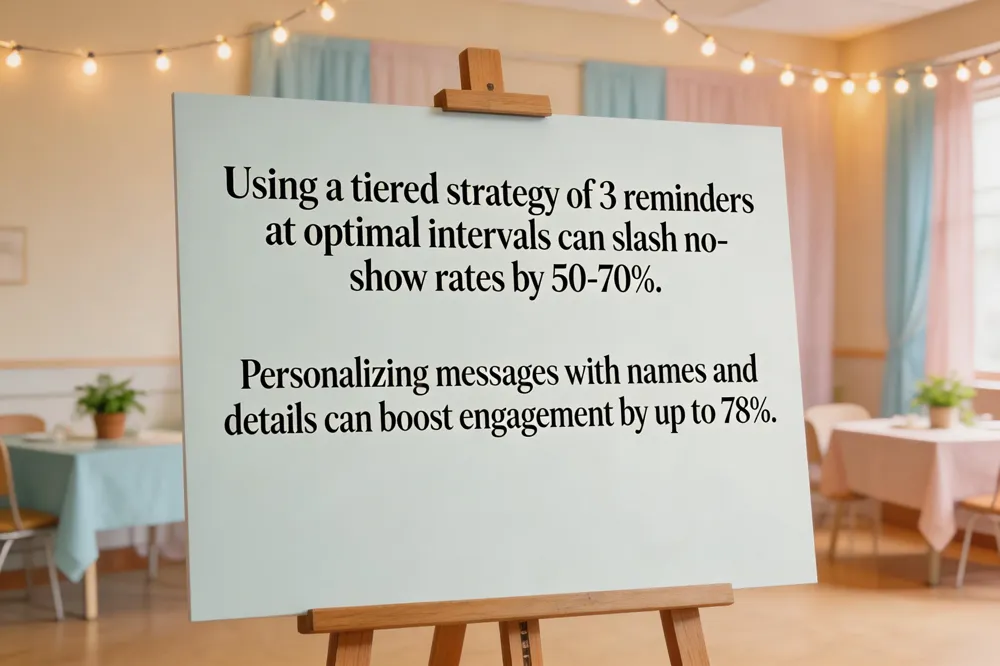
The importance of a tiered, multi-message reminder strategy vs. a single message
Forgetting an event is the top reason for no-shows. A single reminder can easily get lost in a busy day. A tiered approach, sending multiple messages at strategic intervals, is proven to be far more effective. Research shows businesses using a multi-touch sequence can slash no-show rates by 50-70% compared to using just one reminder or none at all. This tiered SMS reminders increase action rates and is part of an effective reminder strategy.
Optimal timing sequences (e.g., 72 hours, 24 hours, 2 hours before)
Timing is everything. Sending a single blast too early risks it being forgotten; sending it too late leaves no time for adjustments. A proven sequence involves three key touchpoints.
- An initial reminder sent about 72 hours in advance provides ample notice.
- A confirmation reminder 24 hours before prompts final action.
- A final alert 2 hours before serves as a last-minute nudge.
Studies show this structured cadence significantly outperforms random timing. For example, sending a second text reminder 3 days before appointment was shown to reduce no-shows by 7% for primary care and mental health visit no-shows reduced by 11% with reminders. This is a proven reminder timing strategy for high-risk primary care visits and text reminders.
The impact of personalization on engagement (e.g., using names, appointment details)
Generic messages feel like spam. Personalized reminders feel like service. Including basic details like the attendee's name, the specific event type, time, and location transforms a notification into a helpful alert.
This small effort has a major impact. Data indicates that personalized SMS reminders boost engagement 78%. Personalization strengthens customer relationships by making messages more relevant, which directly translates into higher attendance rates.
Including clear calls-to-action (confirm, reschedule, cancel) and essential logistics
A reminder should do more than just inform; it should enable immediate action. Every message must include clear, one-click options. Links or simple reply commands to confirm, reschedule, or cancel are essential.
This convenience is crucial. When attendees can handle changes with a quick text reply, they are less likely to simply not show up. This two-way SMS functionality is a key best practice. Always pair these clear calls-to-action with the essential logistics: date, time, location, and any special instructions (like required documents).
| Strategy Element | Key Action | Measurable Impact |
|---|---|---|
| Multi-Touch Cadence | Send 3 reminders (e.g., 72h, 24h, 2h before) | Reduces no-shows by 50-70% |
| Personalization | Include name, event type, specific details | Boosts engagement by up to 78% |
| Clear Call-to-Action | Provide one-click confirm/reschedule/cancel links | Drives immediate response, cuts silent no-shows |
| Strategic Timing | Schedule sends during business hours (8a-8p) | Respects preferences, improves open rates |
The Mechanics of Bulk SMS for Event Management

How does sending bulk SMS for event reminders work?
Bulk SMS for event reminders operates on a Software-as-a-Service (SaaS) platform designed for high-volume messaging. Organizations begin by importing their attendee contact list from a CRM, spreadsheet, or registration form. Then, they create a personalized message template, often using merge fields for details like names and event times. This message can be scheduled to send automatically in a timed sequence, such as a week before, 24 hours before, and the morning of an event. With a single action, the platform broadcasts these messages to all recipients through secure carrier gateways. This eliminates manual, one-by-one texting.
A core advantage of these systems is enabling two-way communication. Recipients can directly reply to the SMS to confirm, ask a question, or request to reschedule. These replies are often captured automatically, updating the attendee's status in the integrated CRM or event dashboard. This streamlines the entire RSVP tracking process, providing a clear, real-time view of attendance.
How can organizations send SMS reminders without using a personal phone number?
Professional event management platforms provide dedicated business sender IDs for sending SMS. These can be a branded alphanumeric name (e.g., 'YOUR_EVENT') or a dedicated short code or toll-free number. All messaging is managed through a secure web dashboard or app, where teams can compose, schedule, and analyze campaigns. This approach protects staff privacy by keeping their personal numbers separate and ensures all outgoing communications maintain a consistent, professional brand identity.
Using a business sender ID is also critical for compliance with regulations like the Telephone Consumer Protection Act (TCPA), which governs commercial messaging in the U.S. These platforms handle the technical connections to mobile carriers, ensuring reliable, high-volume delivery while managing opt-out requests automatically.
The role of two-way communication for handling RSVPs and questions
Two-way texting transforms a simple notification into an interactive conversation. When an attendee receives a reminder, they can instantly reply with "CONFIRM" or ask a logistical question. This immediacy reduces uncertainty and builds trust. For organizers, having replies logged directly into a central system eliminates the chaos of tracking responses across email, phone, and paper lists. It creates a self-service model that scales efficiently, even for events with hundreds of participants.
Scalability and integration with CRM systems for seamless workflows
The true power of bulk SMS is its scalability. Whether you're reminding 50 volunteers or 5,000 conference attendees, the process remains the same. Integration with CRM systems is key to this seamless workflow. When an event platform syncs with a CRM, attendee data flows automatically. Sent messages and received replies are logged against constituent profiles, building a rich history of engagement. This allows for sophisticated segmentation, such as sending extra reminders to those who haven't confirmed or tailoring messages based on past attendance.
| Platform Feature | Core Function | Benefit for Event Management |
|---|---|---|
| Contact List Import | Upload attendees from CRM, CSV, forms | Eliminates manual data entry, ensures accuracy |
| Dedicated Sender ID | Uses a business name/number, not personal phones | Protects privacy, ensures brand consistency & compliance |
| Automated Scheduling | Sends pre-set messages at optimal times (e.g., 24hrs before) | Delivers timely nudges without staff intervention |
| Two-Way Messaging | Allows recipients to reply to confirm or ask questions | Enables instant RSVPs, reduces confusion and admin load |
| CRM Integration | Syncs message logs and replies with constituent profiles | Creates unified engagement records for personalized outreach |
Automation: The Engine for Efficiency and Confirmation
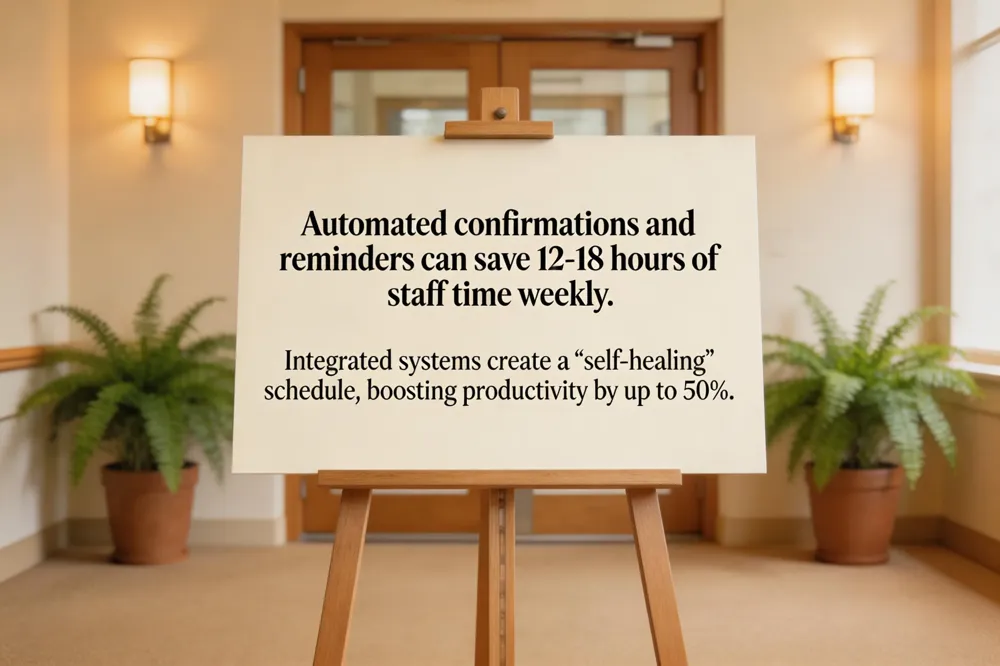
How can automated confirmations help reduce no-shows?
Automated confirmations help reduce no-shows by actively reinforcing attendee commitment immediately after registration and keeping the event top-of-mind. Sending an instant confirmation via SMS—a channel with a 98% open rate—solidifies the plan. As the event nears, automated reminder sequences provide timely nudges. Critically, these messages include easy, one-click options to cancel or reschedule via reply, which updates attendance counts in real time and allows organizers to fill vacated spots from a waitlist. This system reduces uncertainty by sharing key logistics proactively. When integrated with a scheduling platform, it creates a 'self-healing' schedule, freeing staff from manual tracking—one source notes automation can save 12-18 hours weekly—and turning reminders into a proactive engagement tool.
Eliminating Manual Follow-Up Tasks
Manual reminder processes are a significant drain on resources. For instance, tracking expiration dates or appointment statuses for 150-200 items can consume 12-18 hours of staff time each week. Automated systems eliminate this burden entirely. By sending timely, personalized notifications across channels like SMS and email, they remove the need for manual coordination and phone calls.
This shift allows staff to redirect their energy toward strategic projects and direct community engagement, rather than administrative chores.
Quantifying Time and Productivity Gains
Organizations report substantial efficiency improvements after implementing automation. Research indicates these systems can reduce time spent on routine monitoring by 70-80%. In practical terms, a team might reclaim 15 hours weekly, cutting manual tracking down to just 2 hours.
Broader studies show organizations using automated workflows for compliance and tracking save over 11,000 staff hours annually. These productivity gains of around 50% enable teams to handle more—one financial services example saw a 40% increase in appointment volume managed by frontline staff.
Reinforcing Commitment with Real-Time Updates
Automated confirmations do more than just notify; they psychologically cement plans. An instant SMS confirmation acts as a digital handshake, making the commitment feel more concrete. Follow-up reminders then serve as gentle prompts, keeping the event details fresh.
Because SMS messages are read quickly—often within three minutes—attendees receive clear, actionable information precisely when needed. This consistent, reliable communication builds trust and reduces the anxiety or forgetfulness that leads to last-minute cancellations.
Integration for a 'Self-Healing' Schedule
True efficiency comes from seamless integration. When an automated reminder system connects directly to your calendar or scheduling software, it creates a dynamic, self-correcting workflow. Attendee replies (like "Y" to confirm or a request to reschedule) can automatically update the event roster and status in the platform.
This real-time sync turns a static schedule into a proactive tool. If someone cancels via text, the system can instantly alert staff to offer that spot to someone on a waitlist, recovering potential lost engagement and revenue.
Advanced Features: Conditional Logic and Segmentation
Modern systems offer sophisticated features that make communication more relevant and effective.
- Conditional Logic: The system can trigger different message sequences based on an attendee's actions. For example, if someone confirms, they might receive logistical details. If they don't respond, they could get a follow-up nudge.
- Segmentation: Messages can be tailored for different audience groups. You might send one reminder sequence to new volunteers and another to long-term donors, based on their history and engagement level.
| Automation Feature | Primary Function | Practical Benefit for Events |
|---|---|---|
| Multi-Stage Alerts | Sends reminders at preset intervals (e.g., 1 week, 1 day, and 2 hours before) | Keeps event top-of-mind throughout the lead-up period |
| Two-Way SMS | Allows attendees to reply directly to confirm, cancel, or ask questions | Creates a conversational flow and updates counts automatically |
| Calendar Integration | Syncs directly with tools like Google Calendar or Outlook | Eliminates double data entry and ensures reminders are always accurate |
| Personalization Tags | Inserts attendee names, event dates, and specific details into messages | Increases engagement by making communication feel individual and relevant |
Data-Driven Optimization and Continuous Improvement
The importance of monitoring key metrics
Effective SMS reminder campaigns require ongoing measurement. Key performance indicators such as confirmation rates, average response times to messages, and the final no-show rate are essential for assessing success. For instance, tracking the percentage of attendees who confirm their RSVP provides a clear view of engagement, while monitoring no-show rates reveals the direct impact of your messaging strategy. Analyzing which time slots drive the most confirmations helps pinpoint the most effective moments to reach your audience.
Using A/B testing to optimize message timing, tone, and content
Continuous improvement is driven by experimentation. A/B testing allows you to compare different versions of your reminders to see what resonates best with your community. You can test variables like the subject line preview text, the call-to-action phrasing, or the overall tone—whether it's formal or friendly. Testing different timing strategies is also crucial; for example, research indicates that SMS timing optimization boosting response rates by 41.4% shows messages sent at 6 p.m. can see a 41.4% higher response rate than those sent at noon. These small, data-informed adjustments can lead to significant gains in attendance.
Segmenting audiences for targeted messaging
Not all event attendees are the same, so your reminders shouldn't be either. Segmentation involves dividing your contact list into groups based on shared characteristics for more personalized communication. Common segments for event management include early registrants versus last-minute sign-ups, past attendees versus new guests, or different volunteer roles. A large-scale study on SMS reminders for appointments demonstrated the power of targeting by focusing extra reminders on appointments with a high predicted no-show risk, efficiently using resources. For a nonprofit, this could mean sending a different reminder sequence to loyal donors than to first-time event guests.
How analytics inform refinement of reminder strategies
Data from your campaigns should directly shape your strategy. By analyzing which messages get the fastest replies or which segments have the lowest confirmation rates, you can iteratively refine your approach. If data shows low engagement from messages sent on weekends, you might adjust your schedule. Monitoring channel performance (SMS vs. email open rates) also informs where to focus efforts. This process of measurement, analysis, and adjustment creates a feedback loop that continuously enhances the effectiveness of your communication and slashes no-show rates over time.
Example: Timing optimization
Timing is a critical factor that analytics can precisely optimize. Beyond the broad recommendation to send SMS reminders 24 to 48 hours before an event, data can reveal the ideal hour of the day. As noted, a comparison found messages sent at 6 p.m. garnered a 41.4% increase in response rates over those sent at noon. This highlights the importance of testing and adapting send times to match when your audience is most likely to see and act on a message, ultimately driving higher confirmation and attendance rates.
Core Analytics and Optimization Tactics
| Metric to Monitor | Purpose of Tracking | Optimization Action Based on Data | Example Outcome |
|---|---|---|---|
| Confirmation Rate | Measures immediate attendee commitment | A/B test different call-to-action phrases | Increase in confirmed RSVPs by 15% |
| SMS Open Rate | Gauges message visibility and reach | Adjust send times to audience activity patterns | Achieve near 98% open rate for SMS messages |
| Response Time | Indicates urgency and message clarity | Refine message content for quicker comprehension | Faster attendee confirmations |
| No-Show Rate | Ultimate measure of campaign effectiveness | Segment reminders for high-risk attendee groups | Reduction in no-shows by 30-50% |
| Channel Performance | Compares SMS vs. email effectiveness | Allocate resources to highest-performing channel | Improved overall engagement efficiency |
Special Considerations for Nonprofits and Educational Groups
The Relevance of SMS for Community Engagement and Volunteer Coordination
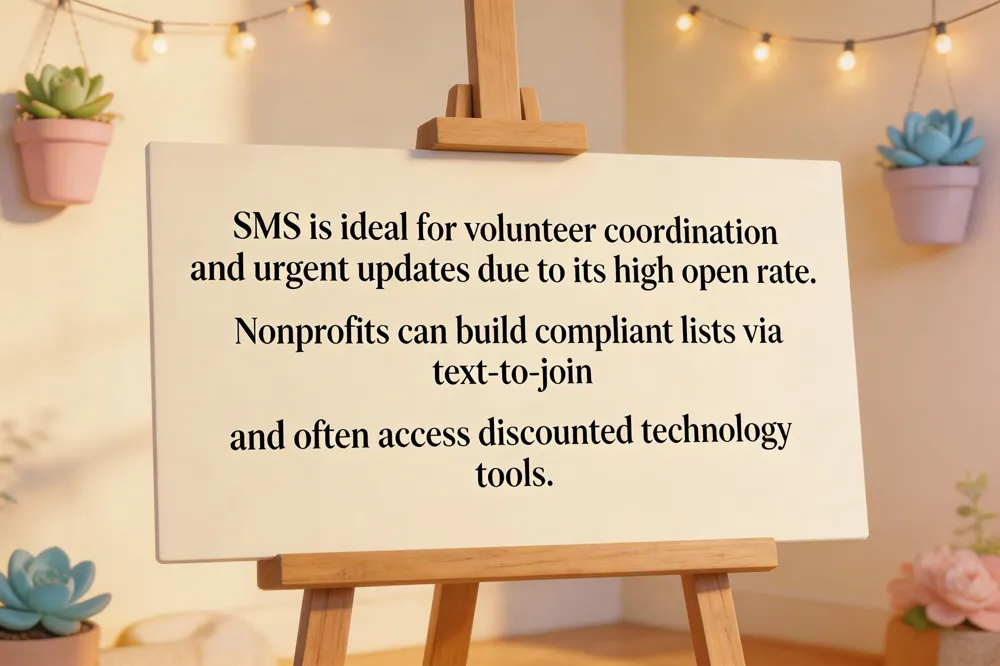
SMS is a powerful tool for community engagement and volunteer coordination. Its high open rate, often cited at 98%, ensures messages are seen quickly, making it ideal for timely reminders and urgent updates. For nonprofits, this immediacy is crucial for managing volunteer shifts and confirming RSVPs for events.
Text messaging supports two-way conversations, allowing volunteers and attendees to reply directly to confirm, cancel, or ask questions. This builds stronger relationships and reduces administrative back-and-forth. Bulk messaging features also let you efficiently communicate with large groups, such as all volunteers for a community clean-up day or attendees for a fundraising gala.
Building Compliant Opt-In Lists Through Events, Websites, and Forms
Growing a compliant SMS subscriber list is foundational. You can collect opt-ins through various touchpoints. Adding a text-to-join keyword on event registration forms, your website, and promotional materials is a common and effective method. For example, asking supporters to text "EVENT2024" to a shortcode to receive updates.
Always use clear language about the type of messages you'll send and how to opt out, which is a best practice and a legal requirement under regulations like the TCPA. Integrating these opt-in forms with your CRM or event management platform helps centralize contact data for seamless communication later.
Leveraging SMS for Urgent Updates, Volunteer Shift Reminders, and Last-Minute Changes
SMS excels at delivering urgent information. Use it to communicate last-minute event changes, such as venue updates, speaker cancellations, or weather-related alerts. For volunteer coordination, automated shift reminders sent the day before or morning of an event can drastically reduce no-shows and ensure all roles are filled.
A structured reminder sequence works well. For a volunteer shift, you might send an initial confirmation upon sign-up, a reminder 24 hours prior, and a final check-in a few hours before the start time. This tiered SMS reminders increase action rates keeps details top-of-mind and provides volunteers with easy options to cancel or request help.
Are There Free or Discounted Technology Tools for Nonprofit Event Management?
Yes, there are free and discounted technology tools available to support nonprofit event management. While dedicated, free SMS-based event management platforms are less common, many software providers offer significant discounts for verified 501(c)(3) organizations on tools with event-related features, such as CRM integration, email marketing, and productivity suites. Nonprofits should research 'for nonprofits' programs from major vendors, as discounts on communication and productivity tools can effectively support event workflows. It is crucial to verify eligibility directly with the vendor, as programs often require proof of tax-exempt status. Utilizing these resources can make robust event management software for nonprofits, including SMS components, more accessible.
Integrating SMS into a Multi-Channel Strategy Alongside Email and Social Media
SMS should be part of a broader communication strategy, not a standalone channel. Use it to complement email and social media campaigns. For instance, send a promotional email about an upcoming gala, then follow up with a concise SMS reminder as the RSVP deadline approaches.
Each channel serves a different purpose. Email is great for detailed information and newsletters, while SMS is perfect for time-sensitive calls to action. Social media builds community and awareness. A multi-channel communication for event RSVPs reinforces your message and caters to different audience preferences, leading to higher overall engagement and event turnout.
Comparison of Key SMS Considerations for Nonprofits and Educational Groups
| Consideration | Key Action | Primary Benefit | Example Use Case |
|---|---|---|---|
| List Building | Use text-to-join on forms | Compliant, engaged subscriber base | "Text SCHOOLFAIR to 55555 for updates" |
| Urgent Updates | Send broadcast SMS for last-minute changes | Immediate audience reach | Alerting about a room change for a workshop |
| Volunteer Coordination | Automate shift reminders with reply options | Reduces no-shows, fills gaps | Reminding PTA volunteers of bake sale slots |
| Tool Accessibility | Research nonprofit discount programs | Reduces software costs | Applying for a discounted event platform license |
| Multi-Channel Strategy | Use SMS for deadlines, email for details | Maximizes message reach and clarity | SMS for RSVP deadline, email with event agenda |
| Personalization | Use merge tags for names and event details | Personalized SMS reminders boost engagement 78% | "Hi [Name], your tutor session is tomorrow at 3 PM." |
| Compliance | Include clear opt-out instructions in all messages | Maintains legal standing and trust | "Reply STOP to unsubscribe from event alerts." |
Beyond Reminders: Building Relationships and Trust
From Transactional Alerts to Relationship-Building Flows
SMS reminders are no longer just simple, one-time alerts. They are evolving into strategic communication flows designed to build lasting relationships. This shift moves messaging from a purely logistical function to a core engagement tool. By thinking of reminders as touchpoints in an ongoing conversation, you create opportunities to connect, build trust, and demonstrate your organization's commitment to its community.
Using Empathetic Language to Reduce Anxiety
The tone and language of your messages matter. Empathetic, reassuring texts can significantly reduce attendee anxiety. For healthcare organizations, sending encouraging pre-appointment texts has been shown to build trust and reduce no-shows. This principle applies universally. Setting clear expectations, expressing understanding for potential logistical hurdles, and using a friendly tone make automated messages feel more human. Personalized SMS reminders boost engagement 78% that include the recipient’s name create a sense of individual attention, further strengthening the connection.
The Value of Post-Event Follow-Up
Engagement shouldn't end when the event does. Post-event follow-up is a critical step for cementing relationships and gathering valuable insights. A simple thank-you text shows appreciation and reinforces a positive experience. Following up with a brief post-event text surveys for feedback collection via SMS can provide direct, actionable data to improve future events. Research indicates that timely, personal follow-up can improve overall satisfaction and is a Strategic sequence of reminders for renewals.
Improving Satisfaction and Retention
Reliable, considerate communication directly impacts how your organization is perceived. When attendees receive clear, timely reminders and have an easy way to confirm or reschedule, their overall experience improves. This leads to higher satisfaction, which can translate into positive reviews and increased retention. In business contexts, professional SMS communication has been linked to improved automated appointment reminders reduce no-shows by up to 38%. For nonprofits, this means more reliable volunteers and more engaged supporters who return for future events.
Creating a Cohesive Communication Ecosystem
Effective SMS strategies work best when integrated into a broader communication plan. This ecosystem should respect attendee preferences by using Multi-channel communication for better reminder visibility—and allowing individuals to choose how they receive information. The goal is to create a seamless experience where all touchpoints work together. Platforms that Constant Contact integration help centralize data, enabling more personalized and timely communication at every stage of the attendee journey.
| Communication Focus | Key Strategy | Primary Benefit |
|---|---|---|
| Building Connection | Empathetic, personalized language | Reduces anxiety, builds trust |
| Gathering Feedback | Post-event surveys via SMS | Provides data for future improvements |
| Improving Experience | Reliable, multi-channel reminders | Increases satisfaction and retention |
| Future Engagement | Thank-you messages & value updates | Strengthens long-term relationships |
| System Integration | Connecting SMS with CRM/calendars | Enables seamless, personalized flows |
Calculating the Tangible ROI
Quantifying the Financial Impact of Missed Appointments
No-shows represent a direct financial drain. In healthcare, a single missed appointment can cost an organization over $200. For any group managing appointments or events—from medical clinics to nonprofit workshops—these losses add up quickly. Industry estimates suggest the U.S. healthcare system alone loses over $150 billion annually to missed appointments.
This highlights why preventing no-shows is a critical financial strategy. Automated SMS reminders are a low-cost intervention with a high return, directly protecting this vulnerable revenue.
Case Studies in Revenue Recovery and Volume Growth
Real-world data demonstrates powerful results. Financial institutions using strategic SMS reminders reported 80% fewer no-shows with SMS reminders. This directly translates to recovered revenue from slots that would have been empty.
Furthermore, automation drives efficiency gains that increase capacity. One case study showed automated reminders increase appointment volume 40%. This means more services delivered without proportionally increasing labor costs.
Measuring Gains in Staff Productivity and Time
Manual follow-up is a significant administrative burden. Manual expiration tracking can consume 12–18 hours per week. Automated reminder systems can reclaim 70–80% of this time.
This reallocated time is a key component of ROI. Staff shift from routine tracking and phone calls to higher-value, strategic work. One organization reported saving over 500 hours of administrative work annually, which can be redirected to program development or donor stewardship.
The Cost-Effectiveness of SMS vs. Traditional Methods
SMS is remarkably cost-effective. A large-scale study on SMS reminders for appointments found sending an SMS reminder cost just 7.2 pence, while the saved appointment was valued at approximately £65—a clear net positive. Compare this to manual phone calls, which have a much lower contact success rate (30–60%) and consume significant staff time per attempt.
Text messages also have a 98% open rate for SMS messages, ensuring the reminder is seen. This high engagement at low cost makes SMS a superior financial choice over less reliable methods like email or voicemail.
A Framework for Estimating Your Organization's Savings
Organizations can project their potential ROI with a simple calculation:
- Identify Your No-Show Rate: Track your current baseline (e.g., 15% of appointments).
- Assign a Value: Determine the average lost revenue or cost per missed slot.
- Project Reduction: Based on case studies, estimate a conservative reduction (e.g., reduce no-show rates by up to 53%).
- Calculate Recovered Value: Multiply the number of prevented no-shows by your value per slot.
- Factor in Efficiency Gains: Estimate hours saved on manual follow-up and assign a value to that staff time.
This framework helps move from seeing reminders as a cost to understanding them as a revenue-protection and efficiency tool.
| ROI Component | Example Metric | Impact Summary |
|---|---|---|
| Revenue Recovery | $200 per prevented no-show | Direct income from filled slots. |
| Staff Time Saved | 70-80% less admin time | Hours reallocated to strategic work. |
| System Cost | Low per-message fee | Far less than manual call labor. |
| Volume Increase | 40% more appointments | Greater service capacity without added staff. |
| Confirmation Boost | 25-35% more confirmed meetings | Improved schedule certainty and planning. |
Conclusion: Transforming Attendance with Strategic Automation
Summarizing the Proven Power of Automated SMS RSVP Reminders
Automated SMS reminders are a cornerstone of modern event management, proven to significantly reduce no-show rates across sectors. The evidence is compelling: studies in healthcare and community settings show reductions in absenteeism ranging from 38% to 80% through strategic text messaging. This success stems from SMS's unparalleled open rates of 98% and the ability to deliver concise, timely reminders directly to attendees' primary communication device.
The Strategic Shift from Reacting to No-Shows to Proactively Preventing Them
Organizations are moving beyond manual follow-ups and post-event analysis. By implementing automated, multi-touch SMS sequences, they proactively prevent no-shows before they happen. This involves sending tiered reminders—such as a confirmation request a week out, a logistical detail reminder 24 hours prior, and a final nudge 2 hours before—creating a seamless communication flow that keeps the event top-of-mind for attendees.
Final Encouragement for Nonprofits and Educational Groups to Adopt These Tools
For resource-constrained nonprofits and educational institutions, the return on investment is clear. Automated SMS systems reclaim dozens of staff hours monthly, boost confirmed attendance by 25-35%, and protect vital event revenue. These platforms integrate with existing calendars and CRMs, making adoption straightforward. The shift to automated reminders is not just a technological upgrade but a strategic move toward more reliable and impactful community engagement.
The Future of Integrated, Intelligent Communication for Community Engagement
The evolution points toward smarter, more integrated systems. Future tools will leverage data analytics for hyper-personalized messaging, conditional logic that adapts to attendee behavior in real-time, and seamless multi-channel coordination between SMS, email, and event apps. This intelligent approach will further deepen relationships, optimize resource use, and ensure that every community event achieves its maximum potential for participation and connection.
| Strategy Component | Core Action | Measurable Benefit for Events |
|---|---|---|
| Tiered Cadence | Send multiple reminders (e.g., 1 week, 1 day, 2 hours before) | Can reduce no-shows by 50-70% vs. single reminder |
| Personalization | Include attendee name, event specifics, and clear CTAs | Increases engagement likelihood by up to 78% |
| Two-Way SMS | Enable replies to confirm, cancel, or reschedule | Creates 'self-healing' schedules and fills last-minute slots |
| Automation & Integration | Connect SMS platform to event calendar/CRM | Saves 12-18 staff hours weekly on manual follow-ups |
| Data-Driven Optimization | Test timing, message tone, and segment lists | Optimizes campaigns for higher confirmation and attendance rates |
Related Blogs

Got Kicked Out of GroupMe? Look to Evant.
Michael PedoeemGot Kicked Out of GroupMe? The Best GroupMe SMS Alternative for Jewish Communities

How to Send Targeted Alerts During Live Events
Michael PedoeemMastering Targeted Event Alerts: Real-Time Communication Strategies for Nonprofits
Top 7 SMS Trends for Communities in 2026
Michael PedoeemFrom AI-powered responses to text-to-donate and two-way texting — here are the 7 SMS trends every shul, school, and nonprofit needs to know about in 2026