
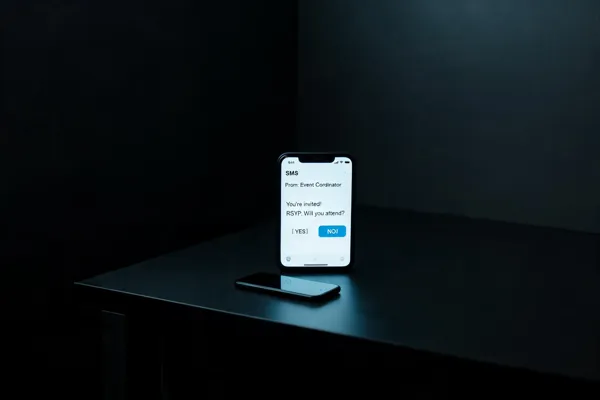
Setting the Stage: RSVP in the Digital Age
From Paper to Pixels
Remember the days of stuffing envelopes and waiting weeks for a reply card? The old RSVP process is a relic. Today, we have digital platforms, but many still create a new problem: they ask guests to jump through hoops, like filling out web forms that don't auto-save or navigating clunky event apps. This friction kills response rates.
Why Speed and Accuracy Matter
For a nonprofit or school, every no-show is a wasted plate and a gap in a budget. A single late email reply can throw off your catering order. You need a tool that captures a commitment instantly and records it without error. Relying on email is like trying to catch a fish with a bow and arrow.
SMS: The Core Channel
This is where SMS wins. It’s not a newfangled app or a complicated form. It’s the one channel that reaches 98% of Americans right in their pocket. An SMS is opened within 90 seconds. For event organizers, that means real-time, accurate headcounts without the lag or the friction. SMS is the fastest line from your invitation to a confirmed "yes."
SMS Beats Email and MMS on Speed
Instant delivery of SMS vs. email latency
SMS messages are delivered within seconds to the recipient’s handset. They do not rely on an internet connection, avoiding the latency that email faces from server processing, spam filters, and inbox delays. This makes SMS the fastest channel for event RSVPs.
Technical reasons SMS is faster than MMS
SMS is faster than MMS because it is text‑only and limited to 160 characters. This simplicity lets it transmit through carrier networks with minimal overhead. MMS requires uploading and delivering images, videos, or other media, creating larger file sizes that take longer to process. The simpler delivery of SMS makes it more reliable and faster for time‑sensitive communications.
Impact on last‑minute event changes
For last‑minute event changes such as venue updates or time shifts, SMS delivers the message instantly. Recipients see the text within minutes, allowing them to adjust their RSVP in real time. This speed ensures attendance data stays accurate and event logistics can adapt quickly. | Channel | Typical Delivery Speed | Internet Required | Message Complexity |
|---------|------------------------|-------------------|---------------------|
| SMS | Seconds | No | Text‑only (≤160 chars) |
| MMS | Up to several minutes | No | Media (images, video) |
| Email | Minutes to hours | Yes | Text plus attachments |
Benchmarks: What Constitutes a Good SMS Response and Delivery Rate?
What is a good SMS response rate?
Industry benchmarks show that SMS campaigns achieve an average 45% response rate of around 45%. This figure far exceeds email or social media engagement. The primary driver is speed: 98% of text messages are opened within three minutes of receipt. For nonprofits using platforms like Evant, personalized and timely messages sent to opted‑in audiences can push rates above 50%. A “good” rate depends on your specific goals, but anything above 40% is considered strong for SMS.
What is a good SMS delivery rate?
A reliable SMS delivery rate typically falls between 90% and 98%. Rates below 90% signal issues like invalid numbers, poor list hygiene, or carrier filtering. Higher rates indicate a well‑maintained, permission‑based list and strict adherence to carrier standards. Because text messages boast a 98% open rate, ensuring a robust delivery rate guarantees your RSVP prompts actually reach your supporters. Monitoring this metric helps you identify and resolve delivery problems early.
Factors That Push Rates Above Benchmarks
Achieving superior response and delivery rates hinges on three factors: list relevance, message timing, and platform compliance. Targeting an engaged, recently‑cleaned contact list naturally boosts responses. Using A/B testing to optimize send times—typically between 10 a.m. and 6 p.m. local—also improves engagement. Finally, deploying a platform that uses direct carrier connections and properly registered numbers (such as a short code or 10DLC) minimizes filtering, ensuring near-perfect delivery.
MetricBenchmarkWhat Drives Higher RatesResponse Rate~45% (industry avg)Personalization, audience segmentation, clear call‑to‑actionsDelivery Rate90%–98%Clean lists, direct‑carrier routing, compliance (10DLC)Open Rate98%Instant SMS arrival vs. email delays; opt‑in trustOpt‑Out Rate<2%Relevant, low‑frequency messages (e.g., 2–4 per month)Conversion Rate15%–25% (event RSVP)One‑click keyword replies, mobile‑optimized forms
Open Rates and Click‑Through Performance: The SMS Advantage
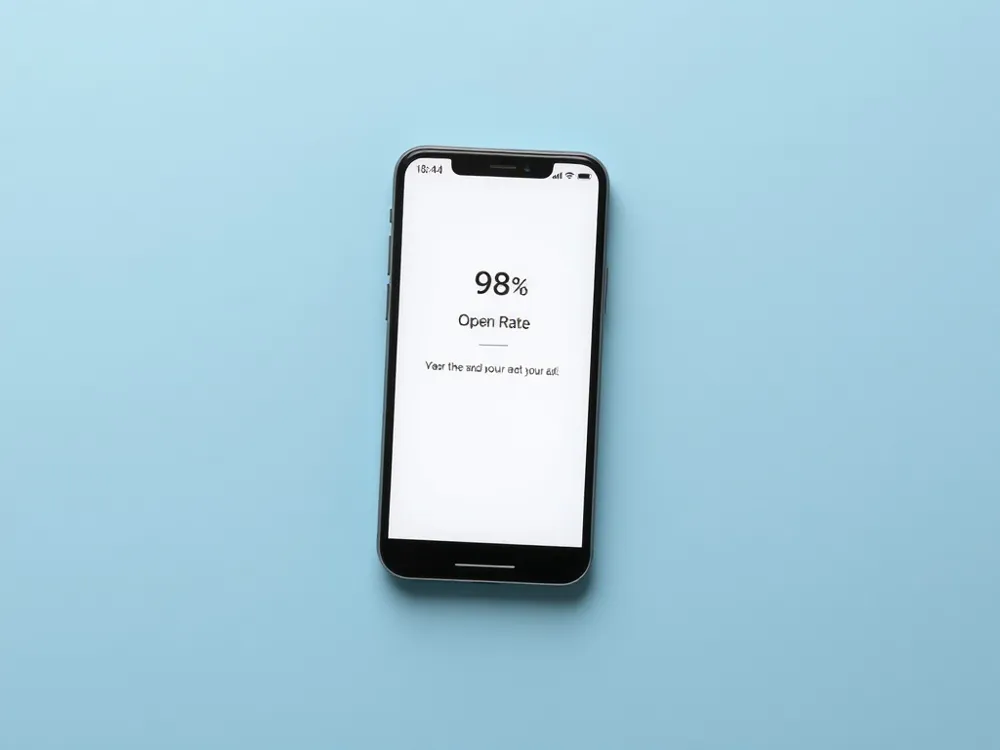
Do SMS messages have a 98% open rate?
Yes, the data consistently backs this up. Multiple studies, including those from Tatango, SimpleTexting, and others, report that SMS messages achieve an open rate of roughly 98%. This means nearly every text sent is read, a stark contrast to email's average open rate of about 20%.
What is a good SMS click‑through rate?
A good click‑through rate (CTR) for SMS varies by industry. While the overall average falls between 19% and 32%, the expectations differ significantly across sectors.
SectorTypical SMS Click‑Through Rate (CTR)NotesOverall Average19% – 32%Represents a strong performance level across all industries.Education & Nonprofit11% – 20%Reflects the nature of fundraising and event invitation messaging.Commercial Services & E‑commerce21% – 35%Driven by promotions, order updates, and transactional messages.Human Resources36% – 50%Includes time-sensitive alerts and action-required communications.Travel1% – 10%Often used for confirmations, which have lower link-click expectations.
How nonprofits can aim for higher CTRs
Nonprofits can aim for the upper end of their 11–20% benchmark by focusing on message relevance. A targeted audience, combined with a clear and compelling call-to-action, will outperform a generic blast.
Accuracy at Scale: Real‑Time Headcounts and Low Error Rates
Instant headcount visibility with SMS replies
When a guest texts “YES,” the headcount updates instantly. No manual data-entry lag, no spreadsheet confusion—just a live view of who is coming. For a wedding or gala with hundreds of invitees, this means organizers can see within minutes exactly how many people to plan for.
Low bounce (1-2%) and opt-out (0.04%) rates
SMS delivers messages with a 1–2% bounce rate, meaning nearly every RSVP request reaches its target. The opt‑out rate is just 0.04%—almost no one unsubscribes after receiving a text‑based invitation. This keeps the attendee list clean, accurate, and stable.
How real-time data improves catering, staffing, and safety
Accurate headcounts affect every operational detail: venue capacity, seat assignments, meal counts, and even emergency procedures. Instant SMS replies give planners the data they need to adjust staffing levels, avoid wasted food, and ensure the space isn't overcrowded. For nonprofits, this precision means budget dollars go further and attendee safety stays high.
Choosing the Right RSVP App for Nonprofits and Schools
What is a good RSVP app for nonprofits and educational organizations?
Selecting the right RSVP app is crucial for simplifying event logistics and boosting participation. The best platforms combine ease of use with reliable communication, and SMS support is now a key differentiator for nonprofits and schools.
Below is a quick comparison of popular RSVP apps in 2026, focusing on SMS capabilities and pricing structures suitable for these organizations.
RSVP AppSMS SupportFree Tier (Guest Limit)Paid Tier (Starting Price)RSVPifyYesYes (up to 100 guests)$10/month or $24/month for pro featuresEviteYesYes (includes ads)Paid plans for ad-free & advanced featuresPartifulYesYes (unlimited guests)Paid plans for premium featuresEventbriteLimitedYes (free events)3.7% + $1.79 per paid ticketEvantYesNot specifiedPer-message pricing for SMS-centric model
Side‑by‑side comparison of popular RSVP platforms
While platforms like RSVPify, Evite, and Partiful offer SMS integration, their core functionality often revolves around web forms and email. For example, RSVPify’s free tier is great for small events but relies heavily on email for confirmations, which can be slower than SMS.
SMS support, free tiers, and paid guest limits
A free tier is essential for testing, but watch for limitations. Evite includes ads on its free plan, while RSVPify caps free users at 100 guests. Paid tiers often unlock unlimited guests and advanced features like seating charts.
Why SMS‑centric solutions like Evant stand out
SMS-centric solutions like Evant are designed for immediacy and high engagement. With SMS open rates at 98%, messages are read within minutes, leading to faster and more accurate RSVPs. This channel is ideal for last-minute changes or reminders.
For organizations prioritizing real-time responses and high turnout, an SMS-focused app offers superior speed and reliability compared to traditional email-based systems. This direct communication channel bypasses crowded inboxes and ensures critical information reaches attendees instantly.
Is RSVP Still Relevant? Modern Usage and Trends
Is RSVP Still Used Today?
RSVP has traveled far from its French formalities. Once the mark of high society, it’s now an everyday verb—and a practical tool for planning anything from a birthday party to a gala. The term itself is stuck around, but how we collect those responses has changed completely.
The Shift: Etiquette to Everyday Verb
People don't mail back a card anymore. They text “YES,” click a link, or reply to a WhatsApp message. The core need—knowing who’s coming—hasn’t gone away, but the technology for getting that answer has shifted. We just use faster, more direct channels now.
Adoption in Events, Education, and Fundraising
Nonprofits and schools have led the charge in adopting modern, fast RSVP methods. The data backs this up: SMS open rates are 98%, with most texts read in three minutes. Email, by contrast, often gets buried. For a fundraiser or volunteer shift, that speed is a game changer. Organizers get an instant headcount, not a delayed estimate.
Integration of SMS and Online Tools
Today’s best RSVP systems aren’t about paper versus digital—they’re about combining speed with accuracy. A common approach is to send a paper invitation with a QR code that leads to a mobile form, or to text a direct “Reply YES” prompt. SMS-based RSVPs bypass the friction of app downloads and email logins, working on any phone. This hybrid strategy ensures high response rates and real-time data synced to a CRM, making last-minute planning far more reliable.
ROI and Cost‑Effectiveness of SMS‑Based RSVP
What is the financial return on investment for SMS‑based RSVP campaigns?
Organizations that adopt SMS for event engagement see a substantial return. Tatango reports an average 500% ROI for nonprofits using their SMS platform, meaning every dollar invested in text messaging yields five dollars back in value. This combines high open rates with quick donor actions, including RSVP confirmations and on‑the‑spot donations.
How does the $71 per $1 spent benchmark apply to RSVP?
Broader SMS marketing data reinforces this financial picture. For every $1 spent on text message campaigns, businesses generate an average of $71 in revenue. This high ratio applies to RSVP drives because immediate text responses can be converted into event attendance and follow‑up donations, multiplying the return from a single outreach.
How does per‑message cost compare to mailed or call‑center outreach?
SMS is dramatically cheaper than traditional channels. A bulk text message costs just a few cents, while a mailed invitation can cost over $1 per piece (including printing and postage). Call‑center outreach, even at a low wage, quickly adds up in labor hours. SMS can reach hundreds of attendees instantly for the same cost as a few phone calls, providing both speed and cost efficiency. This cost advantage means nonprofits can allocate more budget to mission activities rather than outreach logistics.
MetricSMS CampaignMailed InvitationPhone Call OutreachAverage Cost per Contact$0.05 – $0.10$1.00 – $3.00$2.00 – $5.00Delivery TimeSeconds3–7 daysMinutes (live)Estimated ROI500% – 7,100%50% – 200%100% – 300%Labor RequiredLow (automated)Medium (manual)High (manual)
Automation, Integration, and Data Accuracy
How does two‑way texting and keyword RSVPs eliminate manual errors?
Forget web forms that require manual data entry. Two‑way SMS allows guests to simply reply "YES" or "NO" to a text invite, and they’re instantly on the list.
Platforms like Falkon and Infobip enable keyword RSVPs (e.g., text “RSVP” to a short code), which automatically capture the respondent’s details. This eliminates the friction of typing in names and emails, reducing typos and improving response accuracy. The reply is captured in your system the moment it’s sent.
How does CRM sync ensure real‑time attendee updates?
An SMS RSVP is worthless if it doesn’t update your master record instantly. Platforms like Mogli and RSVPify integrate directly with major CRMs such as Salesforce and HubSpot.
When a guest texts "YES," that response is automatically synced to their contact record. No manual re-entry or copy-pasting between spreadsheets. This single source of truth ensures catering, seating, and venue capacity numbers are always accurate.
How do analytics dashboards improve RSVP performance?
Event organizers need to see what’s working. Analytics dashboards from services like Evant.app, Infobip, and EZ Texting provide real-time visibility into:
MetricWhat It TracksWhy It Matters for AccuracyDelivery RatePercentage of texts that reach recipientsIdentifies invalid numbers before they skew your headcount.Response RateHow many recipients replied to the RSVP promptMeasures engagement; improving this boosts data accuracy.Opt‑Out RateHow many recipients unsubscribed after a campaignLow opt-outs (typically <2%) indicate your list is healthy and engaged.Click‑Through RatePercentage who clicked a link in the RSVP textShows which links (e.g., for event details) drive attendees to confirm.Conversion RatePercentage who completed an RSVP actionDirectly measures your event registration success.
These dashboards allow you to A/B test messaging, target specific audience segments, and refine your campaigns in real-time, ensuring that every RSVP you collect is as accurate and immediate as possible.
Why this matters for your event strategy
The combination of keyword RSVPs, CRM integration, and analytics shifts event management from guesswork to a data-driven operation. You get faster responses, fewer manual errors, and a clear view of your event’s health. This is the core value proposition for nonprofits, churches, and community groups looking to boost participation and streamline logistics.
Real‑World Success: Speed and Engagement Metrics in Action
200 RSVPs in Minutes: Is That Even Real?
One wedding host using an SMS RSVP system reported receiving over 200 confirmations within minutes of sending the invitation. This isn't an outlier. It shows how instant delivery and high open rates turn a broadcast into a flood of responses.
What Benchmarks Tell Us About SMS Response
Beyond case studies, sector-wide data confirms SMS outperforms other channels. The table below shows typical metrics for information-focused campaigns:
MetricSMS PerformanceWhy It MattersResponse rate71%Almost 3 out of 4 recipients replyAverage reply time90 secondsRSVPs arrive in under two minutesOpen rate98%Nearly every message is seenDelivery rate98-99%Messages reliably reach the phoneOpt-out rate0.04%Subscriber fatigue is negligible
How This Changes Event Planning
Real-time RSVP data directly impacts logistics. With accurate counts arriving within minutes, organizers can:
This speed eliminates the guesswork and last-minute scrambles typical of email or paper-based RSVPs.
The Bottom Line on Speed and Accuracy
The combination of near-instant delivery, a 71% response rate, and 90-second reply times means SMS provides actionable data faster than any other RSVP method. For nonprofits and event organizers, this translates directly into better resource allocation and fewer empty seats.
Why SMS Emerges as the Clear Winner for RSVP Speed and Accuracy
You send a paper invite. You wait. You send an email reminder. You wait longer. You call people. You get voicemails. Meanwhile, your headcount is a guessing game. This is the old way of doing things. It's slow and filled with friction. SMS flips the script. It is the fastest, most reliable channel for capturing accurate RSVPs. Text messages boast a 98% open rate, and 90% of them are read within three minutes. That is not a typo. Your invitation is seen instantly, not buried in a spam folder. Delivery is near-instant, and because it works without internet, it reaches every guest, from tech-savvy alumni to smartphone-light volunteers. With text, you get real-time data. You know exactly how many people are coming, right now. No lag. No guessing. No manual data entry errors from forms that don't auto-save.
The Smartest Move for Your Next Event
For nonprofits and schools, where every dollar and every person counts, an SMS-first RSVP strategy is no longer optional; it is the smartest move. It transforms a clunky, multi-step process into a two-second reply. "YES" to confirm. Done. This simplicity drives up response rates and eliminates no-show ambiguity. You stop wasting budget on catering for ghosts and start planning for actual attendees. The data is clean, actionable, and feeds directly into your planning tools. Don't let your next event be a casualty of outdated communication. Try Evant’s SMS RSVP platform today. See how fast you can turn uncertainty into a precise headcount. Your next event is too important to leave to chance.
Related Blogs

Got Kicked Out of GroupMe? Look to Evant.
Michael PedoeemGot Kicked Out of GroupMe? The Best GroupMe SMS Alternative for Jewish Communities

How to Send Targeted Alerts During Live Events
Michael PedoeemMastering Targeted Event Alerts: Real-Time Communication Strategies for Nonprofits
Top 7 SMS Trends for Communities in 2026
Michael PedoeemFrom AI-powered responses to text-to-donate and two-way texting — here are the 7 SMS trends every shul, school, and nonprofit needs to know about in 2026