Why SMS is Your Strongest Engagement Channel
Email marketing struggles to gain traction, with industry average open rates hovering at 20% compared to the 98% open rate seen in text messaging. While messages often sit ignored in a digital inbox, consumers read 80.5% of their text notifications within five minutes of receipt.
This speed makes mobile text the superior choice for high-stakes, time-sensitive event logistics. When you use Evant, you replace scattered communication with targeted updates that actually reach your audience. By leveraging personalized text updates, you move past the noise of crowded email folders to drive genuine event participation and strengthen your community connection.
The Power of Text for Nonprofit Events

Email marketing is suffering from a massive engagement deficit. While industry averages for email open rates linger around 20%, SMS boasts an impressive 98% open rate, with 90% of those messages read within three minutes. This immediacy is exactly why
Trying to coordinate a volunteer schedule or a major fundraising dinner through traditional email chains is like trying to catch a fish with a bow and arrow. Supporters often miss important updates buried under cluttered inboxes. By using Evant.app to send event reminders, organizers ensure their messages cut through the noise to reach the right people at the right time.
Texting remains a personal, high-trust channel. Unlike social media algorithms that hide your invitations from your most dedicated supporters, SMS lands directly in their pocket. This creates a more intimate connection. When you adopt Evant.app for your community engagement, you shift from one-way broadcasting to a two-way dialogue. This format allows guests to ask direct questions, adjust their RSVPs, or even contribute to a text-to-donate appeal without ever leaving their messaging app.
Ultimately, the tools you choose define your efficiency. Using a solution that integrates natively into your CRM, such as Evant.app, ensures that your data remains clean and actionable. As research from the National Center for Education Evaluation and Regional Assistance suggests, highly personalized, actionable messaging is the most effective way to drive consistent attendance and long-term participation.
Building a Compliant SMS Contact List

While SMS is a powerful engagement tool, it requires strict adherence to legal frameworks like the TCPA to ensure compliance and avoid significant penalties. Organizations must navigate the challenge of spam filters, which can block messages if content is flagged or if best practices are not followed, hindering delivery. Because SMS allows for only 160 characters, communication must be highly concise, potentially limiting the depth of information shared. Furthermore, organizations face the consistent hurdle of securing opt-ins from audiences wary of spam, requiring a clear value proposition to build trust. Finally, if messaging frequency becomes too high or feels intrusive, organizations risk damaging community relationships through increased opt-outs and negative user sentiment.
The foundation of a high-quality list begins with explicit permission. You should never treat mobile numbers as free-for-all data; instead, collect consent through registration forms, clear checkboxes, or specific keywords that sign users into a program they actually want to join. Implementing a double opt-in strategy ensures that your list contains only confirmed, interested supporters, which drastically lowers your spam risk.
The CAN-SPAM Act demands that you clearly identify your organization in every transmission. By relying on automated workflows to manage consent and removal, you protect the reputation of your nonprofit while ensuring that your messages reach the people who truly want to stay involved with your community.
Crafting Personalized Event Reminders That Work
Sending a generic blast is the fastest way to get ignored. If your event message doesn't immediately tell the recipient who it is from, what the event is, and where they need to show up, they will likely archive it without a second thought. Effective communication starts with personalization, using
For organizations using Evant, crafting reminders becomes an exercise in automation rather than manual labor. A high-performing cadence follows a predictable schedule: send your first reminder one week before, a follow-up one day out, and a final logistical update one hour before doors open. This consistency builds trust and keeps your organization at the top of the recipient's mind.
Every message should bridge the gap between intent and action. Include a direct call to action, whether it is a link to digital tickets, a map, or a pre-filled SMS RSVP form. To drive peak participation, create an incentive for the recipient to engage, such as early-bird access or instructions for a skip-the-line check-in. By providing a clear benefit for their time, you transform a standard alert into an valuable touchpoint that actually moves the needle on attendance.
Automated RSVP and Check-In via SMS
Manual event tracking is a drain on your resources. Relying on legacy spreadsheets or disconnected third-party forms creates data silos and often results in low response rates. To solve this, Evant.app provides an automated, low-cost solution that integrates directly into your existing infrastructure to streamline the entire event lifecycle.
How can nonprofits implement digital, low-cost RSVP solutions for their events?
Nonprofits can implement efficient RSVP solutions by adopting mobile-first platforms that replace manual spreadsheets with automated workflows. By utilizing tools that offer embeddable forms, dynamic QR codes, and SMS messaging, organizations can streamline the check-in process while providing donors with a seamless, touchless registration experience. Unlike static forms, these SMS-based systems allow attendees to simply reply to confirm their status, removing friction and boosting overall response rates.
These platforms offer deep CRM integration, allowing nonprofits to automatically sync attendee data and segment donor lists without manual data entry. This keeps your interactions centralized and secure, ensuring your guest list is always accurate in real-time.
Driving Attendance Through the Event Lifecycle
A standard event invite often gets buried in a crowded email inbox. Most organizations send one email and hope for the best, but that is like trying to reach your entire community with a single flyer pinned to a distant bulletin board. SMS transforms event communication into a dynamic, two-way conversation that spans the entire lifecycle of your gathering.
How can SMS-based communication strategies effectively boost event attendance for nonprofits?
Nonprofits can significantly boost event attendance by utilizing SMS marketing to create personalized, timely touchpoints throughout the entire event lifecycle. By sending automated reminders, such as notifications one week, one day, and one hour before an event, organizations ensure their programs remain top-of-mind for busy supporters. Personalized messaging that addresses attendees by name fosters a stronger connection, while exclusive incentives like VIP access or special discount codes provide tangible motivation for registration. During the event, SMS serves as a vital channel for real-time updates and interactive engagement, such as live polls or Q&As, which keeps participants active and connected. Finally, post-event follow-ups allow nonprofits to express gratitude and gather valuable feedback, effectively nurturing community relationships and streamlining future event logistics.
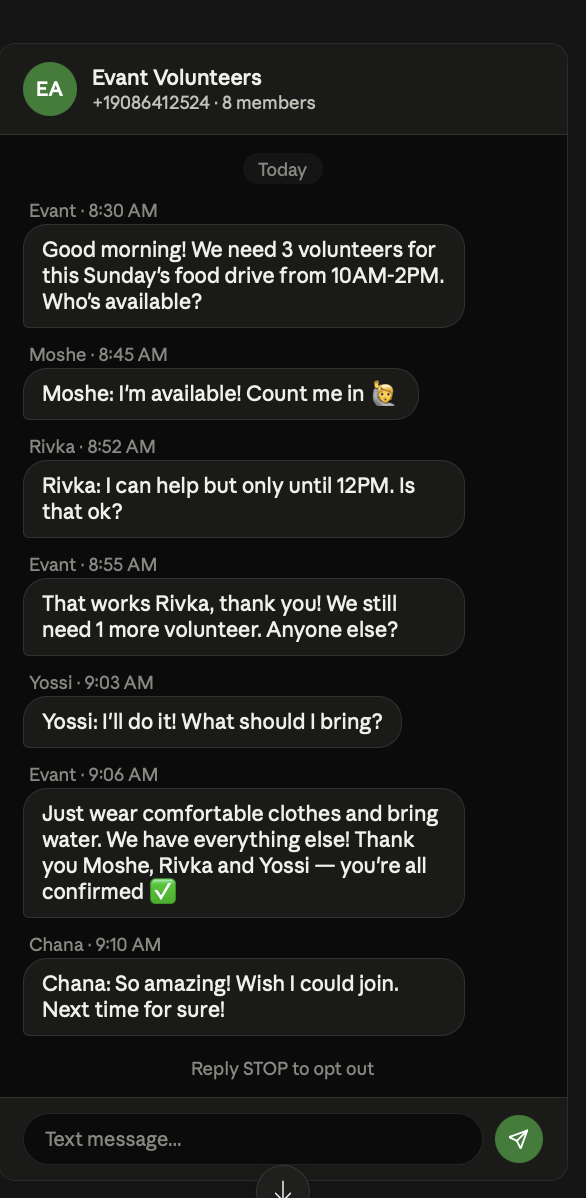
Segmenting your audience is the secret to moving beyond generic blasts. Just as Microsoft recommends using dynamic text to surface relevant data, your nonprofit can categorize supporters by their history—treating volunteers, VIP donors, and first-time attendees to tailored content. If a volunteer needs a specific shift reminder, they see that, not a generic request for ticket sales.
SMS can bridge these gaps by treating SMS as the anchor of an omnichannel strategy. While email handles your long-form event narrative, your text messages drive the immediate actions that fill seats and keep spirits high throughout the day.
PhaseGoalAction StrategyPre-eventRegistrationEarly-bird incentivesDay-ofParticipationInteractive poll triggersPost-eventRetentionFeedback survey links
Leveraging Analytics to Optimize Engagement
Data serves as the compass for your communication strategy. Without tracking performance, you are simply broadcasting into the void. To truly understand donor interest, monitor open rates, click-through rates, and RSVP volume, as these metrics highlight which appeals resonate and which fall flat.
Using an integrated platform allows your SMS engagement data to live centrally within your CRM, providing unified reporting that eliminates data silos common with third-party tools. This visibility enables you to refine your segmentation, shifting away from generic blasts to personalized content that reflects a supporter's previous interests or attendance history.
A/B testing is your most reliable tool for growth. By experimenting with different tones, call-to-action phrasing, or even the timing of your messages, you can pinpoint what triggers action. When you treat these variables as measurable data points rather than guesses, you protect your list health and ensure every text delivers measurable ROI.
Choosing the Right SMS Platform for Your Organization
Selecting an SMS provider for your nonprofit requires more than just mass-texting capabilities. You need a solution that fits your existing infrastructure. CRM-native integration can eliminate the need for third-party syncs, ensuring your donor data and event engagement metrics remain centralized and secure.
When evaluating your options, prioritize providers that enable two-way messaging. Unlike one-way broadcast tools that limit communication, a robust platform allows your staff to answer attendee questions in real time. Features like automated workflows and dynamic placeholders allow you to personalize every outreach without manual effort, which can help improve engagement.
Regulatory compliance is non-negotiable for organizations handling sensitive supporter data. Ensure any prospective platform offers built-in safeguards, such as audit trails and opt-out management, to align with TCPA standards. Specialized tools can provide the necessary data privacy protections for highly regulated sectors.
FeatureRequirementImpact on OperationsIntegrationCRM-NativeRemoves data silosCommunicationTwo-wayEnables real-time supportComplianceTCPA audit trailsReduces legal riskReportingUnified analyticsTracks donor ROI
Expanding Reach with Zero-Party Data and Personalization
Zero-party data is information that your audience intentionally shares with you, such as event preferences, dietary needs, or past involvement history. Unlike third-party data scraped from cookies, these intentional insights provide a clear window into what your donors actually care about.
At Evant, we see how leveraging this data changes the math. When you use predefined dynamic text to automatically insert a recipient's name or reference their history at a previous gala, you stop sending blast messages and start having a conversation.
Generic outreach acts like a filter that drives people away, whereas tailored text messaging makes your audience feel seen. Personalization is the easiest way to turn a one-time attendee into a long-term member of your community.
Unlock the Full Potential of Personalized Text Messaging
Text messaging remains the most direct way to reach your community, offering an industry-leading 98% open rate. Unlike email, reach is measured in minutes, not days.
Using Evant allows you to move beyond generic blasts. By leveraging predefined dynamic text, you can turn every reminder into a one-on-one conversation that builds trust.
Ready to stop the guessing game? Start optimizing your events today. A modern, integrated approach ensures your community feels seen, valued, and connected for every milestone.
Related Blogs