
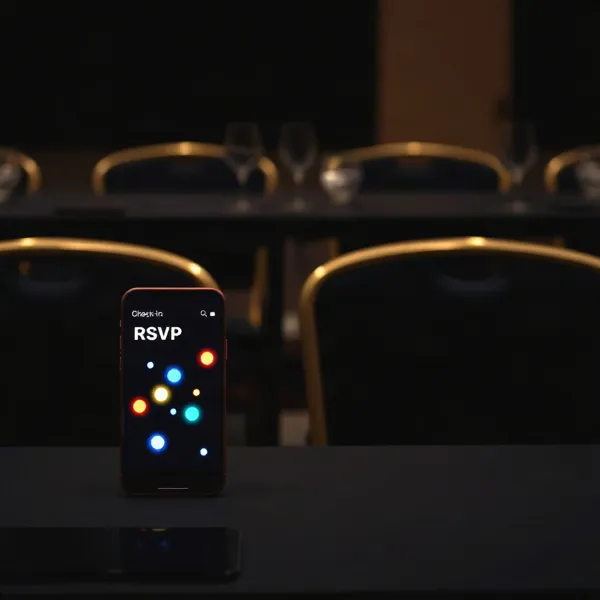
Measure More Than Replies
Switching from paper, calls, or email to SMS RSVPs is an operational investment, not a promise of fuller rooms or lower costs. A quick reply tells you someone intends to attend. It does not show whether they arrive.
For a nonprofit or school, the possible return reaches beyond response counts: earlier replies can sharpen headcounts, reduce manual follow-up, and give staff more time to coordinate logistics. Timely reminders and event updates can also help people stay connected to the community.
Those are outcomes to test, not guaranteed results. The available sources describe useful SMS tactics, but do not establish a quantified financial return from switching to SMS RSVP systems. Evant connects SMS RSVPs with event check-ins, targeted messaging, CRM integration, and analytics, giving organizers ways to examine the wider workflow.
A fair evaluation should compare total system and messaging costs with RSVP and attendance outcomes, staff effort, and message engagement. Count replies, but also track who checks in and how much work it takes to get there.
RSVPs Record Intent, Not Attendance

RSVP comes from the French phrase répondez s’il vous plaît, or “please respond.” An invitation asks each guest to say whether they plan to attend, usually by a stated deadline. Evant’s SMS RSVP tools can capture those replies and connect them with event check-ins, keeping intended attendance distinct from arrivals.
A “yes” is a statement of intent, not a promise. A guest may confirm and later face a schedule conflict, become ill, or simply change plans. A reply count therefore tells organizers who expects to come, but not how many people will walk through the door.
That distinction still makes replies useful. Organizers can use them to estimate food quantities, arrange seating, schedule staff, and prepare supplies. Then, at the event, check-ins provide the separate record of who actually arrived. Comparing the two helps teams see where the headcount changed and plan more accurately next time.
For ROI, count both steps. A rise in confirmations alone does not show that attendance improved or that the event delivered financial value. Evant combines SMS RSVPs with event check-ins and analytics, giving organizations a way to assess replies alongside attendance rather than treating them as interchangeable.
This separation also helps when comparing communication methods: track who received an invitation, who replied, and who checked in. For a closer look at keeping confirmations distinct from arrivals, see reliable RSVP tracking.
Build a Low-Friction SMS RSVP Flow

Start with permission, not a surprise text. Invite people who have agreed to receive messages, identify your organization and event, then make the reply simple: “Reply YES to attend or NO if you can’t make it.” Include the date, time, and location so recipients can decide without hunting for details.
If you need meal choices, accessibility needs, or other details, keep the next step mobile-friendly. A short registration link can collect the information, or a keyword reply can prompt a brief follow-up form. Evant supports SMS RSVPs and targeted messaging, giving nonprofits and schools a way to connect event responses with attendee communication.
Confirm each response automatically. Repeat the event details, acknowledge whether the person is attending, and explain how to change their RSVP. That confirmation gives guests a useful record and gives organizers a chance to correct inaccurate information before planning is finalized.
Capture replies in an event list or CRM instead of copying them by hand between messages and spreadsheets. Evant includes CRM integration and event check-ins, so RSVP information can support planning and help teams keep communication connected to event operations. For a practical look at the response workflow, see letting guests confirm by text.
Once someone confirms, send only useful follow-ups, such as a reminder or a change to parking or the venue. Identify your organization in every message and make opting out clear, for example, “Reply STOP to opt out.” Get permission before sending and honor opt-out requests promptly. A clear, respectful flow makes it easier for guests to respond and for organizers to act on those responses.
Compare Channels With Local Results

SMS can put a simple RSVP action close at hand: guests can reply with a keyword or tap a link. Email gives organizers more room for schedules, directions, and other details, but either message can be overlooked. Evant supports SMS RSVPs and targeted messaging, so organizers can use texts for concise prompts while keeping longer explanations in email.
A reported lead-generation finding put average text reply rates at 50%, compared with 1.4% for email replies. Those figures describe replies in that specific context, not event RSVPs, so they should not be used to predict attendance or RSVP results.
For event planning, define RSVP completion rate as the share of invited recipients who submit an RSVP. Greenvelope reported a median response rate of 85.3% across 70,624 events on its digital invitation platform, but the figure is platform-specific and does not compare SMS with email. It is a reference point, not a forecast for a different audience or campaign.
Results can vary with the audience, event type, invitation quality, and reminder schedule. Compare channels using similar audiences and campaigns, and count responses against the number of people invited. Evant’s SMS and event-management tools can help teams connect messages with RSVP and check-in activity, making it easier to assess whether replies became attendance.
A practical division of labor is to send a short SMS prompt or reminder and use email for fuller event information. Track each channel separately, including invitations sent and completed RSVPs, rather than combining results into one rate. That local comparison gives organizers a sounder basis for deciding which channel fits each event.
Set Benchmarks for Campaign Responses
What counts as a good SMS response rate for an event or nonprofit campaign? A response rate of about 18 to 28% is a useful reference for nonprofit and charity SMS campaigns, not a promise of what an event invitation will achieve. Audience, message, and campaign goal all affect the result. Treat the range as a starting point, then build a baseline from your own campaigns.
Calculate the rate by dividing replies by successfully delivered texts, then multiplying by 100. If 100 texts reach their recipients and 20 people reply, the response rate is 20%. A reply is not always an RSVP: someone may tap a link or complete a form without texting back. Track RSVP completions separately, using your event tool or registration records.
Compare campaigns with similar audiences, goals, and message timing rather than treating every send as an equivalent test. A reminder to confirmed guests is different from an invitation to a broad community list. Evant brings SMS messaging, RSVPs, event check-ins, and analytics together, helping teams view replies alongside event activity instead of relying on a single campaign number.
Keep each message concise and relevant, with one clear action, such as replying to confirm or tapping an RSVP link. Faster replies can give organizers earlier notice of likely attendance, helping them adjust plans while there is still time. That operational benefit does not, on its own, prove a financial return.
Read response rate alongside registrations, attendance, donations when relevant, and opt-outs. A high reply rate may not mean more people arrived, and an increase in opt-outs can signal that messages are poorly timed or not useful. Evant’s event check-in and analytics features can help organizations connect messaging activity with participation, while comparisons across similar campaigns show whether results are changing.
Define Conversions Before Counting Them
A text reply is not automatically a conversion. First decide what action the campaign is meant to produce: an RSVP confirmation, a completed registration, or a check-in. The right measure depends on the goal and the audience, so one conversion rate cannot describe every event campaign.
A broad reference sometimes used for nonprofit SMS is a 0.5 to 1.2% conversion rate. Treat it as context, not a firm target or an event-specific finding. An invitation to an opted-in audience that already knows the organization may behave differently from a general fundraising message.
Calculate the rate by dividing completed actions attributed to the campaign by successfully delivered texts, then multiplying by 100. Count only the action you defined in advance. For example, if the goal is registration, a click on the RSVP link is interest, not a completed registration.
Track each stage separately: message delivery, RSVP response, completed registration, and actual check-in. That makes it easier to see where people drop off. Evant brings SMS messaging, RSVPs, event check-ins, and analytics into an event workflow, giving teams practical stages to monitor rather than treating replies as the whole result.
To improve the rate, send targeted messages with one clear call to action and keep the RSVP or registration flow simple. Compare campaigns only when they use the same conversion definition and denominator. Otherwise, a higher rate may reflect a different goal or audience, not a better message.
Attribution also has limits. Invitees may see an email, social post, or other reminder before taking action, making it hard to assign the result to SMS alone. State how you attributed conversions, keep the method consistent, and report uncertainty instead of presenting the rate as proof that one channel caused the outcome. For broader campaign measurement, see SMS metrics for community engagement.
Protect Engagement by Respecting Preferences
A useful working benchmark is to keep SMS opt-outs below 1.5% per campaign. Treat it as a signal, not a universal rule: unsubscribe levels can vary with the audience, message purpose, and timing. Evant’s analytics can help organizations review campaign activity alongside replies, clicks, and RSVPs, rather than judging success by response volume alone.
Watch for sudden opt-out spikes and trace them to the campaign, audience, or message that may have prompted them. Explain at sign-up what kinds of texts people will receive and how often. Clear expectations help prevent a reminder from feeling like an unexpected promotion.
Relevance matters more than sheer frequency. Evant’s targeted messaging supports sending updates to appropriate groups, such as volunteers, event registrants, or community members with a shared interest, instead of texting everyone about everything. Keep messages useful, choose sensible send times, and offer preference choices where available.
Make opting out easy and honor requests promptly. A smaller list of people who want to hear from you is more valuable than a larger list that receives unwanted texts. For practical guidance on respecting preferences in RSVP campaigns, see protecting supporter relationships with clear opt-outs.
Consent is not just a setup step. It shapes whether people continue to trust an organization with their attention. For nonprofits, schools, and community groups, that trust supports participation over time, even when a particular message does not produce an immediate RSVP.
Count Every Part of SMS Cost
A low per-text rate can make an SMS RSVP program look inexpensive. The bill may tell a different story once you count message segments, carrier fees, and platform charges.
As a general U.S. estimate, bulk SMS often costs about $0.01 to $0.05 per message. Rates vary by provider and plan. For example, Twilio lists a base rate of $0.0083 per U.S. SMS segment, before applicable carrier fees. That is a provider-specific starting rate, not a universal total price.
The final cost depends on more than how many people are on the invitation list. Destination and carrier affect rates, and MMS messages can cost more than SMS. Long texts may be split into multiple billable segments, so a message that looks like one text to a guest may incur multiple charges.
Check for platform subscriptions, phone-number fees, registration or setup charges, and paid add-ons such as advanced analytics or integrations. Ask for a complete pricing breakdown, including carrier fees and how message length is counted, rather than comparing headline rates alone.
Then compare that full expense with the outcomes you can measure: RSVP completion, attendance, check-ins, and staff time spent on follow-up. For a nonprofit or school, include implementation and ongoing staff time where relevant. Evant combines SMS RSVPs, event check-ins, targeted messaging, CRM integration, and analytics, so teams can assess communication alongside event operations. None of this guarantees savings; the useful comparison is your actual costs and results against the process you use now.
For a broader look at how message fees fit into an event program’s cost assessment, see counting every part of SMS cost.
Choose SMS Reach or RCS Richness
SMS keeps event communication simple: a short message can carry a reminder, a schedule change, or a prompt to reply YES or NO. Because it works across a broad range of mobile phones, it is a practical choice when the main goal is reaching the whole invited list. Evant’s SMS RSVP and targeted messaging tools suit these direct, text-based exchanges.
RCS can add more to the conversation. Depending on the recipient’s device and service, an event message may include a branded sender identity, images, video, interactive buttons, suggested replies, calendar details, or location sharing. Those features can make it easier to review event information or choose an action without opening a separate form.
That richer format does not guarantee wider reach. RCS availability varies with device compatibility, messaging app, carrier support, and market. A community organization should check its audience before relying on it, especially when a message contains essential logistics. SMS remains the safer default for broad delivery; RCS is worth testing when visual detail or interactive choices add a clear benefit.
A hybrid setup can send RCS to supported devices and fall back to SMS for others, keeping the basic message accessible. This fits the channel-planning approach described in Evant’s guide to SMS and RCS adoption.
Treat any change as a pilot, not a promised return. Compare delivery, replies, completed RSVPs, attendance or check-ins, and total messaging cost across comparable campaigns before expanding. The available information does not establish that RCS improves event RSVP results or delivers a specific ROI.
Run a Measurable Pilot
Before replacing an RSVP process, record how it performs now: replies, check-ins, staff time, and direct costs. Then test SMS with one event or a defined group, tracking the same measures alongside message and platform fees and opt-outs.
Compare similar events or audience groups, and note other factors that may affect results. Faster replies or greater visibility are possibilities to measure, not guaranteed gains. Evant brings SMS RSVPs, event check-ins, targeted messaging, and analytics into a workflow, giving nonprofits and schools practical measures to review together.
Keep email, calls, or other channels where they suit attendees better. Expand SMS only when the pilot shows value against the organization’s actual goals, such as more reliable attendance data or less staff follow-up. A small, honest test is more useful than assuming a channel change will pay for itself.
Related Blogs

Evant vs Tithe.ly Messaging: Church Texting Compared (2026)
Michael PedoeemTithe.ly bundles texting into its church management plans. Evant focuses on texting that gets a response. Here is how the two compare.
Evant vs Clearstream: Church Texting Compared (2026)
Michael PedoeemClearstream is built for high-volume church texting. Evant is built to get a response. Here is how they compare on price, calls, RSVPs, and giving.
Evant vs Text In Church: Which Is Better for Your Church? (2026)
Michael PedoeemText In Church is built for guest follow-up. Evant is built to get people to reply, RSVP, and give. Here is how the two compare in 2026.