
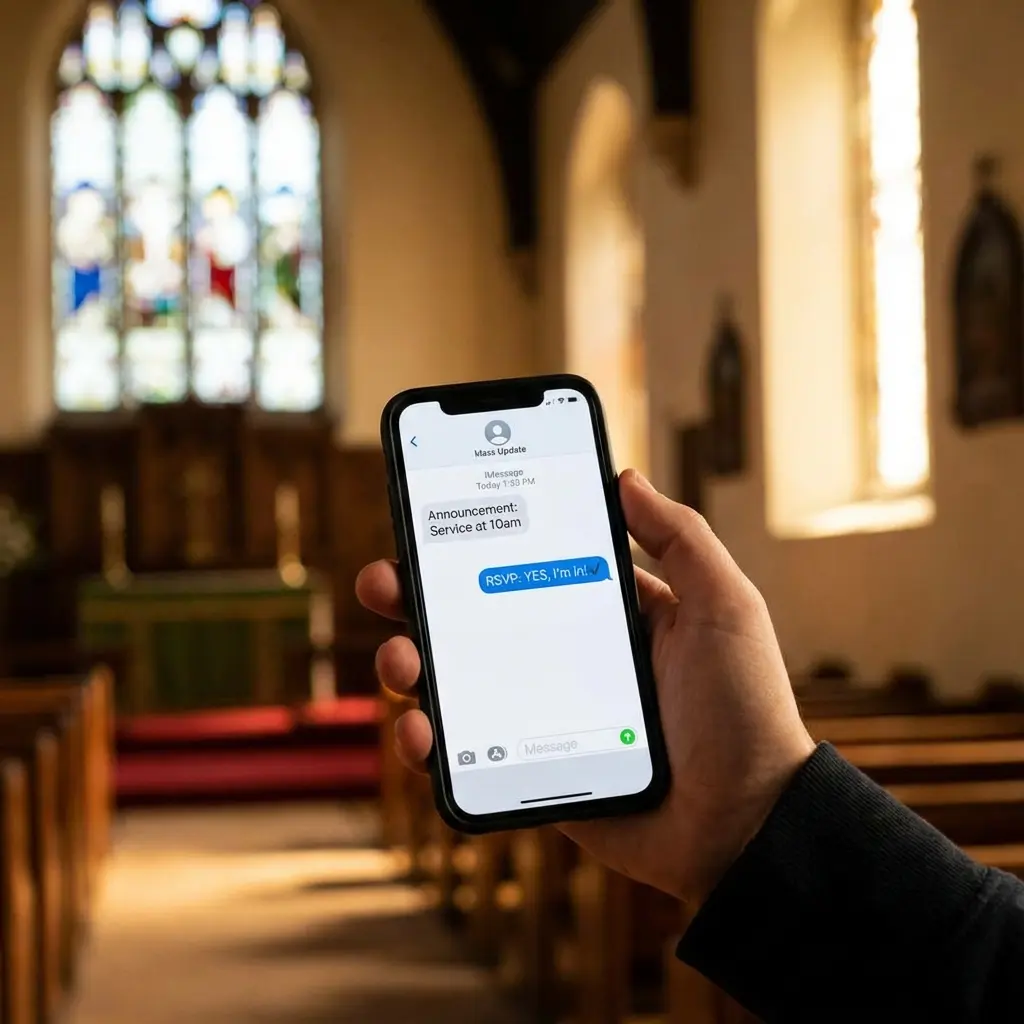
I'm seeing churches make the same mistake when they start shopping for text messaging platforms. They grab a regular SMS service because it's cheap and familiar. Then six months later, they're wondering why nobody responds to their messages.
The problem isn't the technology. It's that generic SMS services weren't built for communities. They were built for marketing blasts and appointment reminders. When you try to build genuine community engagement on that foundation, critical capabilities just aren't there.
Let me break down what actually matters when you're choosing a platform, based on patterns I'm observing across churches that get this right.
The Three Capabilities You Can't Build Community Without
Churches tell me they need bulk texting and maybe some basic scheduling. That's thinking about the tool wrong. You're not buying a broadcast system. You're building communication infrastructure that either enables real engagement or quietly kills it.
Here are the three non-negotiables I've seen separate platforms that work from platforms that waste your time.
Personalization That Actually Scales
Generic SMS services let you blast the same message to 500 people. Great. But your youth pastor needs different information than your small group leaders, and first-time visitors need different follow-up than members who've attended for years.
Personalization means segmentation that doesn't require a database degree. You need to tag people by ministry involvement, attendance patterns, and engagement level. Then you need to send targeted messages without manually sorting through spreadsheets every time.
When churches skip this capability, they default to one-size-fits-all messaging. It feels generic because it is generic. People tune out because the messages don't apply to them. You're creating noise instead of connection.
RSVP Triggers That Remove Friction
Here's where the difference becomes obvious. Imagine you're coordinating a volunteer event. With a generic SMS service, you send a message with a link to a form. People have to click through, wait for a page to load, fill out fields, and submit.
With RSVP triggers, they reply with a single keyword. Text "YES" to confirm. Text "MAYBE" if you're unsure. That's it.
I'm watching this play out in real implementations. Text-based RSVP systems using keyword triggers achieve up to 95% show rates for events. Compare that to traditional methods where you're lucky to get 60% of confirmed attendees to actually show up.
The reason is simple. Replying to a text takes three seconds. Filling out a form takes three minutes and requires you to switch contexts. That friction matters more than you think. When responding is effortless, people respond.
Data Tracking That Shows What's Working
Generic SMS services tell you how many messages you sent. Church-specific platforms tell you who opened messages, who responded, who attended events, and who's falling through the cracks.
This isn't about surveillance. It's about not losing people. When a first-time visitor stops engaging after three weeks, you need to know. When small group attendance drops, you need visibility into patterns before the group dissolves.
Churches using platforms with proper tracking capabilities report a 27% increase in overall attendance. The difference comes from personalized follow-ups that happen because the system flags people who need attention. Without tracking, those people just disappear.
The Strategy Problem That Happens Before You Choose a Platform
Most churches fail at text communication before they even evaluate tools. You're focused on logistics when you should be focused on engagement.
I see this pattern constantly. Churches use texts for ministry schedules, event announcements, and internal coordination. All logistical. All focused inward. Then they wonder why engagement drops.
Your text strategy needs to meet people where they are, not just tell them where to be. That means mixing logistical messages with encouraging content, relevant resources, and personalized check-ins.
The data backs this up. Text messages achieve a 98% open rate compared to email's 20% open rate. People are almost five times more likely to respond to texts than emails. But that advantage disappears fast if every message feels like an administrative notification.
Here's the framework I recommend. For every three messages you send, two should add value without asking for anything. One can be logistical or ask for action. That ratio keeps you relevant instead of annoying.
The Frequency Question Nobody Gets Right
Churches either text too much or too little. Both kill engagement.
Too much texting turns you into spam. People start ignoring your messages or opting out entirely. Too little texting means you're not top of mind when people make decisions about where to invest their time.
The pattern I'm seeing work: 1-2 planned messages per week, plus event-specific alerts. That's enough to stay present without becoming background noise. But it depends on your segmentation. Your core volunteers can handle more frequent communication than casual attendees.
This is where church-specific platforms matter. Generic SMS services don't let you manage frequency by segment. You're stuck choosing between annoying your casual members or under-communicating with your engaged ones.
The Hidden Costs Sales Demos Skip Over
Generic SMS services look cheap until you factor in what they don't tell you upfront.
Starting February 1, 2025, unregistered long-code SMS traffic can be blocked entirely by U.S. carriers. That's because of mandatory A2P 10DLC registration requirements. If your platform isn't compliant, your messages get filtered as spam or blocked completely.
Most generic services don't handle this registration for you. You're responsible for navigating carrier requirements, maintaining compliance, and dealing with deliverability issues. Church-specific platforms build this compliance into their infrastructure.
Then there's the integration problem. Your generic SMS service doesn't talk to your church management system. So you're manually exporting contact lists, importing them into your texting platform, and trying to keep everything synchronized. That's time your staff doesn't have.
The real cost isn't the monthly fee. It's the hours spent wrestling with workarounds and the engagement you lose when messages don't reach people or feel impersonal because you can't access the data you need.
How to Evaluate Platforms Using Your Actual Variables
Every church operates differently. Your evaluation framework needs to account for your specific situation.
Start with these questions:
How many distinct groups do you need to communicate with? If you're just doing church-wide announcements, a simple tool might work. If you're coordinating multiple ministries, age groups, and volunteer teams, you need serious segmentation capabilities.
Who manages your communications? If you have dedicated staff, you can handle more complexity. If you're relying on volunteers, you need a platform simple enough that someone can figure it out without training.
What systems do you already use? Your texting platform needs to integrate with your church management software, event registration tools, and giving platform. Otherwise you're creating data silos that make personalization impossible.
What's your growth trajectory? If you're stable at 200 people, your needs differ from a church expecting to double in two years. Pick a platform that scales with you instead of forcing a migration later.
The Decision Framework That Actually Works
Here's how I'd approach the evaluation if I were doing it today.
Step one: List your must-have capabilities. Not nice-to-haves. Must-haves. For most churches, that's personalization, RSVP triggers, and basic tracking. Write them down before you look at any platforms.
Step two: Test the user experience. Sign up for trials and actually use the platform. Send yourself test messages. Try setting up an RSVP campaign. See if you can segment contacts without reading documentation. If it's confusing for you, it'll be impossible for volunteers.
Step three: Calculate total cost. Monthly fee plus setup costs plus integration costs plus training time. Generic platforms look cheaper until you factor in the hours you'll spend on workarounds.
It depends on your specific situation, but for most churches, a platform built specifically for church communication will save you time and increase engagement enough to justify the cost difference.
What Evant Gets Right That Other Platforms Miss
I've looked at dozens of church texting platforms. Most either oversimplify and leave out critical features, or they overcomplicate and require a technical background to use effectively.
Evant built their platform around the RSVP trigger capability specifically. That's not an add-on feature. It's the foundation. When someone texts a keyword, the system can automatically add them to a list, send confirmation details, and trigger follow-up sequences.
Here's a concrete scenario. You're planning a volunteer training session. You send a text: "Reply TRAINING to sign up for next Saturday's session." People respond with that single word. Evant automatically confirms their registration, adds them to the attendee list, sends them location details, and queues a reminder for Friday.
That workflow would require multiple tools and manual steps with a generic SMS service. With Evant, it's built in.
The other thing Evant handles well is the compliance and deliverability piece. They manage carrier registration, monitor delivery rates, and handle the technical infrastructure so you don't have to think about it.
Best Practices That Work Regardless of Platform
Your platform choice matters, but your communication strategy matters more. Here's what I'm seeing work across churches using different tools.
Keep messages short and action-oriented. You have seconds of attention. Get to the point. If you need to share detailed information, text a summary with a link to the full details.
Use conversational language. You're texting people, not broadcasting announcements. Write like you're sending a message to a friend. Skip the formal church language.
Make opting out easy and obvious. Include opt-out instructions in your first message to new contacts. It builds trust and keeps you compliant. People who want to stay will stay. People who don't were never going to engage anyway.
Test everything before sending to your full list. Send test messages to yourself and a few staff members. Check how they display on different phones. Verify that links work and RSVP triggers fire correctly.
Track what works and adjust. Look at your response rates. Which messages get replies? Which get ignored? Double down on what's working and cut what isn't.
The Compounding Benefits of Getting This Right
Your communication infrastructure compounds over time. Get it right from the start and you build momentum. Get it wrong and you're constantly fighting friction.
I'm seeing churches that implemented proper text messaging platforms two years ago now operating with engagement levels that seemed impossible before. They're not working harder. They're working with better infrastructure.
The difference shows up in small ways that add up. More people show up to events because RSVPs are effortless. Fewer first-time visitors fall through the cracks because follow-up is automated. Volunteer coordination takes half the time because communication is centralized.
Research shows that 90% of first-time guests visit a church's website before attending. They're evaluating you before they ever walk through the door. When your communication infrastructure is solid, that evaluation continues positively after their first visit. When it's broken, they disappear and you never know why.
The churches growing consistently aren't doing anything revolutionary. They're doing the basics well, with infrastructure that makes consistency possible instead of exhausting.
What You Should Do Next
Stop using generic SMS services for church communication. You're building on a foundation that wasn't designed for community engagement.
Start by auditing your current communication approach. Map out who you're trying to reach, what messages they need, and how often you're contacting them. That clarity will guide your platform choice.
Then evaluate church-specific platforms against your must-have capabilities. Focus on personalization, RSVP triggers, and data tracking. Test the user experience yourself before committing.
If you're starting from scratch or ready to switch, look at Evant. The RSVP trigger foundation solves the engagement problem most platforms ignore. The compliance and integration pieces remove technical headaches you don't want to deal with.
Your communication infrastructure either enables growth or limits it. Pick tools that compound your efforts instead of creating friction. The difference shows up in every interaction, every event, and every person who stays connected instead of drifting away.
Related Blogs

Got Kicked Out of GroupMe? Look to Evant.
Michael PedoeemGot Kicked Out of GroupMe? The Best GroupMe SMS Alternative for Jewish Communities

How to Send Targeted Alerts During Live Events
Michael PedoeemMastering Targeted Event Alerts: Real-Time Communication Strategies for Nonprofits
Top 7 SMS Trends for Communities in 2026
Michael PedoeemFrom AI-powered responses to text-to-donate and two-way texting — here are the 7 SMS trends every shul, school, and nonprofit needs to know about in 2026