
Why SMS Remains the Backbone of Community Engagement
In the U.S. today almost everyone has a phone—97 % own a cell and 85 % own a smartphone—so a text message lands in a pocket that’s always on. That sheer reach makes SMS the most reliable way to talk to a community. And it’s not just reach: open rates hover around 98 % and click‑throughs are ten times higher than email, meaning your invitation or reminder isn’t just seen, it’s acted on. Because a text hits instantly, people read it within minutes, and two‑way messaging lets them reply in real time—RSVP, ask a question, or confirm a donation on the spot. The result? Faster decisions, higher attendance, and a conversation that feels personal, not like a bulk email. For nonprofits and schools, that immediacy translates into more volunteers, more donors, and smoother event check‑ins—all without the friction of apps or web forms.
Legal Landscape: Is SMS Text Blasting Illegal?
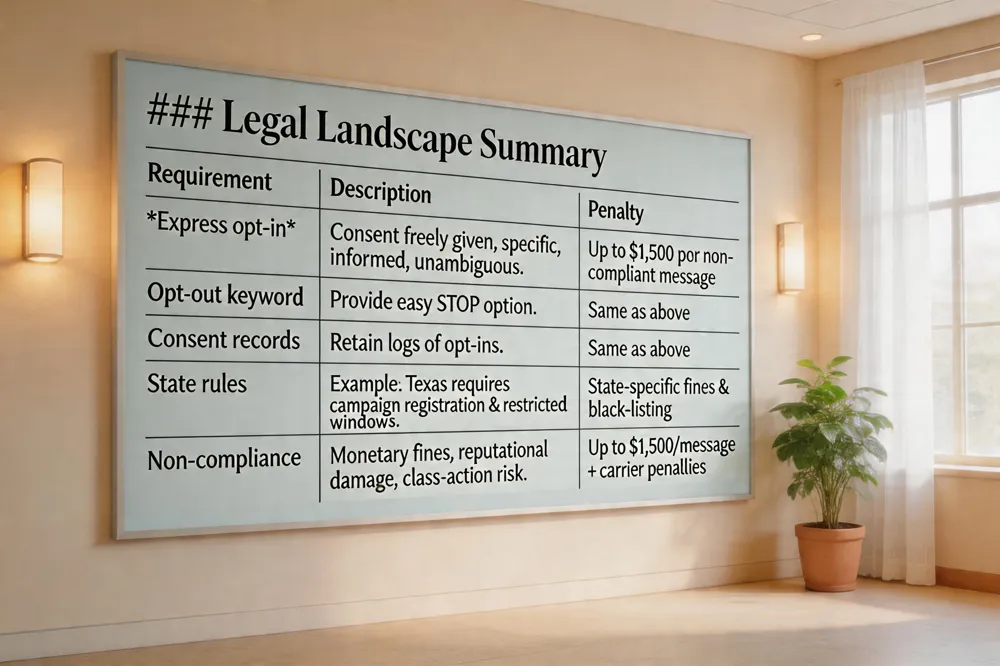 Yes—sending mass, unsolicited text messages (often called “SMS blasting”) is generally illegal under U.S. law. The Telephone Consumer Protection Act (TCPA) requires express opt‑in consent before any marketing SMS can be sent, and a must provide an easy opt‑out keyword (e.g., STOP). Violations can lead to fines up to $1,500 per message, carrier penalties, and the risk of being black‑listed.
TCPA requirements – consent must be freely given, specific, informed and unambiguous; records of that consent must be retained.
State‑specific rules – Texas, for example, mandates registration of the messaging campaign and restricts sending windows to protect consumers from night‑time spam.
Consequences of non‑compliance – besides monetary penalties, organizations face reputational damage, loss of carrier goodwill, and potential class‑action lawsuits.
Bottom line: Only text contacts who have opted in, honor opt‑outs promptly, and keep consent logs up‑to‑date to stay on the right side of the law.
Defining the Community SMS Marketing Platform
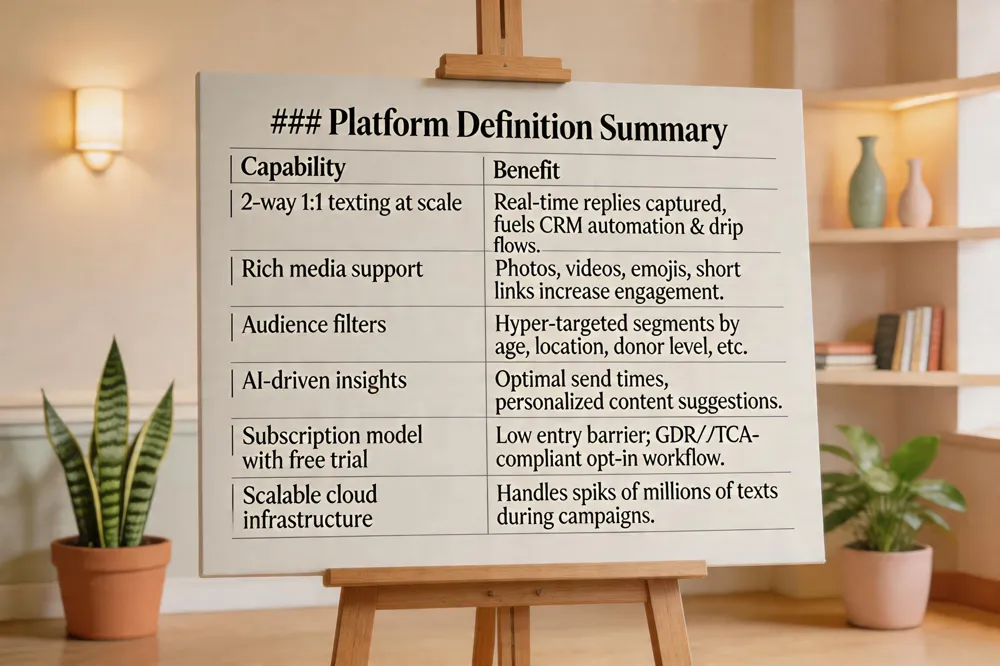 The Community SMS Marketing Platform is a cloud‑based, conversational marketing engine built for nonprofits, schools and other community‑focused groups. At its core it lets you talk to supporters the way they already communicate—by text—so you can reach 98% of Americans who own a phone with a 98% open rate and a 45% response rate.
What makes it scale is two‑way 1:1 texting that works for millions of contacts: every reply is captured in real time, fed back into your CRM (Salesforce, HubSpot, Bloomerang, etc.) and can trigger automated drip flows, RSVP confirmations, or thank‑you notes without a human hand.
Rich media support means you can attach photos, videos, emojis, or short links that turn a bland reminder into an engaging invitation—think a QR‑code flyer or a short donation video that can be opened in seconds.
Audience filters let you slice your list by age, location, donor level, volunteer role or any custom tag, enabling hyper‑targeted campaigns that speak directly to each segment. The platform’s built‑in analytics dashboards show delivery, open, click‑through and conversion rates, while AI‑driven insights suggest the best send times and personalize content on the fly.
All of this lives behind a subscription model with a free trial, a GDPR/TCPA‑compliant opt‑in workflow, and scalable cloud infrastructure that can handle spikes of millions of texts during a fundraising push or emergency alert.
RCS vs. SMS: Pros, Cons, and Adoption Realities
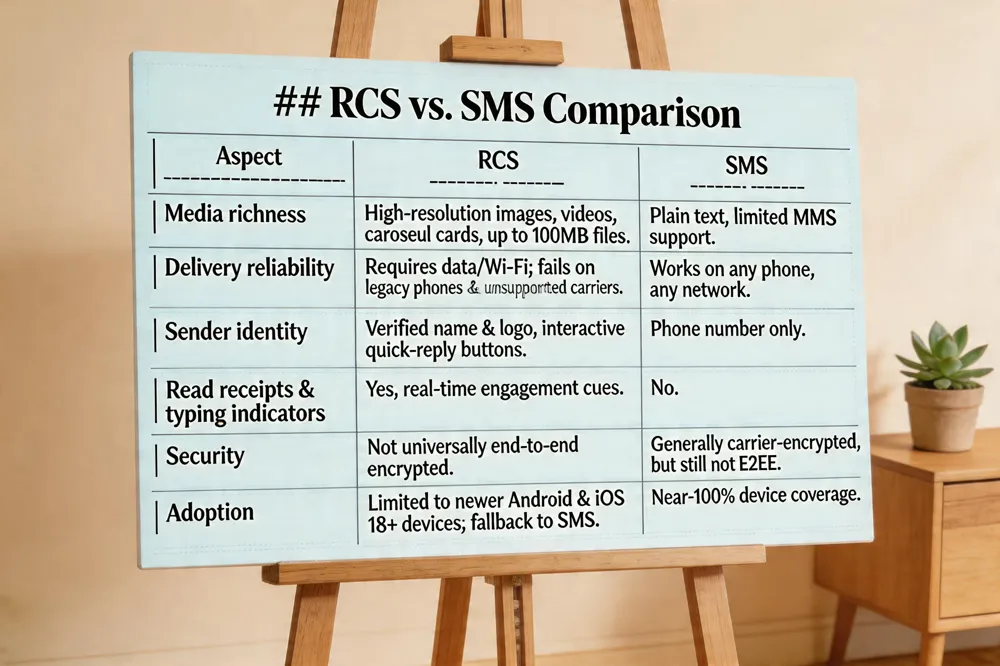 When you think about texting your volunteers or donors, most of us default to plain old SMS because it works on any phone. But the newer Rich Communication Services (RCS) promises a mini‑app experience: high‑resolution images, videos, carousel cards, and even files up to 100 MB can be packed into a single 3,072‑character message. Brands can flaunt a verified sender name, logo, and interactive quick‑reply buttons, while send and read receipts give you real‑time clues about who’s actually engaging. The downside? RCS lives on mobile data or Wi‑Fi, so it fails on legacy phones and on carriers that haven’t rolled out the protocol. In the U.S. you’ll see it on newer Android handsets and iOS 18+ in a few regions, but the majority of contacts still fall back to plain SMS. Security is another gray area—business RCS messages aren’t universally end‑to‑end encrypted, which can be a red flag for sensitive donor data. In practice, many nonprofits run a hybrid strategy: core alerts and RSVP prompts via SMS for reliability, and richer event promos or fundraising videos via RCS where the audience’s device ecosystem supports it.
CRM Integration: SMS Inside Your Database
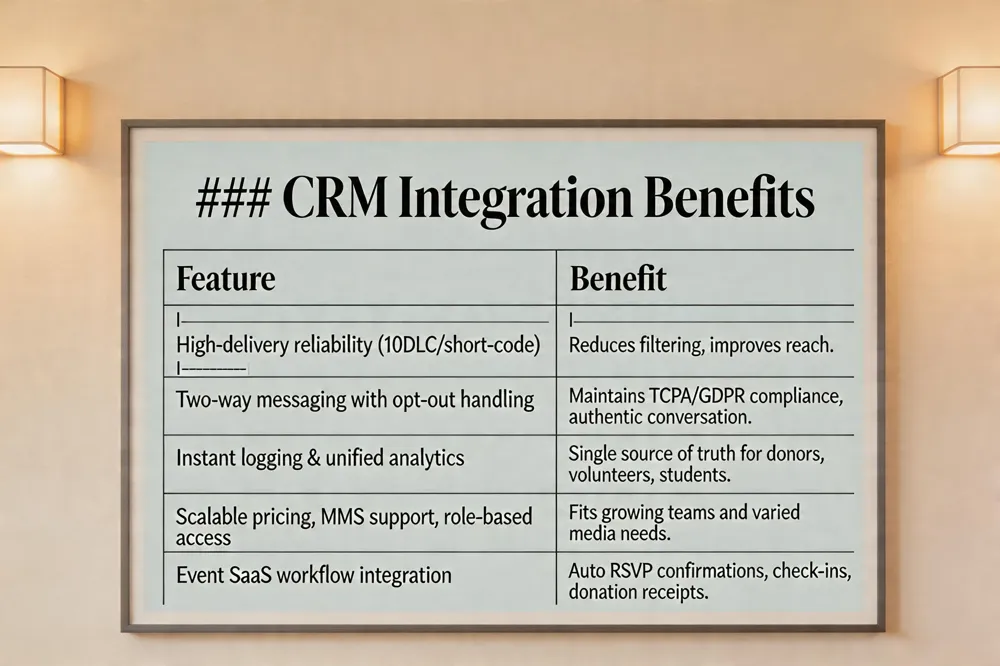 Modern CRMs already speak text. Salesforce, HubSpot, Microsoft Dynamics 365, and Blackbaud all offer native SMS modules or marketplace add‑ons that let you compose, send, and track texts without leaving the CRM. When a platform lacks built‑in messaging, a simple API hookup or no‑code connector—Zapier, Integromat, or Twilio’s Programmable Messaging—bridges the gap, syncing contacts, automating triggers (e.g., new donor, event sign‑up), and logging replies in real time.
Key features to demand
- High‑delivery reliability and carrier‑grade 10DLC or short‑code numbers to avoid filtering.
- Two‑way messaging with opt‑out handling for TCPA/GDPR compliance and authentic conversation.
- Instant logging & unified analytics so every inbound reply, delivery status, and click‑through appears in the CRM’s activity feed, enabling a single source of truth for donors, volunteers, and students.
- Scalable pricing, MMS support, and role‑based access for growing nonprofit teams.
For organizations using Evant’s SaaS platform, SMS is fully baked into the CRM workflow: RSVP confirmations, event check‑ins and donation receipts flow automatically into Salesforce or HubSpot, giving staff real‑time insight and eliminating manual data entry. The result is tighter outreach, better compliance, and higher engagement rates—up to 30 % more attendance and a 10× higher click‑through compared with email alone.
Core Features of a Community App
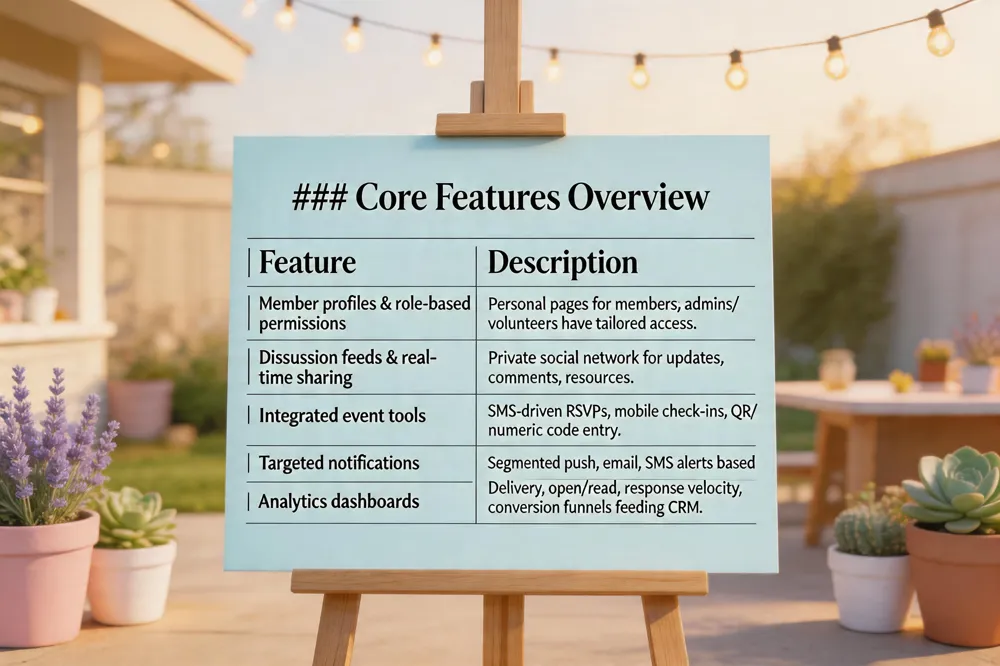 A solid community app starts with member profiles and role‑based permissions—members can create personal pages while admins, volunteers, and staff get tailored access levels to manage content, events, and data. Discussion feeds and real‑time content sharing let users post updates, comment, and exchange resources instantly, fostering a lively conversation hub that feels like a private social network. The app’s integrated event tools lock in SMS‑driven RSVPs and mobile check‑ins: attendees reply to a short text, the system updates the roster live, and on‑site staff scan QR or numeric codes for contact‑less entry, slashing paperwork and no‑shows. Targeted notifications and analytics dashboards round out the experience: segmented audiences receive push, email, or SMS alerts based on interests, past behavior, or location, while real‑time metrics—delivery rates, open/read counts, response velocity, and conversion funnels—feed back into the CRM for unified reporting and continuous optimization. Together, these features give nonprofits and schools a high‑visibility, compliant, and scalable channel for engagement, fundraising, and event management.
Choosing the Best Software for Bulk SMS
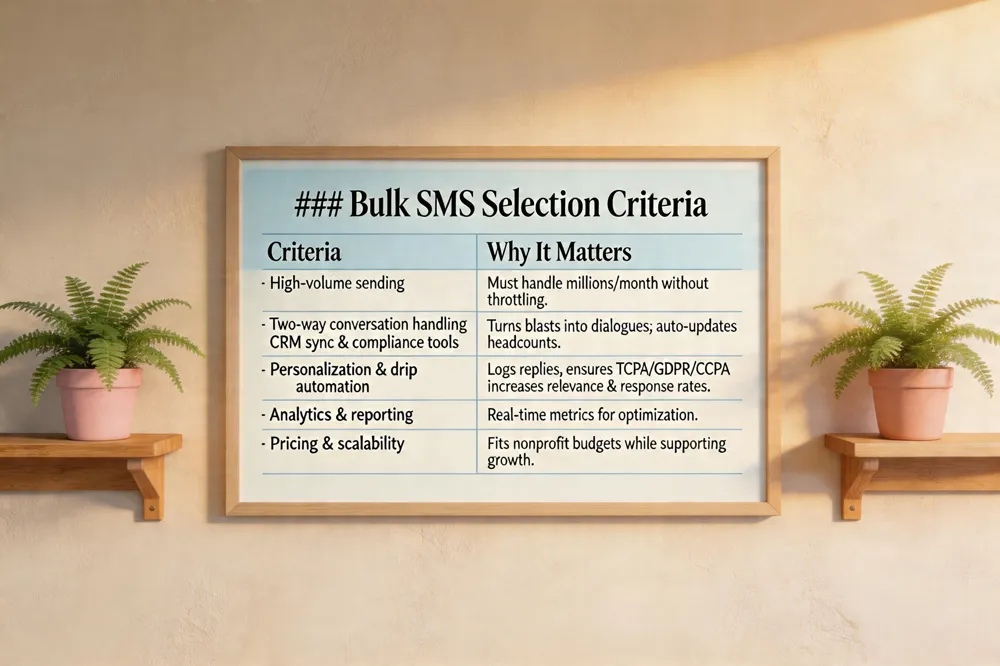 When a nonprofit or school needs to reach thousands of supporters in minutes, the platform you pick can make or difference between a quiet inbox and a buzzing community.
High‑volume sending capabilities – Look for a service that can handle millions of outbound texts per month without throttling. Platforms like TextUs, Twilio, and Infobip boast scalable cloud infrastructure that spikes during fundraising drives or emergency alerts, keeping delivery rates above 98%.
Two‑way conversation handling – Real‑time replies turn a one‑off blast into a dialogue. The best tools give you a shared inbox, keyword routing, and automated RSVP or poll responses, so a “YES” or “NO” instantly updates your headcount.
CRM sync and compliance tools – Seamless integration with Salesforce, HubSpot, Blackbaud, or Bloomerang ensures every reply is logged to a donor’s record. Built‑in opt‑in verification, double‑opt‑in, and easy STOP handling keep you safe under TCPA, GDPR, and CCPA.
Answer: For most nonprofits and educational groups, TextUs is the top choice for bulk SMS because it combines high‑volume sending with two‑way conversations, easy CRM integration, and detailed analytics that keep engagement organized. It also offers dynamic personalization, drip‑campaign automation, and compliance tools that are essential for community outreach. If you need a developer‑focused option, Twilio or Infobip provide robust APIs and global carrier coverage. Other strong contenders include Sinch, Vonage, Bird, Telnyx, Bandwidth, Plivo, and ClickSend, all supporting both web dashboards and API access. Choosing the right platform depends on your need for conversational features, integration depth, and budget, but TextUs consistently ranks highest for the specific needs of nonprofits and schools.
SMS Fundamentals and Etiquette Rules
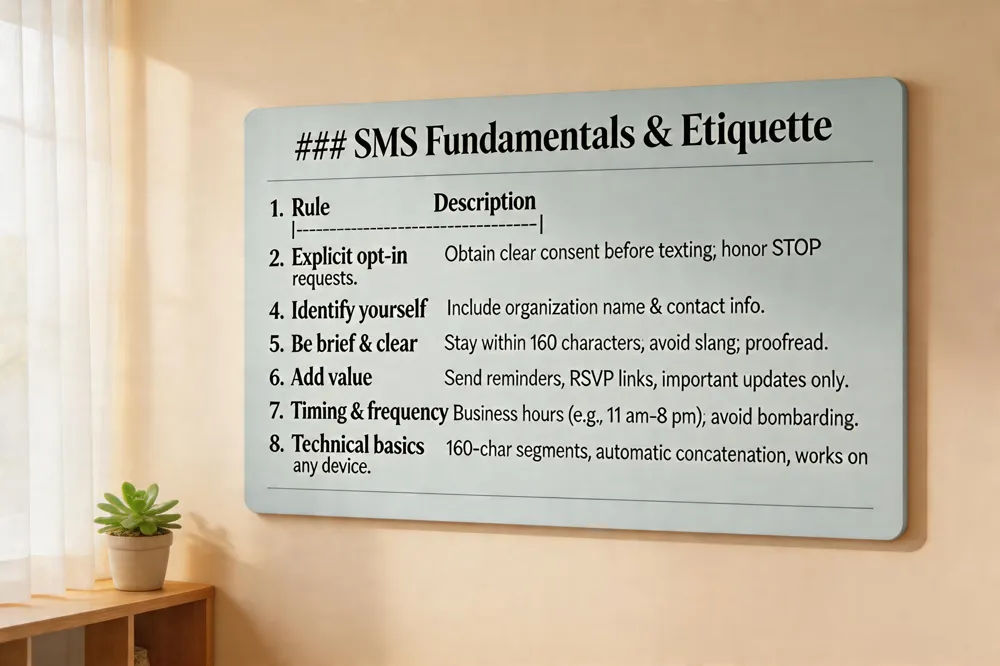 SMS is the old‑school text you all still love – 160 characters per segment, and if you need more, the platform automatically stitches together multiple parts. That concatenation costs a few extra cents and can fragment the message, so keep it concise. The beauty of SMS is its universality: every mobile phone, from a flip‑phone to the latest iPhone, can receive a text without a data plan or an app. That near‑instant, carrier‑wide reach is why nonprofits use it for RSVP reminders, donation alerts, and emergency notices.
What are the main features of SMS?
- Up to 160 characters per segment, with automatic concatenation for longer texts.
- Works on any mobile device and network – no app, no internet required.
- Near‑instant delivery, high open rates (≈98%), and cost‑effective bulk sends.
- Supports two‑way replies, bulk messaging, and integration with CRM integration, analytics, and payment gateways.
- Enables segmentation, personalization, and compliance tools (opt‑in/out, TCPA/GDPR).
What are the essential SMS etiquette rules?
- Explicit opt‑in – get clear consent before you text and honor “STOP” requests immediately.
- Identify yourself – include your organization’s name and a simple way to contact you.
- Be brief and clear – 160 characters is a sweet spot; avoid slang and proofread before sending.
- Add value – send reminders, RSVP links, or important updates, not random promotions.
- Respect timing and frequency – stick to business hours (e.g., 11 am‑8 pm) and avoid bombarding people.
Following these basics lets you tap into SMS’s 98% open rate while keeping your community happy and compliant.
Free RSVP Text Messaging with Evant
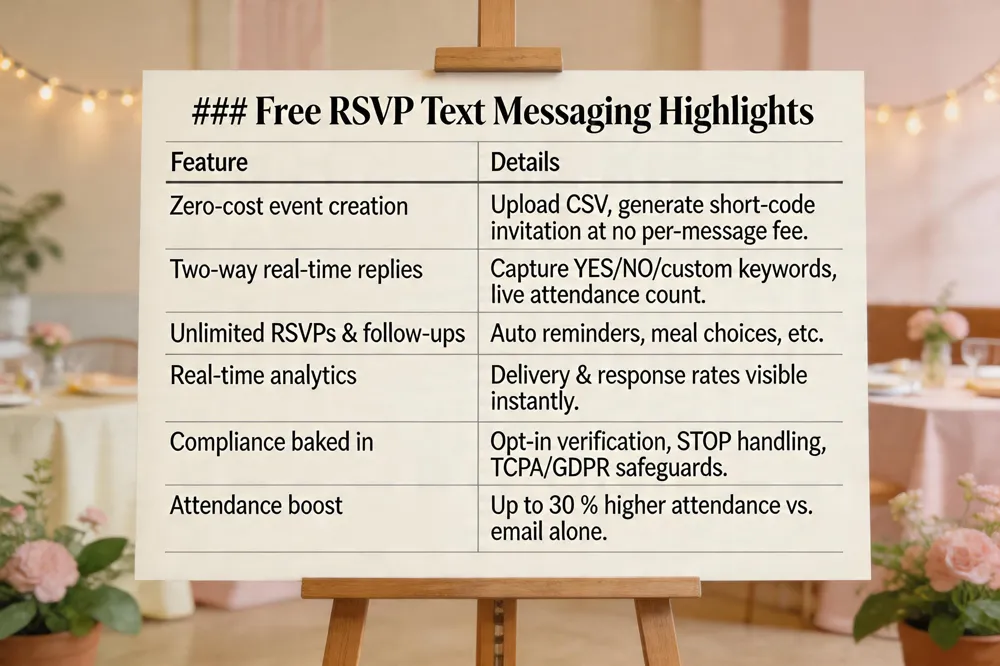 Zero‑cost event creation and guest import are a reality with Evant’s free plan. You simply create an event, upload a CSV of phone numbers, and the platform instantly generates a short‑code invitation. Once the SMS invitation is sent, two‑way messaging captures replies in real time—"YES", "NO", or custom keywords—so you see live attendance counts without any per‑message fees. The free tier lets you track unlimited RSVPs, add automatic follow‑ups (like meal choices or reminder texts), and view real‑time analytics on delivery and response rates. Because SMS boasts a 98 % open rate and most texts are read within minutes, this approach can lift attendance by up to 30 % over email alone. Compliance is baked in: opt‑in verification, easy STOP opt‑out, and TCPA/GDPR safeguards keep you on the right side of the law. In short, Evant’s free RSVP text‑message solution gives nonprofits, schools, and community groups a scalable, instant, and cost‑free way to manage event attendance and boost engagement.
Putting It All Together: Building an Engaged Community with SMS
Building a thriving community via SMS hinges on three pillars: compliance, personalization, and automation. First, obey TCPA and GDPR by collecting explicit opt‑in consent, offering a STOP keyword, and logging consent dates—this shields you from fines and keeps trust high. Next, make each text feel one‑to‑one: insert the recipient’s name, past event history, or location with dynamic merge tags, and segment lists by donor level, volunteer role, or cohort so messages stay relevant. Finally, automate the workflow: schedule RSVP reminders, trigger thank‑you texts after a donation, and set drip campaigns that keep supporters engaged without manual effort. Analytics then close the loop—track delivery, open, response, and conversion rates, compare A/B send times, and adjust content based on what drives attendance or gifts. A platform such as Evant checks these boxes, offering messaging, CRM sync, tools, and a dashboard that turns data into insight, scaling to millions of texts per month.