
A More Direct Way to Reach Supporters
A supporter misses an email about a volunteer shift. A social post announcing a venue change disappears in a crowded feed. The problem is not always the message. It may be the channel.
SMS gives nonprofits a direct way to share timely updates, event details, and clear next steps on supporters’ phones. People can reply to confirm an RSVP, ask a question, or volunteer for an open shift. That exchange can make communication feel less like a broadcast and more like a conversation.
Texting should complement, not replace, email and social media. Email can carry the longer story; SMS can prompt a quick action. A recent guide to launching a nonprofit SMS program recommends fitting texts into existing communications rather than treating them as a separate project.
The practical test is whether messages help people take part: finding event information, checking in, or responding to a last-minute update. Evant connects SMS communication with event tools such as RSVPs, check-ins, targeted messaging, CRM integration, and analytics, helping teams relate outreach to attendance.
The sections ahead look at that event journey, how to choose a platform, when free texting falls short, and what to measure. They also address consent and opt-outs, because direct communication works only when supporters have agreed to receive it.
From Broadcasts to Community Conversation

A useful text does more than announce a date. It gives someone a clear reason and an easy way to take part. Nonprofits can send timely updates about events, programs, open volunteer shifts, urgent closures, or fundraising needs, then invite a reply instead of treating every message as a one-way broadcast.
For an event, that might mean inviting past attendees to save the date, sending registered guests a concise reminder, and sharing a day-of location update. Supporters can RSVP or ask a question by text, while volunteers can confirm a shift or say they are unavailable. Evant’s SMS RSVP and event tools connect messaging with participation, giving organizers a practical way to manage responses and event check-ins.
Relevance matters as much as timing. Segment contacts by their role, interests, location, or past involvement: send a shift request to volunteers, a program update to families who follow that service, and a new event invitation to people who attended a similar gathering. That keeps supporters from receiving every update, even when a single platform serves several parts of the community.
Two-way messaging also gives teams a chance to listen. A simple reply can confirm availability, surface a question, or show whether a call to action is clear. After an event or campaign, thank participants, share what their support made possible, ask for feedback, or invite them to another step. These follow-ups make communication feel like an ongoing relationship, not a string of requests.
SMS works best alongside existing channels and supporter records, rather than as a separate project. NonProfit PRO’s guidance on launching an SMS program recommends connecting texts to an organization’s wider communications. Track RSVPs, attendance, replies, and opt-outs to learn which messages help people participate. Send texts only to people who have agreed to receive them, and make opting out straightforward. For more ways to plan useful updates beyond events, see this guide to SMS community engagement.
Texting Across the Event Journey
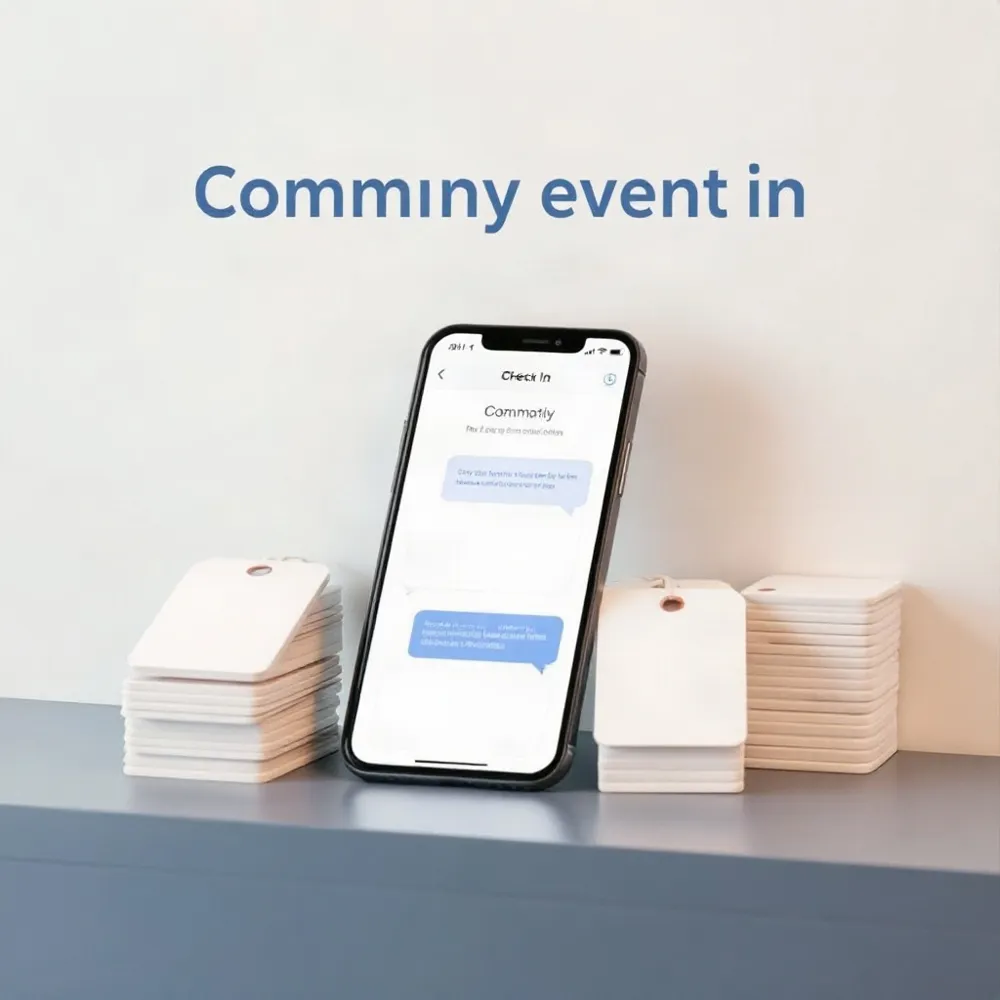
Event texting is more useful as a thread running through the whole experience than as a one-time promotional blast. After someone registers, send a confirmation with the date, location, and a clear way to ask a question. Evant’s SMS RSVP and event check-in tools connect those messages to participation, helping organizers keep track of who plans to attend.
Scheduled reminders can repeat essential details without requiring staff to contact each guest individually. As the event approaches, send directions, parking guidance, check-in instructions, or a note about what to bring. If the schedule or venue changes, target the update to the attendees, volunteers, or staff who need it rather than sending every message to the full list.
Texting can also give people a quick way to respond. Guests can confirm an RSVP or ask where to go, while a volunteer coordinator can check whether someone is available to cover an open shift. Replies help organizers confirm attendance and answer questions without extra phone calls.
Tools That Connect Messages to Attendance

A platform should connect the invitation to what happens at the door. Look for SMS RSVP or registration options, audience segments for attendees, volunteers, and donors, automated reminders, and two-way messaging for questions or last-minute changes. Evant combines SMS RSVPs, targeted messaging, event check-ins, CRM integration, and analytics, bringing communication and attendance records into the same event workflow.
Texting an attendee a reminder is not the same as checking them in. Event-day teams still need a quick, mobile-friendly way to record arrivals and find names, without creating a bottleneck at the entrance. Clear attendance records also help staff follow up with people who registered but did not attend. See how SMS RSVP systems connect messages to attendance.
CRM and marketing-system integration can reduce manual data transfers and preserve RSVP, attendance, and message interactions for later outreach. SMS works best as part of the existing communications setup, rather than as an isolated list; NonProfit PRO’s guidance on launching an SMS program also emphasizes connecting texts with tools such as a CRM, email, and donation forms.
Before choosing a platform, check whether its reports show delivery, replies, clicks, RSVP conversion, and attendance. Use those measures to improve future events, but look beyond headcounts and revenue: meaningful conversations and a supporter’s next step matter too. Confirm that the system is easy for staff to use and supports consent records, opt-out handling, and privacy protections. These safeguards should be part of the workflow, not an afterthought.
Choosing a Service That Fits the Mission
Start with the work, not the software. Decide whether your first goal is higher event participation, volunteer coordination, community updates, or fundraising. Then estimate how many people you will contact and how often. Those answers help narrow the options and keep a new service from becoming an expensive tool your team barely uses.
Match features to the tasks you actually need to handle. A team focused on attendance may need SMS RSVPs, automated reminders, and event check-in. Volunteer coordinators may value two-way messaging and targeted lists for shift updates. Evant connects SMS RSVPs, event check-ins, targeted messaging, CRM integration, and analytics for nonprofits and educational organizations managing event communication.
Check how the service fits with your existing CRM and marketing tools. Connected data can help staff see who received an invitation and who attended, rather than copying contact details between systems. Look at reporting, ease of use, customer support, and whether the platform can handle your event size. A feature list matters less if staff cannot manage the service without adding hours of manual work.
Compare pricing models carefully. Services may charge per message, by subscription, or through a combination of fees, and costs can change as your list and message volume grow. Treat advertised prices as provider-specific, not as a market-wide standard. Ask what happens when you add users, send more messages, or need extra support, and include staff time in your budget.
Before signing up, confirm how the provider handles opt-in records, opt-out requests, and carrier registration requirements. The NonProfit PRO guide to launching an SMS program recommends building texting into existing communications rather than treating it as a stand-alone effort. Evant’s event and messaging tools can sit alongside a nonprofit’s broader supporter communication workflow.
Begin with one manageable use, such as event updates. Test the messages and RSVP process with a small audience, then review replies, attendance, and staff workload. Expand to other campaigns only when the results and supporter feedback show that the service is useful.
For a closer look at how nonprofits assess SMS platforms, see this guide to choosing an SMS provider for event success.
When Free Texting Stops Being Enough
Free texting can be enough for a small gathering: a short contact list, one event, and a simple reminder. If the message is sent once and replies can be handled by hand, paying for a larger system may add little value.
The trade-off appears when the work becomes recurring. Before relying on a free service, check message limits, possible fees, delivery reports, and whether recipients can reply. Also ask whether it can separate audiences, track RSVPs, support check-in, and report attendance. If those steps happen across spreadsheets and inboxes, the apparent savings may come with more staff time.
For U.S. mass messaging from standard ten-digit numbers, carrier registration through the 10DLC program may be required. Confirm with the messaging provider who handles registration and compliance, and ask whether the provider offers a path for nonprofits to manage or reduce those costs.
Keep Messages Relevant and Measure Opt-Outs
An unsubscribe is useful feedback, but the rate needs context. For this article, use below 2% of delivered messages as a directional guide, not a guaranteed industry standard. Calculate opt-outs by dividing the number of people who unsubscribe by the number of messages delivered, then watch how the rate changes over time.
A jump after one message is a reason to investigate, not a verdict on the whole SMS program. Check which message prompted the change, whether it went to a particular audience segment, and where recipients were in the subscriber journey. An event invitation may land differently with recent attendees than with people who have not engaged in months.
Set expectations when people sign up. Explain what kinds of messages they will receive and how often, and text only people who have explicitly opted in. Segment by interests or location so supporters get useful updates, such as an RSVP link for a nearby event or check-in details for a gathering they registered for. Avoid unnecessary messages and inconvenient send times.
Opt-outs are only one part of the picture. Track delivery, replies, clicks, RSVPs, attendance, and completed actions together to see whether messages are helping people participate. Teams using Evant can connect targeted messaging with SMS RSVPs, event check-ins, and analytics, giving them a way to assess communication alongside attendance.
Test wording, calls to action, and send times with care, then compare results across messages and audiences. NonProfit PRO’s guidance on launching an SMS program recommends testing and refining outreach rather than relying on one fixed formula. The same principle applies to unsubscribe patterns: adjust based on what your own supporters do, not on a benchmark treated as a promise.
Consent Is Part of the Communication Plan
A supporter giving a phone number for one purpose has not necessarily agreed to every text that follows. Before sending marketing or fundraising messages, get clear, documented permission. Express written consent is a prudent standard, and nonprofit status should not be treated as an exemption from SMS obligations. The NonProfit PRO guidance on launching an SMS program also emphasizes building a permission-based audience through clear opt-in invitations.
At signup, explain what kinds of messages people can expect, such as event reminders, volunteer updates, or fundraising appeals. Identify your organization in each message, keep records of when and how consent was collected, and protect phone numbers and consent data. Check the federal and state rules that apply to your program, along with carrier requirements. Since obligations can depend on the message and circumstances, ask legal counsel about questions specific to your organization.
Make opting out easy to understand. Include clear instructions, such as replying STOP, and promptly remove the person from relevant lists and automated workflows. Do not resume texting unless they opt in again. Set sending windows with recipients’ local time in mind, and avoid unreasonable hours. A well-managed SMS program, such as Evant’s targeted messaging workflows, can help teams coordinate communications, but the organization remains responsible for its consent practices.
Consent is not the only operational requirement. Applicable application-to-person messages sent from local ten-digit numbers may also need registration through the carrier’s 10DLC process. Ask your messaging provider who handles registration and what information your organization must supply. Build in time for review and budget for possible registration or recurring fees, since costs and approval timing can vary by provider and carrier.
Before launch, review the full path from signup to opt-out: what the form promises, where consent records are stored, which messages are automated, and how a STOP reply affects every connected list. That practical check helps protect supporter trust while keeping event and community messages relevant.
Make SMS Part of the Wider Strategy
A text should fit into the communication work your organization already does, not become another disconnected channel. Email can carry a fuller story or thoughtful donor update; SMS is better suited to a brief RSVP prompt, a schedule change, or a reminder with a clear next step. Social posts, websites, donation and petition forms, and your CRM can all help supporters find the right information and give your team a shared view of engagement.
That connection matters operationally. When SMS works alongside existing supporter records and campaigns, staff can coordinate event invitations, replies, attendance, and follow-up without repeatedly rebuilding contact lists. Evant supports this event-centered approach with SMS RSVPs, check-ins, targeted messaging, CRM integration, and analytics. The broader strategy is also the focus of NonProfit PRO’s guidance on launching an SMS program.
Build the subscriber file through channels supporters already use: add a clear opt-in to relevant forms, invite people through email or social posts, and offer a sign-up during a campaign or event. Explain what kinds of texts they will receive so people can make an informed choice. A permission-based list is more useful than a large one made up of contacts who did not expect messages.
The practical reason to switch is not to text more often. It is to make timely coordination easier, from sending event logistics to managing replies and reducing repeated manual outreach. Teams can connect those workflows with a wider community communication strategy, then review response and attendance data to improve future messages. Results still depend on relevance, consent, suitable tools, and ongoing measurement.
Switch With Purpose
Switching to SMS is not a shortcut around planning. It is a way to make timely community updates and event coordination easier, while giving supporters a simple path to respond. Use it alongside channels that serve other needs, such as email for longer stories and follow-up.
Start with a specific participation goal, such as getting more people to confirm attendance or filling volunteer shifts. Choose a tool that connects messages with event and supporter information. Evant combines SMS RSVPs, event check-ins, targeted messaging, CRM integration, and analytics, helping teams link a text invitation to attendance and follow-up.
Invite people to opt in with a clear explanation of the messages they will receive, then test one focused message with a clear next step. A recent guide to launching a nonprofit SMS program recommends fitting texts into existing communications and testing message tone, timing, and calls to action.
After sending, review replies, attendance, and opt-outs. Use what you learn to adjust the next message, not simply to send more. Respecting supporter preferences while making it easier to respond, attend, and stay connected is what gives SMS a lasting place in community outreach.
Related Blogs

Evant vs Tithe.ly Messaging: Church Texting Compared (2026)
Michael PedoeemTithe.ly bundles texting into its church management plans. Evant focuses on texting that gets a response. Here is how the two compare.
Evant vs Clearstream: Church Texting Compared (2026)
Michael PedoeemClearstream is built for high-volume church texting. Evant is built to get a response. Here is how they compare on price, calls, RSVPs, and giving.
Evant vs Text In Church: Which Is Better for Your Church? (2026)
Michael PedoeemText In Church is built for guest follow-up. Evant is built to get people to reply, RSVP, and give. Here is how the two compare in 2026.