
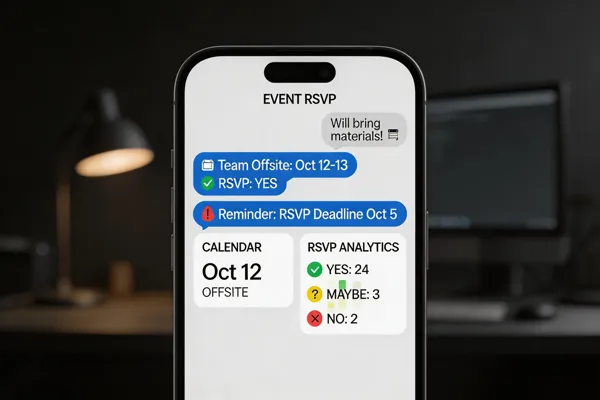
Why SMS Still Rules the Campus and Community Landscape
SMS adoption is now universal in U.S. education and nonprofit circles. Over 95% of 18‑24‑year‑olds own a cell phone, and 97% of those texts within three minutes, while nonprofit open rates hover at 98% and click‑throughs around 45% (Community, 2025). These figures translate into near‑instant reach for tuition reminders, donor appeals, and event RSVPs. The 2026 market environment amplifies this advantage: iOS updates flag unsaved numbers as “Unknown Senders,” making consent‑driven, saved‑contact strategies essential for deliverability. AI‑driven personalization and zero‑party data collection enable hyper‑targeted, behavior‑based messaging, while deep CRM integrations (Salesforce, HubSpot, SIS) sync donor and student records in real time. Compliance tools—opt‑in management, audit trails, and HIPAA/FERPA safeguards—protect organizations from regulatory risk. Together, high adoption, AI‑enhanced automation, and robust integrations cement SMS as the most reliable, high‑impact channel for campus and community event management in 2026.
SMS‑Based Communication in Education – The Core of Instant Campus Outreach
SMS‑based communication in education uses text messaging (SMS) as a direct, low‑cost channel to connect schools, teachers, students, parents, and administrators. It delivers instant notifications—event invitations, schedule reminders, attendance alerts, and emergency messages—with 98% of texts read within minutes and 95% opened within three minutes. Platforms such as Evant, Modern Campus Message, and Mongoose centralize these messages, allowing bulk sends, targeted RSVPs, QR‑code check‑ins, and real‑time analytics. Integration with student information systems (SIS) and CRMs (Salesforce, HubSpot, Slate) syncs contact data, donation histories, and attendance records, creating a single source of truth for outreach. Two‑way conversational SMS drives higher loyalty and reduces opt‑out rates, while AI‑powered keyword handling automates RSVP collection and sentiment analysis. Compliance tools enforce TCPA, FERPA, and GDPR consent, ensuring deliverability and trust. In short, SMS provides a near‑universal, instant, and measurable way to boost campus participation and streamline event logistics.
Is SMS Being Phased Out? – The Reality Behind New Messaging Trends
While newer messaging platforms such as RCS, WhatsApp, and AI‑driven chatbots are gaining market share, SMS is not being eliminated any time soon. Its carrier‑based delivery guarantees reach to every mobile phone, even feature phones, without requiring an app, data plan, or internet connection. This universal accessibility keeps SMS essential for time‑critical alerts, authentication codes, and for organizations that must contact diverse audiences, including families without smartphones. Although costs and fraud concerns are prompting many businesses to shift high‑value, media‑rich interactions to richer channels, they typically retain SMS as a reliable fallback. For nonprofits and schools using Evant, SMS remains a vital, low‑cost backbone for RSVPs, check‑ins and targeted outreach.
Key Features Every SMS Engagement Platform Must Offer Schools and Schools

Two‑way conversational messaging is now the baseline for any school or nonprofit SMS solution. Recipients can reply to RSVPs, confirm attendance, or ask questions, turning a broadcast into a real‑time dialogue that boosts loyalty and reduces no‑shows. Granular audience segmentation pulls data from CRMs (Salesforce, HubSpot) or Student Information Systems (Banner, PeopleSoft) so messages can be targeted by donor history, grade level, class, or language preference, while automated workflows handle reminders and fee collections without manual effort. Integrated event tools—SMS‑based RSVP tracking, QR‑code check‑ins, and scheduled reminder sequences—streamline registration and on‑site verification, cutting check‑in time by up to 70 %. Built‑in analytics dashboards surface open‑rate, response‑rate, click‑through, and conversion metrics, giving organizers a unified view of engagement and ROI. Finally, compliance and security features—opt‑in/opt‑out management, FERPA and TCPA safeguards, carrier‑grade encryption, and audit trails—protect personal data and ensure deliverability in the United States. Together, these capabilities create a frictionless, data‑rich communication loop that drives participation, fundraising, and community building.
Targeting Local Community Members Through SMS – Hyper‑Personal Reach

Organizations can target local community members by slicing their contact database with geographic data—zip codes, city, or neighborhood—combined with interests, past event attendance, donor history, or volunteer roles. This segmentation lets them fire hyper‑personalized texts such as “Save the Date” reminders for a neighborhood clean‑up, volunteer shift confirmations for a specific zip, or donation appeals that reference a recent local fundraiser. Timing matters: AI‑driven send‑time optimization schedules messages when recipients are most likely to read them—often midday for working adults or early evening for parents—while two‑way conversational flows keep the dialogue natural. Compliance is built‑in: platforms like Evant, Community, and Twilio enforce double opt‑in, provide instant opt‑out keywords, and maintain audit trails to satisfy TCPA and GDPR rules. Real‑time analytics track open, reply, and conversion rates, allowing continuous refinement of the SMS strategy to boost local engagement and event attendance.
Text‑to‑Give Solutions – Turning a Simple Reply Into a Donation
A text‑to‑give solution lets donors contribute by sending a keyword to a short code or long‑code number, then receiving a secure link or prompt to enter their credit‑ or debit‑card information. The payment is processed instantly, a receipt is sent via SMS, and the donor’s activity is logged in real time. Keyword‑driven giving—such as texting “DONATE30” to a short code—reduces friction and supports one‑time or recurring gifts, event‑specific fundraisers, and emergency appeals. All reputable platforms must meet PCI‑DSS standards, encrypting card data at rest and in transit, and they often include built‑in fraud detection and audit trails to protect both donor and organization. Seamless integration with CRMs like Salesforce, HubSpot, or Blackbaud syncs donation records, segment data, and engagement history, while analytics dashboards combine SMS metrics (open, click‑through, opt‑out) with revenue and attendance data for a unified view of campaign ROI. For churches and nonprofits, this mobile‑first, low‑friction channel expands reach, boosts participation, and streamlines the donation workflow without needing a website or app.
Free SMS Engagement Platforms Suitable for Education
Several free‑tier SMS tools are well‑suited for schools and nonprofits. Evant offers a free plan that includes basic messaging, RSVP tracking, event check‑ins and analytics, giving educators a ready‑to‑use platform without upfront costs. Twilio provides a limited free sandbox that lets institutions test two‑way texting and integrate with learning‑management systems before committing to a paid plan. TextUs has a starter tier with essential broadcast and reply features, ideal for smaller districts that need simple outreach. Finally, TrueDialog and Mogli both offer free trial periods and modest usage caps that can support pilot projects in K‑12 or higher‑education settings. Core features to look for are two‑way messaging, opt‑in management, CRM/LMS integration, automated reminders, and real‑time analytics. Watch for limitations such as message‑volume caps, lack of MMS or RCS support, restricted API access, and fewer compliance tools, which may require an upgrade as programs scale.
Understanding the Community SMS Marketing Platform

The Community SMS Marketing Platform is a cloud‑based conversational marketing system that lets organizations reach their audience through personalized text messages. It enables users to segment contacts by demographics, location, interests, or other criteria and send targeted SMS campaigns, RSVPs, event check‑ins, and real‑time updates. Integrated CRM and analytics tools provide insight into open rates, click‑throughs, and engagement, helping nonprofits and educational groups streamline communication and boost participation. The platform emphasizes privacy, trust, and a “conversation, than broadcast” approach, delivering high‑open‑rate low‑opt‑out messaging.
Conversational marketing approach – Two‑way messaging replaces one‑way blasts, allowing instant replies, keyword‑driven RSVPs, and AI‑assisted assistants that nurture loyalty and lifetime value.
Segmentation and analytics – Dynamic lists based on donor history, event attendance, or student status enable hyper‑personalized texts; real‑time dashboards combine delivery, response, and attendance metrics for data‑driven decisions.
Privacy‑first design – Built‑in double opt‑in, consent tracking, and compliance with TCPA, GDPR, FERPA, and HIPAA ensure deliverability and protect supporter data.
Best Practices for Nonprofit SMS Marketing

Effective nonprofit SMS marketing hinges on three pillars: consent, relevance, and measurement.
Opt‑in consent and compliance – Begin with explicit, double‑opt‑in checkboxes on donation forms, newsletters, and event registrations to meet TCPA, CAN‑SPAM, and CTIA rules. Keep a built‑in opt‑out link in every message and store consent records in a secure CRM (e.g., Salesforce or HubSpot) to avoid iOS "Unknown Sender" filters that now require a saved contact for deliverability.
Personalization and brevity – Leverage zero‑party data collected from two‑way conversations to segment supporters by donor history, interests, or event attendance. Use dynamic fields (name, gift amount, RSVP status) and AI‑driven content suggestions to keep texts under 160 characters while delivering a clear call‑to‑action. Two‑way messaging can boost click‑through rates by up to 45% and drive higher loyalty.
Cross‑channel promotion and measurement – Promote the SMS opt‑in across email footers, social posts, and peer‑to‑peer texting. Sync SMS interactions with your CRM and analytics dashboard to track open rates (≈98% for nonprofits), response rates, and conversion metrics. Real‑time reporting lets you adjust messaging on the fly, ensuring each campaign is both compliant and results‑driven.
Seamless CRM Integration – How Evant Connects SMS to Your Data Hub
Evant’s platform ships with pre‑built API connectors for major CRMs such as Salesforce, HubSpot, and Blackbaud, allowing a plug‑and‑play link between SMS workflows and your existing data hub. When a supporter replies “RSVP” or checks in via a QR‑code‑linked text, the response is captured instantly and synchronized in real time to the corresponding contact record, updating custom fields like attendance status, donation intent, or volunteer availability without any manual entry. Likewise, outbound SMS campaigns can be triggered directly from CRM workflow rules—e.g., sending a personalized reminder when a donor’s gift anniversary approaches—so messages are always timely and context‑aware. The bidirectional sync also pushes CRM‑generated alerts (new leads, task assignments, or payment confirmations) to staff phones, keeping the team informed on the go. This unified view of each community member streamlines analytics, improves segmentation, and ensures compliance data stays consistent across both systems.
Benefits of SMS for Event Check‑Ins – Speed, Accuracy, and Engagement
Two‑way confirmation flow: Attendees simply reply to a short SMS prompt—e.g., “Reply YES to check‑in”—which instantly records their arrival. Because the conversation is conversational, organizers can send follow‑up questions (dietary needs, session choices) without leaving the text thread.
Real‑time attendance dashboards: Each inbound reply updates a live dashboard that shows who has checked in, who is pending, and overall capacity. This visibility lets staff re‑allocate resources on the fly, send targeted reminders to latecomers, and capture accurate headcounts for post‑event reporting.
Reduced staffing and wait times: With SMS, there is no need for paper sign‑in sheets or barcode scanners. Volunteers can focus on engagement rather than manual data entry, cutting wait times by up to 70% and lowering labor costs.
Overall, SMS check‑ins leverage the 98 % open‑rate and instant delivery of text messages, ensuring every participant can confirm attendance with any mobile phone—no app download or internet required—while providing organizers with immediate, actionable data and a smoother, more engaging event experience.
AI‑Powered Personalization – Scaling Conversational SMS at Campus
AI and automation are now the backbone of modern SMS platforms for schools and nonprofits. Automated flows and branching logic let organizers build behavior‑based journeys—such as drip reminders for tuition deadlines, dynamic RSVP confirmations, or post‑event surveys—without manual effort. When a student replies “YES” to an event invite, the system automatically branches to a follow‑up with a QR‑code check‑in link, while a “NO” triggers a wait‑list offer. Zero‑party data captured from these consent‑driven interactions—like preferred communication times, language, or interest tags—becomes a clean, reliable source for hyper‑personalized messages. AI‑driven keyword extraction and sentiment analysis scan inbound texts in real time, flagging urgency or excitement so organizers can adjust tone or content within minutes. Predictive models then recommend optimal send windows for each segment, boosting open rates that already hover around 98% in education and nonprofit settings. Together, these capabilities transform a simple text channel into a sophisticated engagement engine that drives higher loyalty, lifetime value, and event attendance.
Looking Ahead – Building a Trust‑First, Data‑Rich SMS Ecosystem
The 2026 SMS playbook centers on six core capabilities: (1) two‑way, conversational messaging that replaces one‑way blasts and lifts loyalty; (2) zero‑party data capture through opt‑in, that gives clean, consent‑based insights; (3) AI‑driven automation for personalized flows, branching logic and conversational assistants; (4) trust‑first delivery, where iOS “Unknown Sender” rules and TCPA compliance demand saved contacts and clear opt‑in/out management; (5) deep integration into the marketing tech stack—CRM, loyalty, e‑commerce, help‑desk and analytics platforms—to sync donor or student records in real time; and (6) the emergence of “fandom platforms” that nurture audiences across the entire lifecycle. Looking forward, these fandom platforms will become the hub for fan‑relationship systems, leveraging AI to predict engagement, unifying data across CRMs, event‑ticketing engines, and analytics suites. This tighter tech‑stack weave will turn SMS from a simple alert channel into a data‑rich, consent‑driven engine that fuels personalized outreach, real‑time RSVP handling, and seamless event check‑in for nonprofits and educational institutions.
Related Blogs

Got Kicked Out of GroupMe? Look to Evant.
Michael PedoeemGot Kicked Out of GroupMe? The Best GroupMe SMS Alternative for Jewish Communities

How to Send Targeted Alerts During Live Events
Michael PedoeemMastering Targeted Event Alerts: Real-Time Communication Strategies for Nonprofits
Top 7 SMS Trends for Communities in 2026
Michael PedoeemFrom AI-powered responses to text-to-donate and two-way texting — here are the 7 SMS trends every shul, school, and nonprofit needs to know about in 2026