
Opening the Conversation
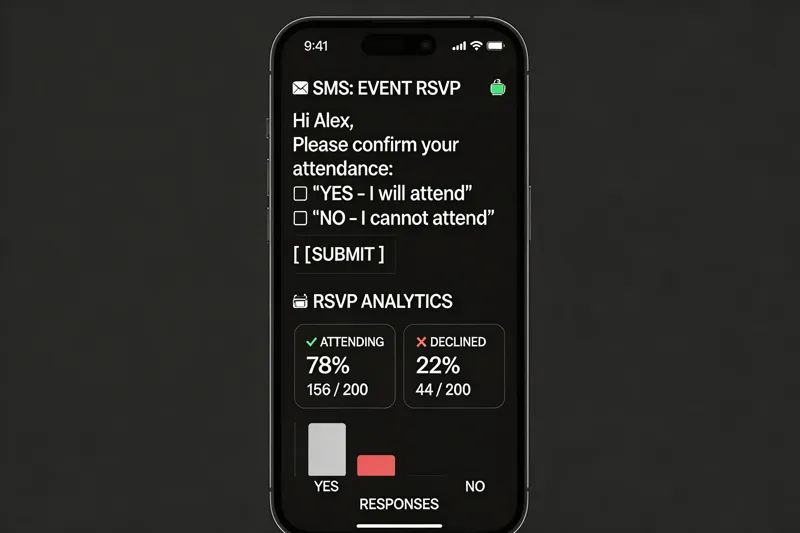
SMS RSVP transforms nonprofit communication by turning a traditional, slow invitation process into an instant dialogue. With open rates near 98 % and most texts read within minutes, organizers receive real‑time confirmations, allowing them to adjust venue size, catering, and staffing on the fly. This immediacy also tackles common communication challenges—email overload, low response rates, and limited internet access—by reaching supporters on their phones. Two‑way texting lets attendees ask questions, update preferences, or cancel with a single reply, reducing no‑shows and administrative workload while strengthening donor relationships. These fast interactions feed directly into CRM systems, keeping records up‑to‑date without manual entry.
Legal Foundations and Consent
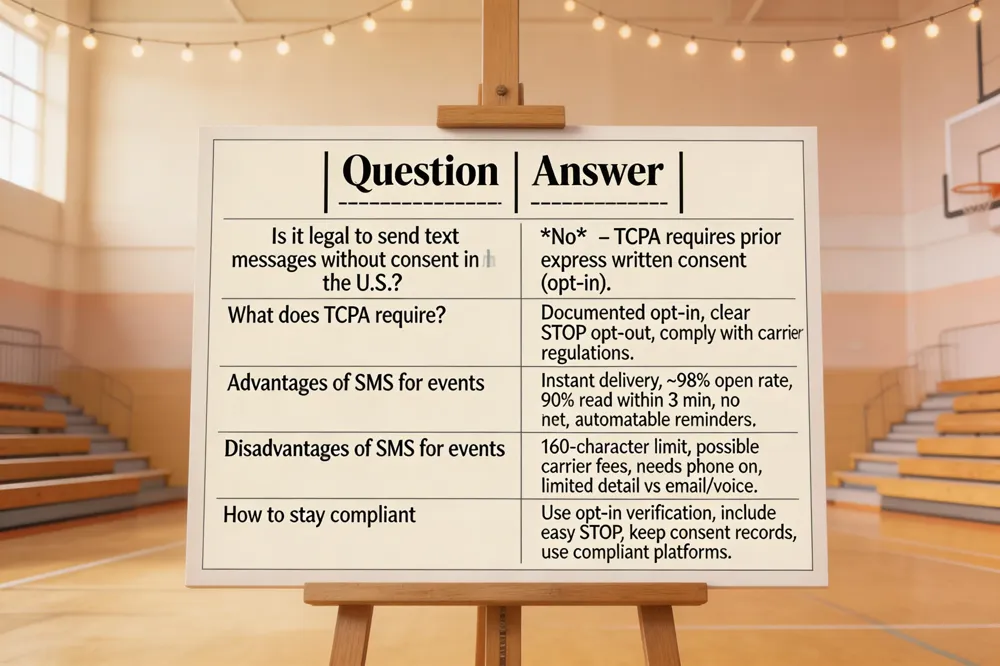
In the United States, nonprofits must follow the Telephone Consumer Protection Act (TCPA) when they send text messages for event communication. The TCPA requires prior express written consent—often called an opt‑in—before any marketing or promotional SMS can be delivered to a personal mobile number. Platforms that manage SMS RSVPs typically include opt‑in verification and easy STOP opt‑out features to keep organizations compliant and protect supporter trust.
Is it legal to send text messages to individuals without their consent in the United States? No. Under the TCPA, sending marketing or event‑related texts without a documented opt‑in is prohibited and can result in hefty penalties.
What are the advantages and disadvantages of using SMS for event communication? Advantages: instant delivery, an average open rate of 98 %, with 90 % read within three minutes, works on any mobile phone without internet, and can be automated for reminders, check‑ins, and real‑time updates. Disadvantages: messages are limited to 160 characters, carrier fees may accrue for high‑volume sends, recipients must have their phones on, and the brevity can limit detailed messaging compared with email or voice calls.
By integrating opt‑in management, bulk sending, and Two‑way replies, nonprofits can leverage SMS’s speed and reach while staying within legal boundaries and minimizing the drawbacks.
Crafting the Perfect Text RSVP
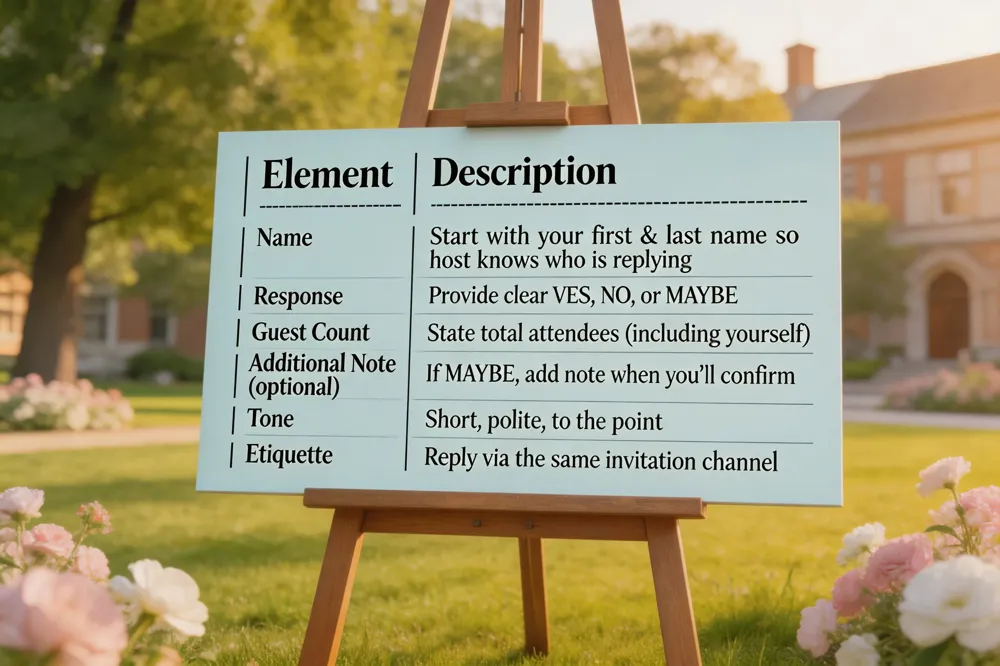
A brief RSVP text should start with your name so the host knows who’s replying. Follow that with a clear answer—yes, no, or maybe—so there’s no ambiguity. Include the number of people who will attend, even if it’s just you. If you’re responding “maybe,” add a quick note about when you’ll be able to confirm. Keep the message short, polite, and to the point.
Is it okay to RSVP via text? Yes—RSVPing by text is both acceptable and increasingly common, especially for nonprofits and schools that rely on quick, mobile‑friendly communication. A clear text RSVP should include your name, a definitive yes/no/maybe response, and the total number of guests you’ll bring, which lets the host track attendance in real time. Because SMS is instant and widely accessible, it speeds up planning, reduces paperwork, and integrates easily with platforms like Evant that capture RSVPs, check‑ins, and analytics automatically. As long as you follow basic etiquette—being polite, concise, and replying to the same channel the invitation came from—text RSVPs are perfectly appropriate. In short, texting your RSVP is not only okay; it’s often the most efficient way to confirm your participation.
How Nonprofits Leverage SMS RSVP
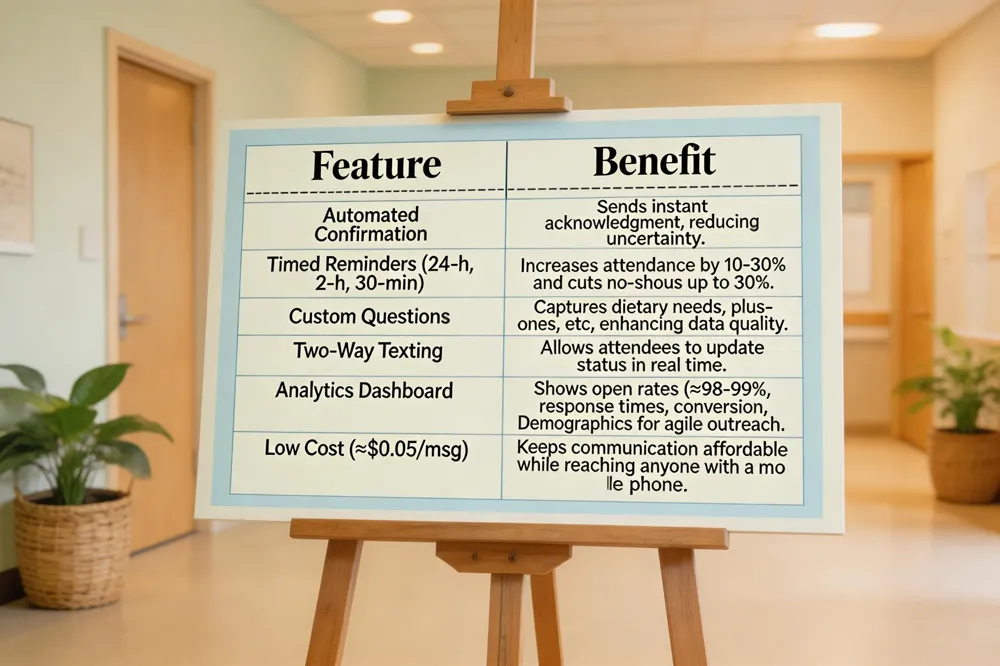
Automation drives the whole process: after a reply, an immediate confirmation text is sent, followed by timed reminders (24‑hours, 2‑hours, and even 30‑minutes before the event) that have been shown to lift attendance by 10‑30% and cut no‑shows by up to 30%. Custom questions (dietary needs, plus‑ones) can be added to the RSVP flow, and two‑way texting lets attendees update their status in real time.
Analytics dashboards display open rates (≈98‑99%), response times (most read within 3 minutes), conversion rates, and demographic breakdowns, giving planners the data needed to adjust outreach on the fly and report impact to donors and board members.
Because SMS works on any mobile phone without internet, it reaches supporters who may lack email access, while bulk pricing keeps costs under $0.05 per message. The result is higher turnout, richer participant data, and a streamlined, compliant communication channel that frees staff to focus on mission‑critical work.
Event Management Essentials: The 5 P’s and 5 C’s
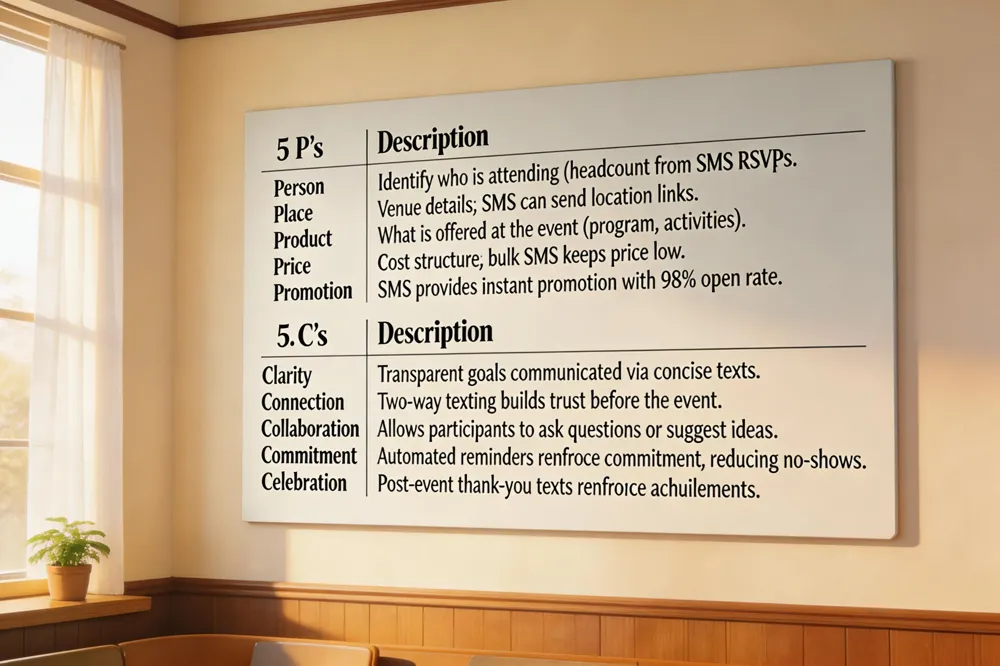 Effective community events hinge on mastering both the classic 5 P’s of event management and the modern 5 C’s of community building.
The 5 P’s are Person, Place, Product, Price, and Promotion. A clear understanding of who (Person) is attending, where (Place) the event will be held, what (Product) is being offered, the cost structure (Price), and how you will spread the word (Promotion) sets the foundation for a successful gathering.
The 5 C’s of community building—Clarity, Connection, Collaboration, Commitment, and Celebration—ensure that the event not only draws participants but also deepens relationships. Clarity means transparent goals; Connection builds trust before asking for help; Collaboration invites co‑creation; Commitment shows long‑term dedication; and Celebration acknowledges achievements, reinforcing motivation.
Integrating SMS RSVP technology amplifies each of these elements. With open rates of 98 % and responses within minutes, SMS delivers instant Promotion (Promotion) and real‑time headcounts (Person), while automated reminders reduce no‑shows by up to 30 %, supporting Commitment and Celebration. Two‑way texting enables participants to ask questions and share preferences, fostering Connection and Collaboration. Cost‑effective bulk texting keeps Price low, allowing nonprofits to allocate more resources toward meaningful community experiences.
Tools and Tech: Free and Low‑Cost Check‑In Solutions
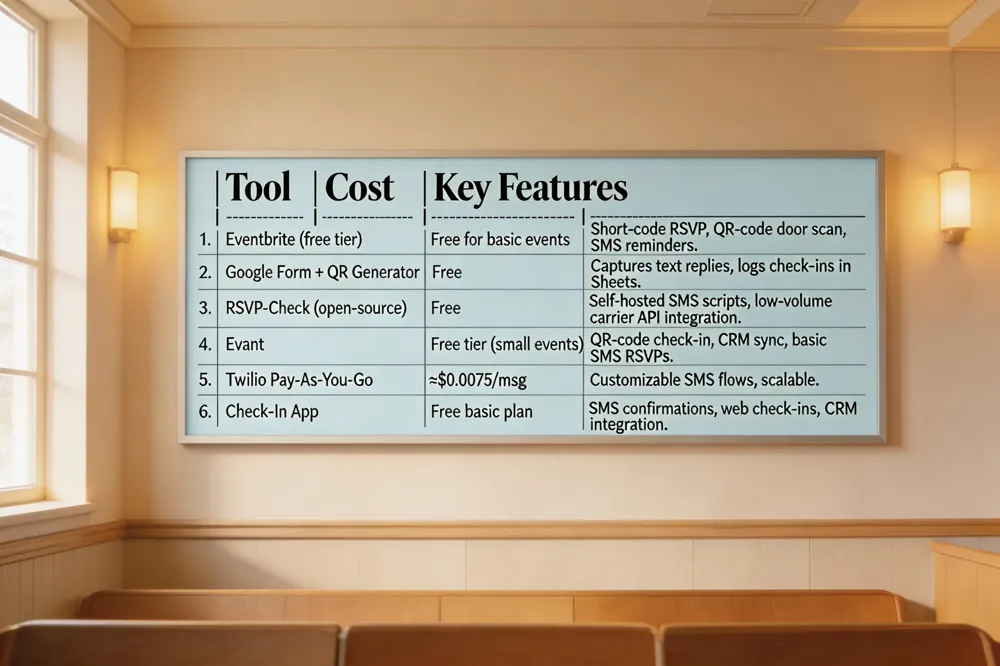
SMS‑based check‑ins dramatically boost attendance tracking because texts are opened by 98 % of recipients within minutes and cost only a few cents each. For organizations looking for a completely free workflow, several options exist. Eventbrite’s free tier lets guests RSVP by texting a short‑code and then scan a QR code at the door, while a simple Google Form paired with a QR generator can capture a text reply and log check‑ins without any fee. Open‑source projects such as RSVP‑Check provide self‑hosted SMS scripts that work with low‑volume carrier APIs for free, and platforms like Evant offer a no‑charge plan for basic SMS RSVPs and real‑time check‑in alerts (though custom branding and bulk messaging require a paid upgrade). Popular low‑cost tools include Evant (free tier for small events, QR‑code check‑in, and CRM sync), Eventbrite (standard plans include SMS reminders and QR scans at no extra cost), and the RSVP‑Check open‑source solution for DIY setups. Twilio’s pay‑as‑you‑go API can be paired with inexpensive templates to build custom check‑in flows, while Check‑In App offers a free basic plan supporting SMS confirmations and web‑based check‑ins. All of these solutions integrate with major nonprofit CRMs—Salesforce, Bloomerang, Kindful—so attendee data automatically updates donor profiles, streamlining post‑event reporting and future outreach.
Creative Event Ideas for Families and Businesses
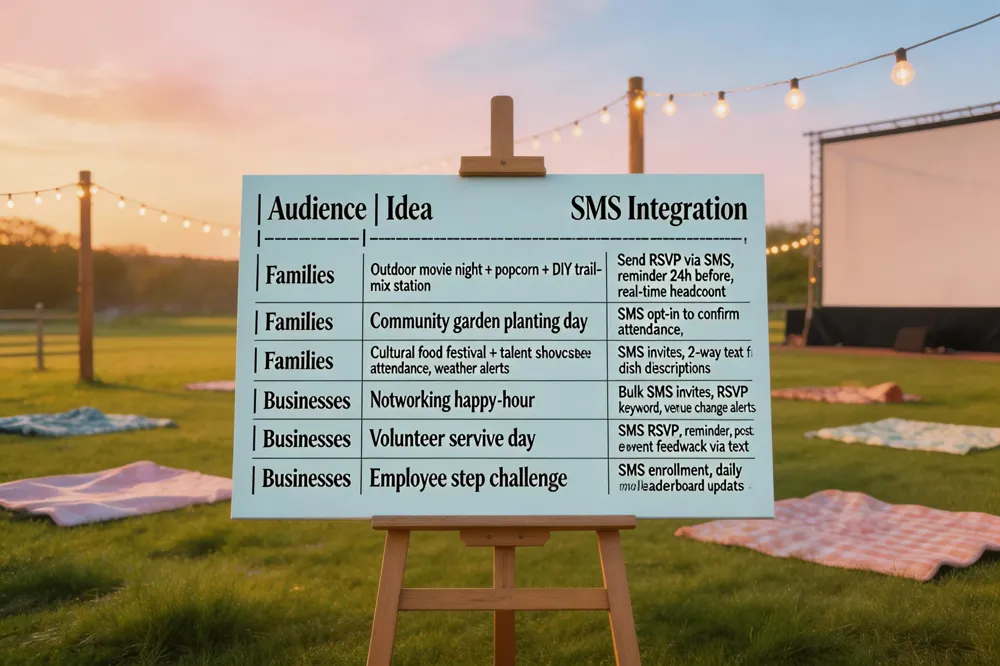
What are creative community event ideas for families?
Organize a family movie night under the stars with blankets, popcorn, and a “make‑your‑own‑trail‑mix” station. Follow it with a community garden planting day where kids sow seedlings and learn kitchen‑scrap projects. Host a cultural food festival where each family prepares a traditional dish and shares its story, paired with a talent showcase. Add a DIY craft workshop for place‑cards, hand‑print hearts, and a “buddy bench” to spark new friendships. Finish with a picnic featuring lawn games, a neighbor‑bingo scavenger hunt, and a seed‑swap booth. Use SMS RSVP invitations (98% open rate) and automated reminders to boost attendance and capture real‑time headcounts, syncing responses directly to your CRM for seamless check‑in.
What are creative community event ideas for businesses?
Plan themed networking happy‑hour mixers with shared‑interest tables, and pair product demo pop‑ups with hands‑on stations. Launch a community service day that lets employees and locals volunteer together, reinforcing social responsibility. Create an employee wellness challenge (step‑count or mindfulness series) with fun incentives, and sponsor a local art fair or pop‑up gallery for brand exposure. Deploy bulk SMS invites and two‑way texting to confirm attendance, send last‑minute updates, and gather post‑event feedback instantly.
What are examples of community events?
Examples include cultural food festivals, seasonal fairs, charity runs, open‑mic nights, talent shows, game nights, neighborhood clean‑ups, pop‑up experiences, bingo nights, lunch‑and‑learn workshops, “ask‑the‑expert” panels, networking mixers, and speed‑networking rounds. Across all formats, SMS RSVP tools provide high‑open rates, real‑time analytics, and easy CRM integration, ensuring higher turnout, reduced no‑shows, and streamlined event logistics.
Step‑by‑Step SMS RSVP Guide and Pros/Cons
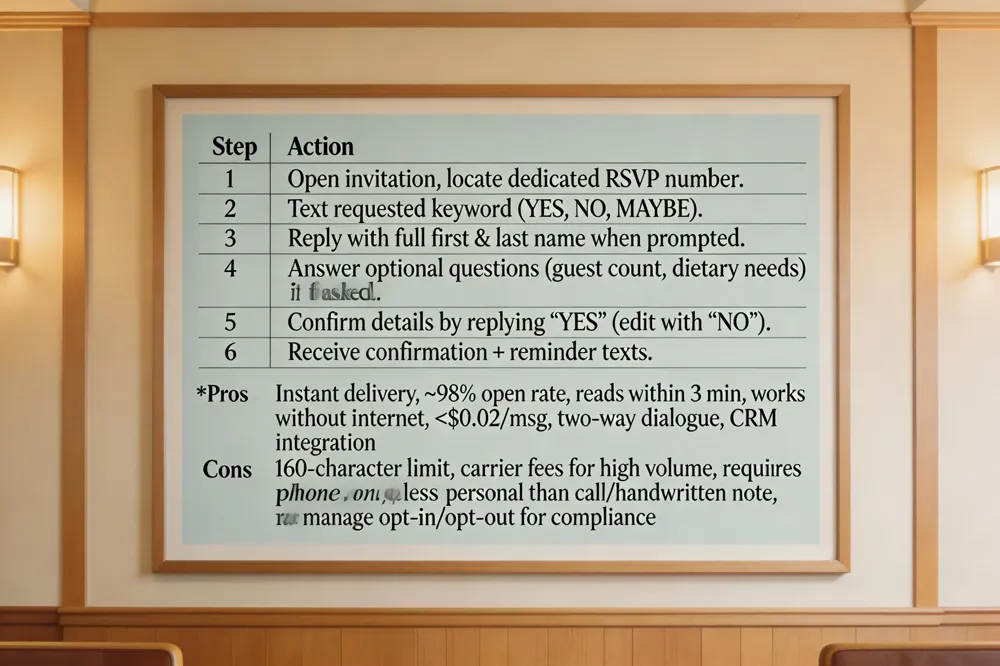 How to RSVP via SMS – a step‑by‑step guide
- Open the invitation and locate the dedicated phone number for text‑message RSVPs.
- Send a text to that number using the keyword the host requested (e.g., “YES,” “NO,” “MAYBE,” or a custom word such as “HELLO”).
- The system replies with a greeting and asks for your first and last name; reply with your full name in a single message.
- If optional questions are enabled, you’ll receive prompts for the number of guests, dietary preferences, or children under 10—answer each using the requested format (numeric digits for counts, exact option name for meals).
- Confirm your details by replying “YES” (or “NO” to edit). You’ll receive a confirmation text and later reminder messages leading up to the event.
What are the advantages and disadvantages of using SMS for event communication?
Advantages: Instant delivery; average open rate ≈ 98 % with most texts read within three minutes; works on any mobile phone, even without internet; low cost (often < $0.02 per message); enables real‑time two‑way dialogue for questions, cancellations, or special requests; integrates automatically with CRM platforms for live headcounts and analytics.
Disadvantages: Limited to 160 characters per message, which can restrict detail; carrier fees may apply for high‑volume sends; depends on recipients having their phones on and signal coverage; may feel less personal than a phone call or handwritten note; compliance requires explicit opt‑in and easy opt‑out mechanisms to meet TCPA/GDPR regulations.
Final Thoughts
SMS RSVP has become a cornerstone of modern nonprofit event planning. With open rates near 98 % and replies often arriving within three minutes, text invitations outpace email and paper calls, driving 10‑30 % higher attendance and cutting no‑show rates by up to 30 %. Bulk texting costs a few cents per message, integrates automatically with CRMs, and supports two‑way dialogue for dietary needs or last‑minute changes. Looking ahead, AI‑driven personalization, richer analytics, and tighter compliance tools will make SMS even more powerful, while expanding broadband‑free access ensures every supporter—whether smartphone user or basic‑phone holder—can stay connected and engaged for future community impact.
Related Blogs

Got Kicked Out of GroupMe? Look to Evant.
Michael PedoeemGot Kicked Out of GroupMe? The Best GroupMe SMS Alternative for Jewish Communities

How to Send Targeted Alerts During Live Events
Michael PedoeemMastering Targeted Event Alerts: Real-Time Communication Strategies for Nonprofits
Top 7 SMS Trends for Communities in 2026
Michael PedoeemFrom AI-powered responses to text-to-donate and two-way texting — here are the 7 SMS trends every shul, school, and nonprofit needs to know about in 2026