
Introduction: Moving Beyond Guesswork to Guaranteed Engagement
The Hurdle of Unpredictable Participation
Organizing a successful event often feels like a high-stakes gamble. Even with paid tickets, no-show rates of 20-30% are a common reality. Traditional reminder emails and cancellation fees are losing their effectiveness, leaving planners with empty seats, wasted budgets, and missed opportunities for connection. This unpredictability makes it difficult to allocate resources, plan logistics, and demonstrate clear return on investment, especially for resource-conscious nonprofits and educational institutions.
A New Paradigm for Communication
The solution lies in moving beyond one-way, passive broadcasts to active, two-way dialogue. Modern attendees expect communication that is personal, immediate, and respectful of their time. The data is clear: while email open rates hover around 20%, SMS messages boast a 98% open rate, with most texts read within three minutes. This shift demands tools that facilitate genuine conversation, not just announcements.
Introducing Targeted SMS Engagement
This is where targeted SMS platforms like Evant come into focus. Designed specifically for nonprofits, schools, and community organizers, Evant provides a suite of tools that turn text messaging into a powerful engine for event management. By enabling features like text-to-RSVP, automated reminders, and personalized two-way messaging, it transforms the attendee journey from a transactional process into an engaging relationship.
Evidence Over Anecdote
This article section will focus on the concrete, data-backed results achieved by organizations using this approach. We will explore how moving from guesswork to data-driven communication strategies not only fills seats but also builds stronger, more vibrant communities.
| Engagement Challenge | Traditional Method Limitation | SMS-First Solution Impact |
|---|---|---|
| Low RSVP/Attendance Rates | Emails ignored; forms cumbersome | 95%+ RSVP rates via simple text keyword replies |
| Poor Communication Reach | 20% email open rates; messages missed | 98% SMS open rate; messages read in minutes |
| High Operational Overhead | Manual follow-ups, data entry, spam filters | Saves 10+ staff hours via automation & CRM sync |
| Weak Post-Event Feedback | <5% survey response rates typical | Enables real-time, in-the-moment feedback collection |
Quantifying the Event Engagement Crisis and the SMS Solution
The High No-Show and Low-Response Reality
Modern events, from corporate conferences to nonprofit fundraisers, are facing a significant engagement crisis. Despite paid tickets and advanced planning, event organizers report alarmingly high high no-show rates for paid events of 20% to 30%. Traditional solutions like reminder emails and cancellation fees are becoming increasingly ineffective.
Post-event surveys, a common tool for gathering feedback, also struggle with abysmal participation, often achieving low response rates for post-event surveys as low as 5%. This creates a critical blind spot for organizers who need data to prove measurable objectives for event ROI and improve future events. The core problem is a growing disconnect between organizers' communication methods and attendees' preferred channels.
Why Email and Traditional Methods Fail
Email, a cornerstone of event communication, suffers from low visibility and engagement. Industry data shows that emails typically have open rates around 20%, with even lower response rates of approximately 8%. In crowded inboxes, event reminders, updates, and feedback requests are easily missed or ignored. For many communities, especially in nonprofit and educational sectors, email is not always a reliable or accessible channel, leading to disengagement.
The Power of SMS: 98% Open Rates and Immediate Read Time
The communication landscape presents a powerful alternative: SMS text messaging. Unlike email, text messages boast a remarkable 98% open rate, with 96% of messages read within just three minutes of being received. This creates a direct and immediate line of communication that ensures critical event information is seen.
The effectiveness translates directly into action. Recipients are 4.5 times more likely to respond to a text message than to an email. This high-engagement channel is particularly effective for time-sensitive communications, such as last-minute reminders, schedule changes, and urgent fundraising appeals during live events.
How Evant's Platform Solves Core Engagement Problems
Platforms like Evant SMS engagement tool are engineered to leverage the unique power of SMS to directly address the engagement crisis. By using text messaging as its primary channel, Evant transforms event management in several key ways:
- Dramatically Reduces No-Shows: Automated, personalized SMS reminders sent directly to attendees' phones lead to significantly higher attendance rates. Case studies show organizations achieving 95% RSVP rate with Evant.
- Streamlines Logistics: Features like "Text-to-RSVP" allow participants to confirm with a single keyword reply, eliminating friction. SMS is also used for seamless text-based check-ins, saving staff time and improving accuracy.
- Boosts Real-Time Feedback: Instead of relying on low-response email surveys, organizers can deploy in-the-moment feedback methods for events via SMS. This method has been shown to increase participation rates from 5% to over 75%.
- Enables Targeted Communication: The platform allows organizers to segment members for personalized messages, making attendees feel valued and increasing the relevance of communications.
- Integrates for Measurable ROI: By syncing with CRM systems, Evant helps track how event attendance influences broader goals like donor retention, volunteer recruitment, and sales pipeline generation, providing the data needed to prove event value.
| Engagement Challenge | Traditional Method Performance | SMS-Based Solution (e.g., Evant) Performance |
|---|---|---|
| Message Open Rate | Email: ~20% open rate | SMS: 98% open rate |
| Attendee Response Rate | Low; emails see ~8% response | High; texts see 45%+ response rate |
| Event No-Show Rate | High; often 20-30% even for paid events | Low; case studies show 95%+ attendance |
| Post-Event Feedback Rate | Very low; ~5% survey completion | Very high; up to 78% feedback collection |
| Audience Reach | Limited by email access/internet | Universal; works on all mobile phones |
Case Study Spotlight: From Uncertainty to 95% Attendance
A Real-World Success Story
Hillel of Rochester, a nonprofit serving a university community, faced a common event management challenge: high no-show rates for paid events. Even with RSVPs, uncertainty in final headcounts led to costly over-preparation and wasted resources. By switching to Evant's SMS-based platform, they transformed their process. The key change was implementing a text-based RSVP system where participants could confirm their attendance with a simple keyword reply.
This shift delivered a dramatic outcome: a 95% attendance rate for their events. This means nearly every person who texted 'YES' actually showed up. The high reliability of this data allowed staff to plan with confidence, ordering the right amount of food and allocating space accurately, which directly reduced costs and eliminated waste.
How Automated Reminders Eliminate Guesswork
The system's success hinges on automated, personalized communication. Here’s how it works to ensure high attendance:
- Timely Prompts: Scheduled text reminders are sent at strategic intervals before an event, cutting through email clutter.
- Frictionless Responses: Participants reply with a single word like 'YES' or 'NO' directly from their SMS inbox—no app download or link-clicking required.
- Personalized Touch: Messages can address attendees by name and reference specific event details, making communication feel more direct and valued.
This consistent, easy-to-use flow keeps the event top-of-mind and significantly reduces the chance of someone simply forgetting. For organizers, the guesswork of 'how many are actually coming?' is replaced with a real-time, accurate attendee list.
Impact on Operational Efficiency and Cost
Moving to a streamlined, text-based RSVP system creates tangible operational benefits. Hillel of Rochester and similar organizations report saving over 10 hours of staff time per event cycle by automating manual tasks. These savings come from eliminating:
- Lengthy email follow-up threads
- Data entry from paper forms or multiple digital sources
- Time spent tracking down verbal commitments
The financial impact is equally clear. With a 95% confirmed attendance rate, organizations can:
- Reduce Over-Preparation: Order precise amounts of food, materials, and swag.
- Optimize Venue Costs: Book appropriately sized spaces without paying for unused capacity.
- Improve Budget Accuracy: Forecast event costs with greater confidence, reducing unexpected overages.
Evidence of Scalability and Broader Adoption
The effectiveness of this approach is not an isolated case. Other organizations using the same platform demonstrate its scalability and versatility:
| Organization | Use Case | Scale Demonstrated |
|---|---|---|
| Chabad at Binghamton | Managing large-scale event RSVPs | Processed nearly 100,000 RSVPs via text |
| Ohio University Chabad | Powering a full calendar of activities | Organized and communicated for 150+ events |
| UC Berkeley Hillel | Transforming overall operations | Achieved transformative results in engagement and management |
These examples show that whether managing a massive volume of responses for a few major events or coordinating a continuous series of smaller gatherings, a text-based system provides a reliable and efficient backbone for community engagement.
The Strategic Framework: Applying the 3 C's for Lasting Impact

The Strategic Framework: Applying the 3 C's for Lasting Impact
Effective community engagement requires more than just sending updates; it needs a deliberate strategy. For nonprofits and educational organizations managing frequent events, a framework of Clarity, Consistency, and Connection provides a proven structure to transform outreach into meaningful impact. This approach aligns perfectly with modern tools like SMS-based community engagement and event management tools, which offer direct pathways to implement each principle.
Clarity eliminates confusion by ensuring every message has a clear purpose. For event organizers, this means communications that are direct and easy to understand. Instead of lengthy emails that get buried, a concise text about an upcoming workshop with a simple RSVP keyword delivers immediate understanding. Research shows SMS open rates and engagement are high, with messages read within minutes, ensuring your core information is actually seen. This direct line reduces the frustration many attendees report from poor communication.
Consistency builds trust through reliable, predictable touchpoints. Automated scheduled messaging for events for event series maintains a steady rhythm of communication. Sending reminders at 30, 14, and 7 days before an event, as part of a continuous engagement strategy for events, keeps your organization top-of-mind. Platforms that offer this automation save organizers time while systematically reducing high no-show rates for paid events. This reliability shows your community you are organized and value their time.
Connection fosters genuine relationships that move beyond transactions. Personalized two-way messaging turns a simple reminder into a conversation. Asking for feedback via SMS after an event or sending a tailored thank-you message makes participants feel heard and valued. This personalized approach is crucial, as studies indicate individualized donor orientation has a strong effect on success. When people feel personally connected, they are more likely to become repeat attendees, loyal volunteers, or consistent donors.
How Evant's targeted messaging and scheduled updates deliver Clarity and Consistency
SMS platforms are engineered to operationalize the first two C's. Targeted SMS messaging segments your audience based on interests or past attendance, ensuring the right person gets the right message. This precision enhances Clarity by avoiding irrelevant information overload. For example, you can send a specific update about a volunteer training only to those who signed up, while sending a fundraiser announcement to your entire donor list.
Scheduled updates deliver Consistency effortlessly. Organizers can plan an entire series of communications—save-the-dates, reminders, and day-of logistics—in advance. This creates a dependable communication flow that attendees can rely on. Automated features handle this workload, leading to high RSVP rates for events and helping organizations avoid the costly over-preparation that comes with uncertain headcounts. The platform's analytics then provide clear deliverability rates and message performance, offering transparency that further strengthens organizational Clarity.
Using personalized two-way messaging and data-driven insights to build genuine Connection
True Connection is built on interaction and insight. Two-way SMS allows attendees to ask questions, confirm details, or provide feedback directly from their text thread. This interactive capability makes communication feel personal and responsive, not just broadcasted. Integrating these conversations with a CRM system builds rich member profiles over time, detailing their engagement history, preferences, and donation patterns.
These data-driven insights allow for increasingly sophisticated personalization. You can acknowledge a member's anniversary with your organization or tailor an event invitation based on topics they've engaged with before. This level of personal attention makes individuals feel like integral partners, not just recipients of services. When communication reflects an understanding of their unique relationship with your cause, it deepens their sense of belonging and commitment.
Moving beyond transactional reminders to foster a sense of belonging and value among attendees
The ultimate goal of the 3 C's framework is to cultivate a community where people feel they belong. This means using communication tools not just for logistics, but for cultivation. Share impact stories via MMS for sending images and videos from a recent successful event. Use SMS to invite top volunteers to an exclusive planning session, making them feel valued. Segment your messages to provide "VIP" content to your most loyal supporters, reinforcing their special status. This approach is key for community building through targeted SMS messaging.
This shift from transactional to relational engagement is powerful. It transforms event management from a series of tasks into an ongoing dialogue that strengthens community bonds. When attendees feel clarity in your mission, consistency in your presence, and a genuine connection to your work, their participation evolves from occasional attendance to lasting investment in your organization's success.
| Framework Principle | Core Objective | Evant Platform Feature | Practical Event Outcome |
|---|---|---|---|
| Clarity | Ensure message is understood | Targeted SMS & Text-to-RSVP functionality | Higher open rates, reduced confusion |
| Consistency | Build trust via reliable touchpoints | Scheduled & Automated Reminders | Lower no-shows, predictable attendance |
| Connection | Foster genuine relationships | Two-Way Messaging & CRM Integration | Increased loyalty, personalized experiences |
| Data-Driven Insight | Inform future strategy | Engagement Analytics & Reporting | Better event planning, segmented outreach |
Beyond Attendance: Building Communities and Measuring True ROI

How do you define a successful event?
A successful event goes far beyond a simple headcount. True success is defined by achieving specific organizational goals, which might include raising brand awareness, generating a measurable sales pipeline, fostering a sense of community, or securing donations for a cause. It delivers an engaging experience that makes attendees feel valued and satisfied, strengthening their relationship with the organization. Crucially, a successful event demonstrates a strong return on investment (ROI) through measurable objectives for event ROI and tracking behavioral change for event ROI, such as improved donor retention and long-term engagement that aligns with the organizational mission.
Shifting from Headcounts to Mission Impact
Modern event strategy focuses on impact over attendance. Key goals often include shifting perceptions, driving mission awareness, and fostering lasting connections. For nonprofits, this could mean increasing product perception scores or generating a specific value in qualified donor pipeline. Tracking behavioral change, such as knowledge retention weeks after a training event, is a powerful method for demonstrating true ROI.
Tracking Engagement with Integrated Tools
To measure this deeper impact, integration is essential. Platforms like Evant connect directly with Customer Relationship Management (CRM) systems. This allows organizations to automatically sync attendee data, track how event participation influences future actions, and monitor long-term engagement. This seamless flow of information, enabled by integrating event registration with CRM, transforms event data from a one-time snapshot into a continuous story of supporter relationships.
Client Examples: Transforming Operations
Real-world results showcase this shift. Organizations report transformative outcomes using SMS-based engagement tools. For instance, Hillel of Rochester achieved a 95% attendance rate with text-based RSVPs. Ohio University Chabad powered 150+ events with text messaging, streamlining communication. UC Berkeley Hillel noted a complete operational transformation. These cases highlight how efficient communication builds stronger, more reliable community relationships.
Personalizing Follow-Up with Engagement Data
The data collected through SMS interactions is a goldmine for personalization. Organizers can segment members for personalized messages based on their behavior—like who RSVP'd, who attended, or who engaged with specific content. This enables highly targeted follow-up. Messages can thank attendees, share impact stories, or invite specific groups to future events. This approach makes communication feel personal and relevant, which is key to nurturing long-term supporters.
Using Analytics for Strategic Decisions
Detailed analytics turn engagement data into actionable intelligence. Event platforms provide reports on metrics like message deliverability, RSVP rates, and check-in patterns. This data helps organizers understand what resonates with their community. For example, seeing which message types drive the highest response allows for optimization of future communications. This evidence-based approach replaces guesswork, enabling data-driven decisions for event agendas that continuously improve event outcomes and community building efforts.
| Event Success Metric | Traditional Focus | Modern, Impact-Driven Focus | Tool for Measurement |
|---|---|---|---|
| Primary Goal | Maximizing headcount | Achieving specific mission outcomes (e.g., donor pipeline) | Pre-defined KPIs in analytics dashboard |
| Attendee Experience | Generic communication | Personalized, two-way engagement via segmented SMS | CRM-integrated messaging platforms |
| Post-Event Follow-up | Broad thank-you email | Targeted messages based on individual attendee behavior | Behavioral segmentation and automated flows |
| Long-Term ROI Proof | Survey completion rate | Tracking donor retention & behavioral change over time | CRM integration tracking sales/engagement lifecycle |
| Community Building | One-off event attendance | Fostering ongoing dialogue and connection | Analytics on recurring participation and message response rates |
Operational Transformation: Saving Time, Reducing Friction, Scaling Effortlessly
How Evant automates manual tasks like scheduling reminders, saving 10+ staff hours per event
Organizers report substantial time savings using Evant’s automation suite. Features like scheduling series, recurring event reminders, and follow-ups for non-responsive attendees automate communications traditionally requiring manual effort. This can save over ten staff hours per event. Automated reminders have been shown to increase student event attendance by 20-30%, and some organizations achieve RSVP rates of 95%, eliminating time-consuming guesswork and costly event over-preparation.
These automated workflows handle the logistical 'busywork', allowing staff to focus on higher-value aspects of community building through targeted SMS messaging and content creation. By eliminating manual tasks like sending individual follow-up emails or managing paper sign-up forms, organizations can operate more efficiently, even with limited resources.
The platform's app-free design: participants engage via SMS, organizers use a web platform
Evant’s model removes technological barriers to participation. Attendees do not need to download a dedicated app; they receive information, RSVP, and check in using standard text messaging on any mobile phone, without requiring an internet connection. This ensures accessibility for communities with varying levels of tech adoption. Organizers manage everything from a centralized, mobile-friendly web dashboard, streamlining their workflow on a single platform.
This design directly addresses low adoption rates for native event apps, which can see usage as low as 30%. By utilizing the ubiquitous SMS channel—where messages have a 98% SMS open rate for engagement and are typically read within minutes—organizations achieve higher and more reliable engagement compared to email or app-based systems.
Features enabling team collaboration: unlimited organizer access and seamless Stripe integration for payments
The platform is built for collaborative event management. An organization’s Evant account supports an unlimited number of organizer logins, facilitating seamless teamwork without per-user fees. For events involving payments, such as fundraisers or ticketed conferences, the platform integrates directly with the payment processor Stripe. This allows for automatic transfer of collected funds into the organization's bank account, simplifying financial logistics and reducing administrative overhead.
This integrated approach ensures that communication, registration, and financial data remain synchronized across the team. Clear responsibilities and integrated tools, as highlighted in nonprofit email marketing research, form a crucial organizational framework for successful engagement initiatives.
The role of automation in handling massive scale, as evidenced by the 100,000+ RSVP case study
Evant’s automation capabilities enable organizations to manage events at significant scale without a proportional increase in staff effort. A prime example is Chabad at Binghamton, which handled close to 100,000 RSVPs for its events using the platform. Automation handles the high-volume, repetitive tasks of sending confirmations, reminders, and collecting responses, allowing a small team to engage a large community effectively.
This scalability is essential for growing organizations and large-scale campaigns. The system’s ability to personalize communication at scale—segmenting audiences and sending targeted messages—further enhances its efficiency, turning vast participant numbers from a logistical challenge into a manageable asset.
| Feature | Core Function | Operational Benefit |
|---|---|---|
| Automated Reminders & Series | Schedules & sends pre-event communications. | Saves 10+ staff hours, boosts attendance rates. |
| SMS-Based RSVP & Check-In | Enables interaction via standard text messaging. | No app download required; high adoption & accessibility. |
| Unlimited Organizer Logins | Allows multiple team members to access the platform. | Facilitates collaboration without extra cost. |
| Stripe Payment Integration | Automates collection & transfer of event funds. | Streamlines financial management, reduces admin work. |
| Scalable Automation Engine | Manages high-volume tasks like sending & sorting replies. | Empowers small teams to handle large-scale events. |
Integrating SMS into a Holistic Engagement Strategy
Positioning SMS as a Strategic Pillar
Modern community engagement requires a coordinated, multi-channel approach. While email and social media are foundational, SMS serves as a critical accelerator within an omnichannel strategy. Its unique value lies in immediate, direct access: texts have a 98% SMS open rate and are typically read within 90 seconds, compared to emails with average open rates of only 20%. This makes SMS the ideal channel for time-sensitive information, urgent calls to action, and reinforcing messages sent through other mediums. Rather than operating in a silo, SMS should be deliberately woven into the broader communication fabric.
Reinforcing Messages Across Channels
A holistic strategy uses each channel for its strengths. An email newsletter can provide detailed event background, a social media post can build buzz with visual content, and an SMS message can deliver a last-minute reminder or a link for on-the-spot registration. This layered approach ensures messages are seen and acted upon. For instance, a donor might see a campaign preview on social media, receive an in-depth update via email, and then get a timely text prompting a final contribution. This continuity strengthens message retention and drives higher engagement.
What are examples of outreach strategies for community-based organizations?
Community-based organizations can employ a variety of outreach strategies to build trust and drive engagement. Key examples include developing targeted digital campaigns on social media to share compelling stories and amplify their mission. Building strategic partnerships with local businesses, other nonprofits, and government agencies expands reach and resources through co-hosted events and shared initiatives. Proactive, two-way communication is essential, utilizing community engagement tools like SMS messaging for direct updates, text-based RSVPs to improve attendance, and real-time feedback collection. Furthermore, hosting community workshops, volunteer drives, and advocacy campaigns fosters direct involvement and turns supporters into active champions for the cause.
Operational Uses of SMS for Engagement
Within an integrated plan, SMS has several high-impact operational uses:
- Targeted Outreach: Segment your audience based on interests or past behavior. Send personalized event invites or relevant content updates to specific groups.
- Volunteer Management: Streamline coordination by confirming schedules, sending shift reminders, and recruiting for urgent needs via broadcast texts.
- Urgent Updates: Communicate last-minute venue changes, weather alerts, or safety instructions that require immediate attention.
- Real-Time Feedback: Deploy quick SMS polls or surveys during or immediately after an event. This in-the-moment feedback method for events can achieve feedback rates over 75%, far surpassing traditional post-event surveys.
Ensuring Ethical and Compliant Communication
High engagement carries the responsibility of respectful communication. Adhering to regulations like the Telephone Consumer Protection Act (TCPA) is non-negotiable. This means:
- Securing explicit opt-in consent before adding contacts to an SMS list.
- Providing clear and easy opt-out mechanisms in every message.
- Managing message frequency to avoid overwhelming subscribers.
- Using platform features to easily manage and honor opt-out requests.
Ethical SMS use builds long-term trust, ensuring your most direct communication channel remains a welcome touchpoint for your community.
| Channel | Best For | Typical Open/Response Rate | Integration Role with SMS |
|---|---|---|---|
| SMS / Text Messaging | Urgent alerts, time-sensitive reminders, quick calls-to-action, RSVP collection | 98% open rate, 45% response rate | Core channel for immediate action; reinforces other messages |
| Detailed narratives, newsletters, formal invitations, lengthy updates | ~20% open rate, 8% response rate | Provides depth and context; SMS drives opens for critical emails | |
| Social Media | Brand storytelling, community building, visual content, broad awareness | Varies by platform & algorithm | Creates buzz and brand identity; SMS can drive traffic to key posts |
| In-Person / Phone | Deep relationship building, complex issue resolution, high-touch stewardship | High impact but resource-intensive | SMS schedules meetings and confirms appointments for in-person touchpoints |
The Blueprint for Success: Key Elements Powered by Technology
What are the key elements of a successful event?
Successful events rely on a foundation of clear, measurable objectives for events, detailed planning, and flawless execution. A defined strategy aligned with business strategy is crucial. Elements include a well-managed budget and timeline, a skilled team, engaging content with diverse speakers, and strong structured networking opportunities. Event marketing with SMS and other channels drives turnout, while a focus on seamless logistics and attendee experience builds engagement and community. Success is measured by achieving intended outcomes, such as education, fundraising, connection, or brand growth. Modern event management technology directly supports and amplifies these elements.
Linking the core elements of a successful event to Evant's functionalities
Technology platforms like Evant for SMS community engagement translate these abstract success elements into tangible, automated processes. The platform's core functionalities serve as the digital infrastructure for the entire event lifecycle. SMS RSVPs for higher attendance and automated text-based check-ins replace manual guest lists, ensuring flawless execution. Targeted SMS messaging and scheduled updates drive effective promotion and reduce no-shows. CRM integrations and in-depth event reporting tools allow for goal-aligned strategy and detailed post-event measurement. By linking its features directly to event planning's fundamental needs, the technology provides a unified system for organizers.
Clear objectives and planning supported by analytics and data collection
Setting specific, measurable goals is the first step. Technology provides the tools to track those objectives from start to finish. Analytics dashboards track metrics like registration rates, SMS deliverability, and check-in percentages in real-time. This streamlined data collection moves planning from guesswork to evidence-based strategy. For instance, seeing a 20% open rate for emails versus a 98% SMS open rate provides clear guidance for communication channels. Post-event, this data demonstrates ROI by showing tracking behavioral change or fundraising totals against initial targets.
Effective promotion and seamless execution via targeted SMS and automated check-ins
Promotion and execution become streamlined through targeted, automated communication. Segmentation allows organizers to send personalized messages based on attendee interests or demographics. Automated text reminders sent at strategic intervals (e.g., 7 days, 1 day before the event) build excitement and reduce high no-show rates for paid events. Seamless execution is enabled by features like text-based check-ins, which eliminate physical lines and manual data entry. This automation saves staff hours and provides an accurate, real-time headcount, preventing costly over-preparation.
Attendee experience enhanced through personalized communication and reduced frustration
The attendee experience is fundamentally shaped by communication. Personalized, two-way SMS messaging makes participants feel valued and informed. It addresses the common frustration that 90% of attendees report from poor communication. Features like custom chat flows or live Q&A via text create interactive, engaging moments. Simplifying processes—such as allowing frictionless ticket transfers to reduce no-shows or using single-keyword RSVP responses—reduces friction. This focus on a smooth, personalized journey directly boosts satisfaction, engagement, and the likelihood of repeat attendance.
| Event Success Element | Corresponding Tech Functionality | Practical Outcome for Organizers |
|---|---|---|
| Clear Objectives & Planning | Analytics & CRM Integration | Data-driven decisions; tracks ROI against goals. |
| Effective Promotion | Targeted & Scheduled SMS | Higher SMS open/response rates; boosts turnout. |
| Seamless Execution | Automated Check-ins & Reminders | Reduces no-shows; saves staff time. |
| Attendee Experience | Personalized Two-Way Messaging | Increases satisfaction; builds community. |
| Post-Event Measurement | Engagement Insights & Reporting | Provides feedback; informs future strategy. |
From Feedback to Future-Proofing: The Continuous Improvement Loop
From Feedback to Future-Proofing: The Continuous Improvement Loop
Relying solely on traditional post-event surveys often results in minimal data, with typical response rates languishing around 5%. This leaves organizers with an incomplete picture of what truly resonated with attendees. To overcome this data deficit, forward-thinking organizations are shifting towards immediate, in-the-moment feedback methods for events.
Integrating SMS for feedback collection is a powerful alternative. Sending a simple, one-question text survey as attendees exit a session capitalizes on fresh impressions. This method has proven dramatically more effective, with some organizations achieving feedback rates as high as 78%. The direct and personal nature of SMS, with its 98% open rate, encourages swift participation where lengthy email surveys fail.
How Evant's Analytics Provide Insights into Engagement, Deliverability, and Participation Trends
Capturing feedback is only the first step; deriving actionable insights is where platforms like Evant community engagement platform add significant value. The platform's built-in analytics dashboard transforms raw data into a clear narrative of event performance. Organizers can track real-time metrics that go beyond simple headcounts.
Key analytics include message deliverability rates, showing exactly how many reminders or updates reached attendees' phones. Engagement insights reveal which messages prompted the highest response rates, indicating what communication styles work best. Participation trends are visualized through data on RSVP confirmations, check-in rates, and feedback submission times, helping identify peak engagement moments.
Using Collected Data to Refine Future Event Strategies, Segment Audiences, and Personalize Communications
The true power of data lies in its application to future planning. By analyzing feedback and engagement patterns, organizers can make data-driven decisions for event agendas. For instance, if data shows low attendance for late-afternoon sessions, future agendas can be adjusted accordingly.
This data also enables sophisticated audience segmentation. Organizations can create distinct groups based on attendance history, feedback scores, or interaction types. This allows for highly personalized future communications using a targeted SMS messaging platform. A donor who frequently attends fundraising galas might receive different follow-up messages than a first-time volunteer at a community workshop, making each feel uniquely valued.
Personalization extends to content as well. Insights on which event topics generated the most positive feedback can guide the development of future programming, ensuring it aligns with community interests and needs.
The Platform's Role in Enabling a Culture of Continuous Learning and Adaptation for Organizations
Tools like Evant SMS-first event engagement platform do more than streamline logistics; they foster an organizational culture centered on continuous learning. By providing a consistent and easy method for gathering input, the platform makes listening to the community a regular practice, not a post-event chore.
This continuous loop of communication, feedback, and adaptation helps organizations become more agile and responsive. They can quickly test new event formats, messaging styles, or Interactive ideas to engage event attendees and measure results in near real-time. This data-driven approach moves planning away from assumptions and towards proven strategies that boost participation and satisfaction over the long term.
| Feedback Method | Typical Response Rate | Key Advantage | Best For |
|---|---|---|---|
| Traditional Email Survey | ~5% | Familiar, allows detailed responses | Detailed written feedback from highly engaged attendees |
| In-the-Moment SMS Survey | Up to 78% | Immediate, high open/response rates | Capturing fresh sentiment and quick polls |
| Feedback Stations (e.g., buttons) | Varies (can be high) | Simple, anonymous, and tactile | Gathering instant reaction at session exits |
| Integrated App Polling | Moderate to High | Interactive and engaging for attendees | Live audience interaction during presentations |
Conclusion: The New Standard for Event Outcomes
Tangible Improvements in Modern Event Management
For nonprofits and educational institutions, event management has moved from a logistical burden to a strategic lever for community growth. The evidence is clear: modern tools yield tangible improvements. Organizations now consistently report higher attendance rates, with SMS-based RSVPs achieving up to 95% confirmation, dramatically reducing costly no-shows.
Operational efficiency sees a profound boost, with targeted SMS communication saving over ten staff hours per event by automating reminders, check-ins, and data collection. This efficiency transforms into deeper community bonds, as personalized, timely messaging makes participants feel valued, fostering loyalty and long-term engagement that extends far beyond a single gathering.
The Strategic Shift in Event Philosophy
The role of the event organizer has fundamentally evolved. It is no longer sufficient to simply plan a schedule and manage a venue. The new imperative is to design a strategic engagement opportunity that builds community capital. This means starting with clear, measurable goals and leveraging technology to foster genuine connections before, during, and after the event itself.
This shift requires viewing every communication not as a logistical update but as a touchpoint to strengthen relationships. The most successful organizations now see event management as a continuous cycle of engagement, where data from one event informs and improves the strategy for the next, creating a virtuous circle of community growth.
An Endorsement for a New Operational Model
Based on the demonstrated successes, an SMS-first, data-informed approach is no longer a nice-to-have; it is essential. SMS provides a direct, high-impact channel with near-universal reach, ensuring critical information is seen and acted upon. When combined with robust analytics and CRM integration, this approach provides the clarity needed to make smart decisions and prove return on investment.
For any organization serious about its mission, adopting tools that prioritize direct communication, streamline logistics, and deliver measurable results is a critical step. The platforms that excel are those that remove friction, provide actionable insights, and place community connection at the center of their design.
A Call to Action for Forward-Thinking Organizations
The future of successful community building belongs to those who embrace this integrated model. It is an encouragement to move beyond outdated methods and adopt tools designed for the way people communicate today. By choosing solutions that provide clarity, drive authentic connection, and deliver concrete outcomes, organizations can ensure their events are not just well-attended but are transformative experiences that advance their core mission and strengthen their community for the long term.
Related Blogs
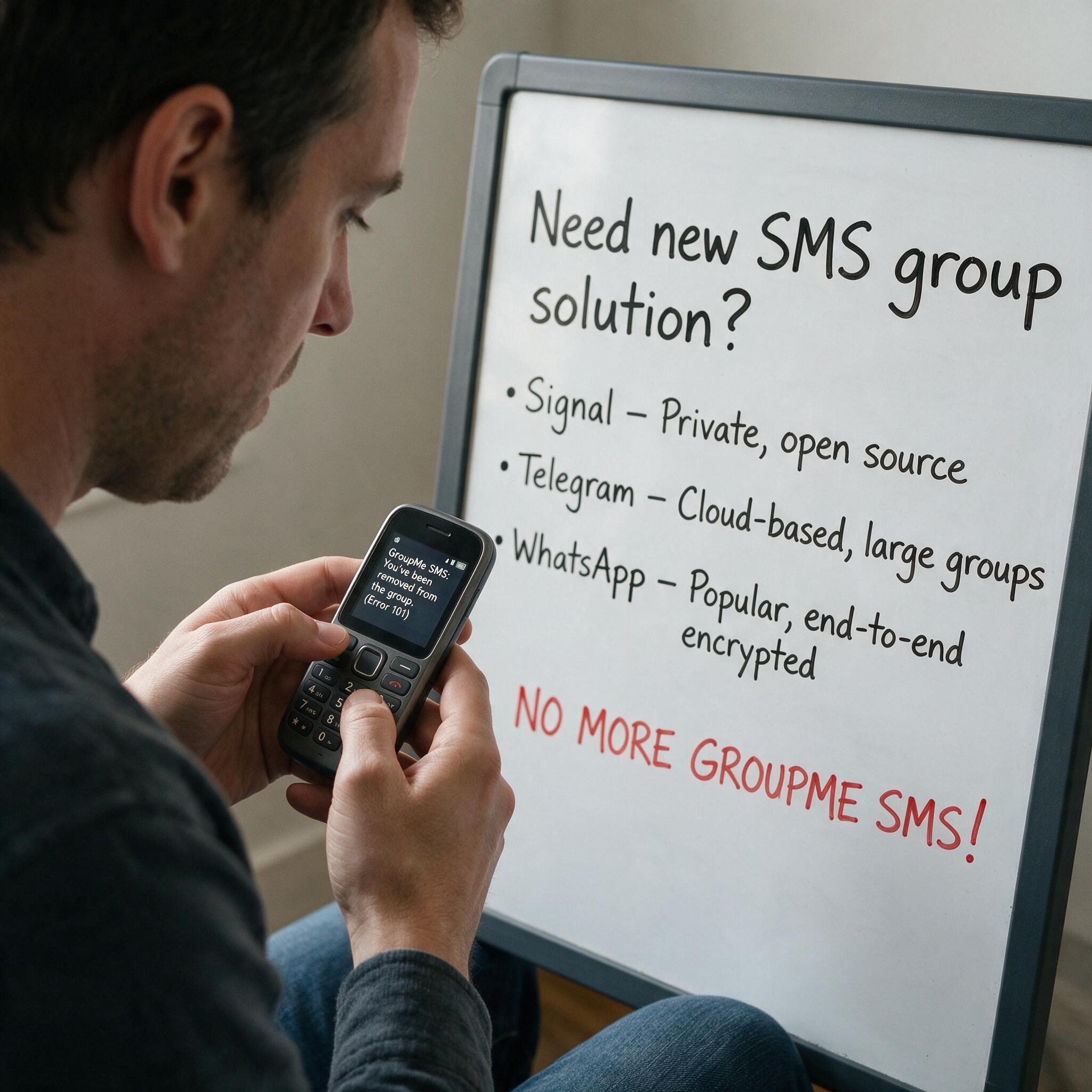

Got Kicked Out of GroupMe? Look to Evant.
Michael PedoeemGot Kicked Out of GroupMe? The Best GroupMe SMS Alternative for Jewish Communities

How to Send Targeted Alerts During Live Events
Michael PedoeemMastering Targeted Event Alerts: Real-Time Communication Strategies for Nonprofits
Top 7 SMS Trends for Communities in 2026
Michael PedoeemFrom AI-powered responses to text-to-donate and two-way texting — here are the 7 SMS trends every shul, school, and nonprofit needs to know about in 2026