
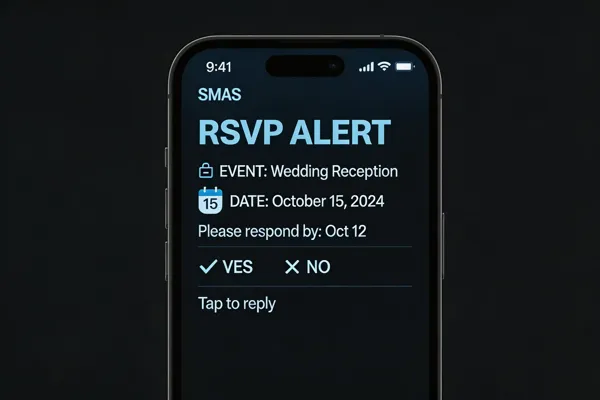
From Paper to Pixels
Traditional paper invitations have long been the staple of event planning, but they carry hidden costs—printing, postage, manual tracking, and environmental waste. Digital tools now let organizers design, send, and update invitations instantly, eliminating postage fees and the risk of lost cards. Among digital channels, SMS stands out as the logical next step. Over 97% of U.S. adults own a mobile phone, and text messages boast a 98% open rate, with most read within minutes. A simple keyword reply updates guest lists in real time, supports automated reminders, and integrates with CRM systems for analytics. This two‑way, instant communication reduces no‑shows, saves staff hours, and aligns with sustainability goals—making SMS the most efficient bridge from paper to a fully digital, responsive event workflow.
Instant Reach and Unmatched Open Rates
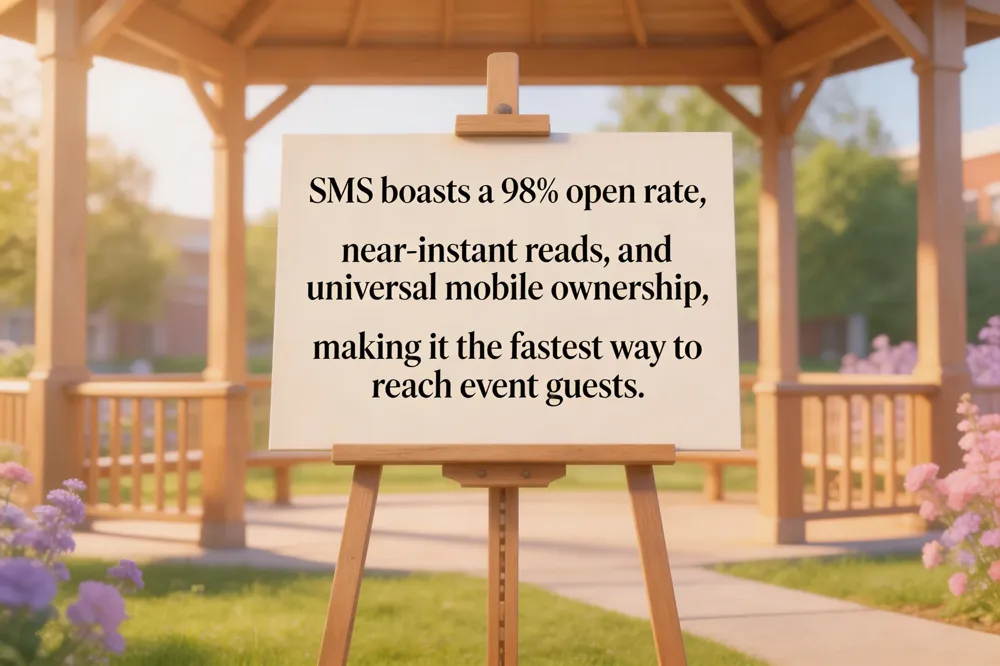
SMS invitations dominate modern event outreach. With a 98% open rate—compared to roughly 20% for email—texts are read within minutes, often under three, ensuring instant visibility. Over 95% of U.S. adults own a mobile phone, making SMS the most universal channel for nonprofits and schools.
Is bulk SMS still effective? Yes. Bulk SMS delivers near‑instant reach and high engagement, with 90% of recipients reading messages within three minutes. Platforms like Evant automate segmentation, reminders, and real‑time RSVP tracking, driving participation while keeping costs low.
What are the benefits of having an SMS channel? It offers instant, high‑visibility communication that works on any phone without apps or internet, integrates seamlessly with CRMs, and supports two‑way dialogue for confirmations, dietary needs, and last‑minute changes. The low per‑message cost and robust analytics make it ideal for time‑sensitive event management.
Text messaging services for business include bulk sending, scheduling, API integration, and analytics. Services such as Twilio, SimpleTexting, and Evant’s SaaS solution provide RSVP tracking, event check‑ins, targeted messaging, and compliance tools, helping organizations boost attendance, reduce no‑shows, and streamline logistics.
Simplifying the RSVP Process

How to RSVP via SMS?
Reply to the short code with the host’s keyword (e.g., “YES”). If asked, include guest numbers or restrictions. Send promptly and double‑check for clarity.
Is it okay for people to email RSVPs for a wedding?
Yes. Email RSVPs are convenient, eco‑friendly, and can be tracked in real time. Provide a clear link or instructions, and offer a paper alternative for less‑tech‑savvy guests.
Cost Savings and Environmental Impact

Paper invitations typically cost $0.50‑$1.40 each when you factor in printing, postage, and handling, while a single SMS costs less than $0.01. Sending 1,000 paper RSVP cards consumes roughly 5 kg of paper and generates about 25 lb of CO₂, whereas SMS eliminates that waste entirely, supporting sustainability goals. The instant delivery of text messages (98% open rate, read within minutes) also removes postage delays and manual data‑entry errors, giving organizers real‑time headcounts. The staff hours saved from not printing, mailing, and entering data can be reallocated to core event needs—higher‑quality catering, entertainment, or program impact. For nonprofits and educational groups, the cost‑savings and reduced carbon footprint translate into a larger budget for mission‑driven activities, while also presenting a modern, eco‑friendly image to donors and participants.
Compliance, Privacy, and Legal Considerations

When using SMS for RSVPs, organizations must follow the Telephone Consumer Protection Act (TCPA). Consent must be explicit—written or electronic opt‑in—before any promotional or fundraising text is sent, and the message must disclose the type and frequency of communications. Each text must include a clear opt‑out mechanism (e.g., reply STOP) and honor opt‑outs promptly; non‑compliance can trigger fines of up to $1,500 per violation.
Is SMS text blasting illegal? Yes. Bulk texting without prior consent is prohibited under the TCPA and state telemarketing rules; it can lead to hefty penalties and reputational damage.
Is text solicitation illegal? Unsolicited marketing texts sent via autodialers are illegal unless the recipient has given prior consent. Informational alerts may be exempt, but best practice is to obtain explicit opt‑in for any outreach.
Risks of unsolicited texting include legal exposure, damage to donor trust, and higher opt‑out rates, which can reduce overall engagement. By integrating opt‑in/opt‑out workflows and CRM tracking—features offered by platforms like Evant—nonprofits can stay compliant while leveraging SMS’s 98% open rate and real‑time RSVP data.
Choosing the Right Platform and Pricing
Evant login and onboarding – Access Evant at https://app.evante.app, enter your registered email and password, or use the Magic‑Link option. Forgot your password? Click “Forgot your password?” for a reset email. New users can sign up directly on the page. A dashboard refresh is slated for after Dec 1, so the UI may look slightly different.
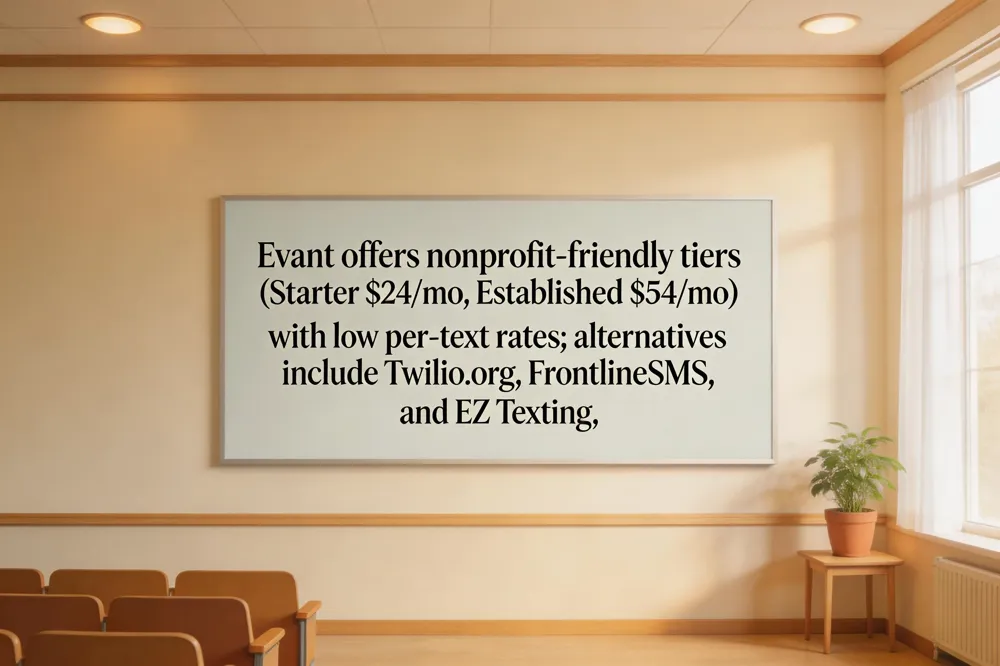
Pricing tiers for nonprofits – Evant’s Starter plan costs $24 / mo for <80 contacts (SMS $0.02 / text, MMS $0.05 / text). The Established plan at $54 / mo covers 80‑500 contacts with lower rates (SMS $0.008 / text, MMS $0.028 / text). One‑off events can use a $99 Single‑Use option (up to 1,000 messages). All plans include a dedicated 10‑digit number, unlimited contacts, a free trial, and cancel‑any‑time terms.
Free bulk SMS alternatives – Twilio.org offers trial credits and a $500 grant; FrontlineSMS provides a completely free, self‑hosted open-source solution. CitizenInsights, RapidPro, and CallHub also give free inbound/outbound texting tiers that sync with CRMs.
Best business SMS service – For event‑driven communication, Evant combines RSVP tracking, check‑ins, targeted messaging, CRM integration, and analytics in a nonprofit‑friendly package. Twilio remains the developer‑centric API leader, while EZ Texting and SimpleTexting excel for marketing teams needing easy segmentation and quick launch.
Embracing Text‑Based RSVPs
The next wave of event communication will be dominated by instant, mobile‑first interactions. As 97% of U.S. adults own a phone and SMS open rates sit at 98%, text‑based RSVPs are becoming the default channel for nonprofits and schools seeking reliable headcounts, rapid reminders, and real‑time analytics. Future platforms will deepen CRM integration, add AI‑driven segmentation, and enable two‑way multimedia dialogs (maps, menus, video invites) without requiring any app download.
Action steps for mission‑driven organizations: 1) Import guest lists into an SMS RSVP tool (e.g., Evant, RegFox, Paperless Post). 2) Set up keyword triggers for instant RSVP updates and automated follow‑up reminders. 3) Segment audiences for tailored messages such as dietary surveys or parking instructions. 4) Sync responses to your CRM to eliminate manual entry and monitor attendance trends. 5) Schedule pre‑event and post‑event texts to cut no‑shows by up to 30% and capture feedback while the experience is fresh.
Related Blogs
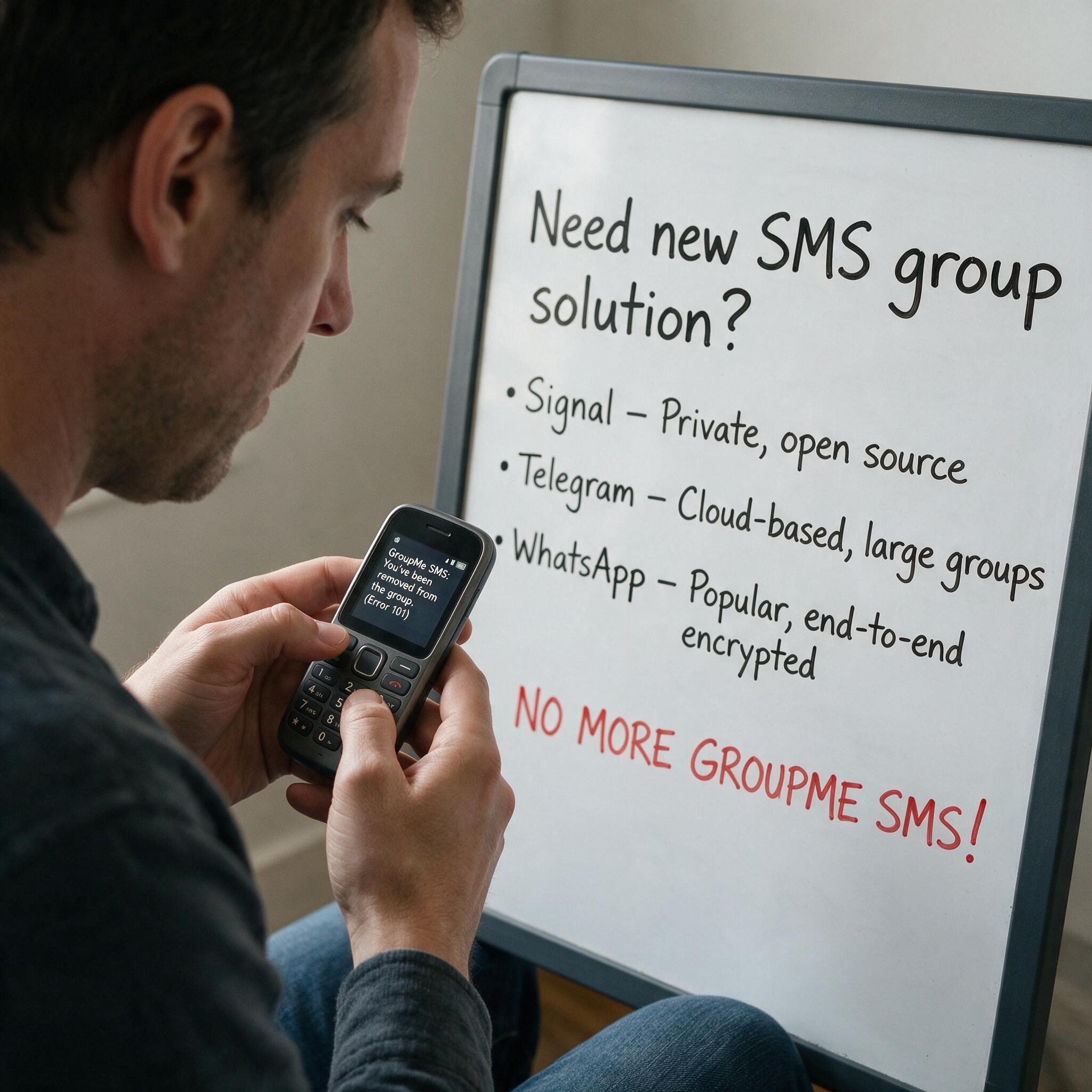

Got Kicked Out of GroupMe? Look to Evant.
Michael PedoeemGot Kicked Out of GroupMe? The Best GroupMe SMS Alternative for Jewish Communities

How to Send Targeted Alerts During Live Events
Michael PedoeemMastering Targeted Event Alerts: Real-Time Communication Strategies for Nonprofits
Top 7 SMS Trends for Communities in 2026
Michael PedoeemFrom AI-powered responses to text-to-donate and two-way texting — here are the 7 SMS trends every shul, school, and nonprofit needs to know about in 2026