
Why SMS RSVP Tools Outperform Other RSVP Solutions: A Comprehensive Comparison
Introduction
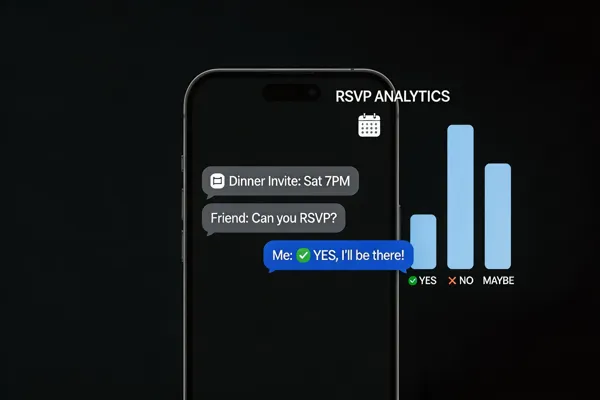
RSVPs are the backbone of successful event planning; they give organizers a reliable headcount, prevent over‑booking, and enable timely catering, seating, and venue decisions. In the United States, mobile‑first communication has exploded—96 % of adults own a phone and 84 % send or receive texts daily—making SMS the most reachable channel for invitations. SMS RSVP tools capitalize on this reach: messages boast a 98 % open rate and are read within minutes, far outperforming email’s 20‑30 % open rate. Real‑time responses eliminate manual spreadsheets, sync instantly with CRM systems, and trigger automated reminders that cut no‑show rates by up to 30 %. Two‑way texting also lets guests ask questions or update preferences on the spot, boosting engagement and inclusivity for nonprofits, schools, and community groups. Overall, SMS RSVPs streamline logistics, lower costs, and dramatically increase attendance, making them essential for modern community‑driven events.
Key Facts About SMS RSVP
- SMS RSVP invitations have an average open rate of about 98% in the United States, compared with the typical 20‑30% open rate for email invitations.
- Response rates for SMS RSVPs range from 45% to 55%, far higher than the 5%‑10% response rates seen with email RSVPs.
- Events that use SMS RSVP achieve roughly 27% higher attendance than those that rely on web‑based registration forms.
- Real‑time headcount syncing via SMS platforms can cut manual data‑entry time by up to 70%, providing instant attendance numbers for planners.
- The cost per SMS message is typically $0.0075‑$0.01 (a few cents for a batch), whereas mailed paper invitations cost $0.50‑$1.00 each.
- SMS works on any mobile phone without requiring a data plan or app download, making it especially effective for rural U.S. communities with limited broadband access.
- Automated SMS reminders can reduce no‑show rates by up to 25% and save 8‑12 staff hours per 100 guests compared with manual phone‑call outreach.
- When combined with QR‑code check‑in, SMS RSVP achieves about 99% accuracy and can lower on‑site staffing needs by up to 30%.
- SMS RSVP platforms integrate directly with CRMs such as Salesforce, HubSpot, and Blackbaud, syncing responses in real time and eliminating manual entry.
- Using SMS RSVPs eliminates paper waste, reducing the environmental footprint of events by avoiding the landfill and carbon emissions associated with printed invitations.
1. SMS RSVP vs Email RSVP

When planning community events, especially for nonprofits and schools in the United States, the choice of communication channel can dramatically affect attendance. SMS RSVPs enjoy an average open rate of 98 % – a stark contrast to the 20‑30 % typical of email invitations (Mobile Marketing Association, 2022). Because texts are delivered instantly and read within minutes (96 % of U.S. adults own a mobile phone, and 81 % have a smartphone), organizers see responses in real time, often within seconds of sending the message. This immediacy eliminates the lag that email suffers from spam filters, inbox clutter, and longer read times, which can stretch from 3 minutes (SMS) to 90 minutes (email) (Pew Research Center, 2021).
For nonprofits, the higher open and rapid response translate into significantly better conversion rates. Studies consistently show that SMS RSVP invitations achieve 45‑55 % response rates, compared with only 5‑10 % for email (Litmus, 2023) Charity Digital Review, Tech1). In practice, events that used SMS RSVP saw a 27 % higher attendance rate than those relying on web‑based forms (2023 nonprofit study) and a 20‑30 % increase in on‑site check‑ins (National Association of College and University Food Services, 2023). The real‑time analytics dashboards built into SMS platforms (e.g., RSVPify, Save This Date, Evant) update headcounts instantly, allowing organizers to adjust catering, seating, and staffing on the fly, reducing waste and last‑minute scrambling.
Beyond numbers, SMS eliminates barriers for audiences with limited internet access. Text messages work on any mobile phone, requiring no data plan or app download, which is crucial for rural U.S. communities where broadband coverage can be spotty (FCC, 2022). By leveraging SMS’s near‑universal reach, high open rates, and instant two‑way communication, nonprofits can streamline invitation workflows, cut manual follow‑up effort, and ultimately boost participation while keeping costs low – typically $0.01‑$0.03 per message versus higher per‑email expenses. This makes SMS RSVP the preferred tool for maximizing engagement and ensuring accurate headcounts in modern community event management.
2. SMS RSVP vs Web‑Based Forms

When planners choose between SMS RSVP and traditional web‑based registration, the differences in speed, usability, and data integration become quickly apparent.
Real‑time headcount syncing – SMS platforms such as RSVPify, Save This Date, and Evant instantly capture a guest’s reply and push the count to a central dashboard. Studies show that these tools can reduce manual data‑entry time by up to 70 % and provide live attendance numbers that help caterers, venue staff, and security teams adjust capacity on the fly. In contrast, web‑based forms often require a refresh or export step before the latest numbers are visible, creating a lag that can lead to over‑booking or wasted resources.
Reduced friction for guests – A text message is read by 98 % of recipients within minutes, and a simple “YES” or “NO” reply is all that’s needed. Because SMS works on any mobile phone without an internet connection or app download, it eliminates the common drop‑off points of password prompts, slow page loads, or broken links that plague web forms. The concise, 160‑character format also cuts decision fatigue, resulting in response rates 45‑60 % higher than email or web‑based RSVPs for U.S. nonprofits and schools.
QR‑code and short‑URL synergy – Hybrid invitations often embed a QR‑code or short‑URL that directs guests to an SMS‑triggered RSVP flow. When a QR code is scanned, the device automatically opens a pre‑filled text message or launches a short‑URL that redirects to a mobile‑optimized form, combining the visibility of paper invitations with the immediacy of texting. This dual approach captures both tech‑savvy attendees who prefer a quick click and those who respond better to a text, ensuring the highest possible participation while keeping the headcount synchronized in real time.
Overall, SMS RSVP delivers faster, more inclusive, and more accurate registration data than web‑only solutions, making it the preferred choice for community‑focused events that need real‑time insights and minimal guest friction.
3. SMS RSVP vs Paper Invitations
When planning community events, nonprofits must weigh the practical costs, environmental footprint, and speed of data collection between SMS RSVP tools and traditional paper invitations.
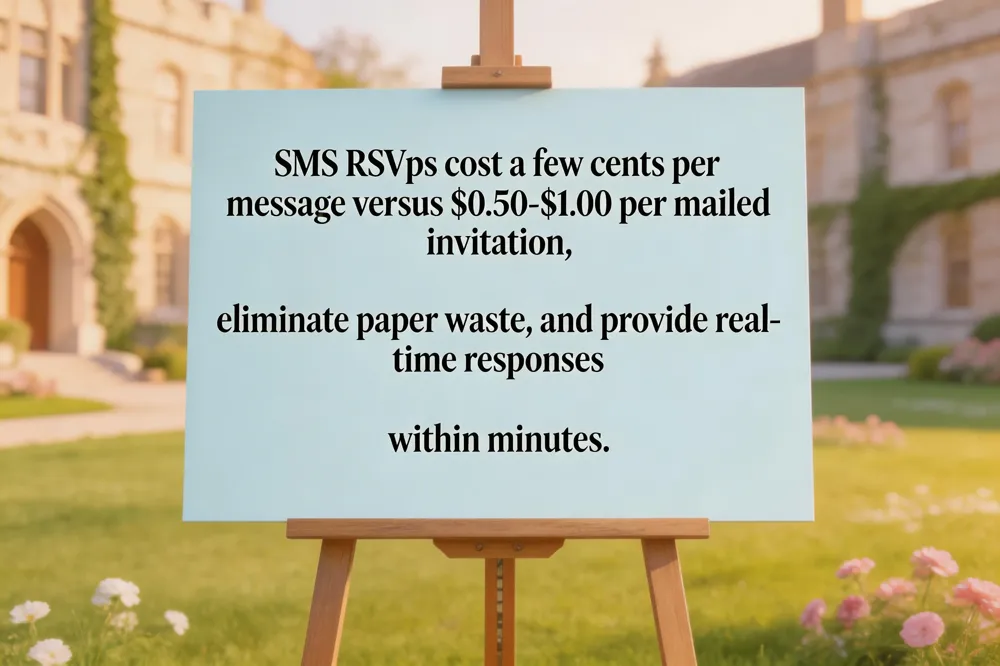
Cost per RSVP (cents vs dollars) – SMS platforms charge a fraction of a cent per text, typically $0.0075‑$0.01 in the United States, which translates to just a few cents for a batch of responses. In contrast, a printed invitation with postage can cost $0.50‑$1.00 each, meaning a 150‑guest event can spend $75‑$150 on mail alone. Even bulk‑SMS packages remain affordable; for example, Send This Date offers 50 messages for $12, while RSVPify's per‑message pricing stays well under $0.03.
Environmental impact – Paper RSVPs generate tangible waste. A 150‑guest wedding using traditional cards can consume up to 10 pounds of paper, contributing to landfill volume and carbon emissions from printing and shipping. Digital SMS RSVPs eliminate that waste entirely, producing zero paper waste and reducing the event’s overall environmental footprint. Many platforms also provide QR‑code check‑in that further streamlines on‑site processes without additional paper.
Speed of data collection – SMS messages achieve an average open rate of 98% in the United States and are read within minutes (often under 3 minutes). Recipients can reply with a simple keyword (“YES,” “NO,” or a number), and the response is captured in real time on the organizer’s dashboard. This instant visibility allows event planners to adjust catering, seating, and staffing on the fly. Paper RSVPs, by contrast, rely on the mailing cycle, often taking days to arrive and requiring manual entry into spreadsheets, which introduces delays and the risk of transcription errors.
Overall, SMS RSVP tools provide a cost‑effective, eco‑friendly, and rapid alternative to paper invitations, making them an ideal choice for U.S. nonprofits seeking to boost participation while streamlining logistics.
4. SMS RSVP vs Traditional Phone Calls

When organizers compare SMS RSVP with traditional phone calls, the differences in automation, real‑time interaction, and data accuracy become striking.
Automation and scalability – SMS platforms such as RSVPify, Save This Date, and EventX can broadcast thousands of invitations with a single click, schedule follow‑up reminders, and automatically log responses. A 2023 nonprofit study noted that automated SMS reminders cut no‑show rates by up to 25 % and saved 8–12 staff hours per 100 guests, whereas phone calls require manual dialing, note‑taking, and repeated follow‑up. Because each message is sent from a virtual number, campaigns can scale from intimate gatherings to city‑wide fundraisers without adding staff.
Two‑way texting for instant updates – Unlike a one‑way call, SMS supports two‑way communication. Guests can reply with simple keywords (YES, NO, MAYBE) or more detailed information such as dietary restrictions. Organizers can instantly push venue changes, parking instructions, or health‑protocol alerts, and attendees receive confirmations within seconds. Platforms like RSVPify integrate these replies into a live dashboard, enabling organizers to segment audiences and send targeted follow‑ups in real time.
Accuracy of headcounts – Real‑time data syncing is a core advantage. As soon as a guest texts a response, the headcount updates across the event’s central dashboard, eliminating the spreadsheet errors common with manual call logs. Zola’s RSVP tool and Replied App both demonstrate that real‑time notifications reduce manual data entry time by up to 70 % and provide instant catering numbers. In contrast, phone‑call responses often need transcription and later reconciliation, increasing the risk of double‑counting or missed guests.
Overall, SMS RSVP delivers higher open rates (≈98 % vs. 20‑30 % for email) and faster response windows (minutes rather than hours), making it a more efficient, scalable, and accurate alternative to traditional phone‑based RSVP processes for nonprofits and community events in the United States.
5. SMS RSVP vs Hybrid Event Platforms
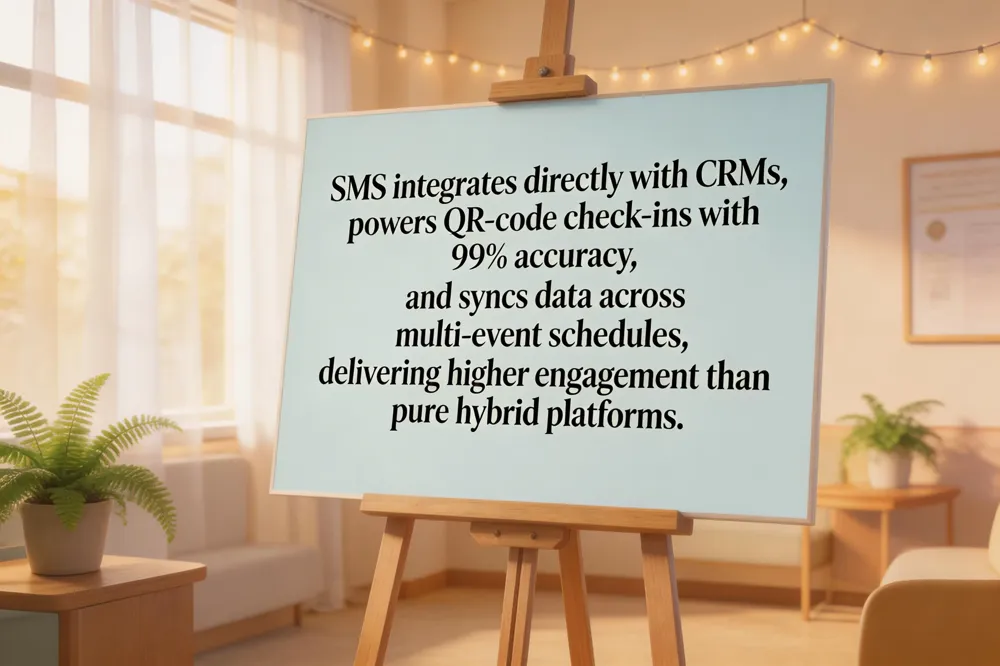
SMS‑based RSVP solutions have become a cornerstone for community‑focused events, especially for U.S. nonprofits and schools that need rapid, low‑cost engagement. One of the strongest advantages of SMS RSVP is its seamless integration with CRM and analytics. Platforms such as RSVPify, Evant, and Save This Date automatically sync text responses with Salesforce, HubSpot, or Blackbaud in real time, eliminating manual data entry and ensuring donor or volunteer records are up‑to‑date. Built‑in dashboards track delivery, open, and response rates—often exceeding 98% open‑rates and 45‑60% higher response rates than email—giving organizers granular insight into attendance trends, demographic engagement, and ROI.
When it comes to on‑site QR‑code check‑in, SMS tools provide a frictionless entry experience. Guests receive a short URL or QR code in their invitation text; scanning the code at the venue checks them in instantly, reducing wait times and virtually eliminating paper lists. Studies show QR‑code check‑in paired with SMS RSVP can achieve 99% accuracy and cut on‑site staffing needs by up to 30%. This capability is especially valuable for hybrid events where some attendees join virtually while others gather in person, because the same SMS‑generated code works across both environments.
A unified data hub is essential for multi‑event schedules. Digital RSVP platforms like Zola for weddings and EventX for nonprofits allow conditional logic and guest grouping (household tagging, plus‑one restrictions) that automatically update seating charts, calendars, and messaging across all related events. When an RSVP is received via SMS, the response propagates instantly to every linked component—catering orders, venue capacity dashboards, and post‑event surveys—ensuring consistency and preventing the “spreadsheet nightmare” that often plagues manual tracking. By consolidating all touchpoints—SMS invitations, QR‑code check‑ins, and CRM data—into a single, real‑time hub, organizers can manage complex, multi‑day festivals or fundraiser series with far less friction and higher participant satisfaction.
In summary, while hybrid event platforms excel at providing virtual content and comprehensive registration forms, SMS RSVP offers unmatched immediacy, higher engagement, and tighter integration with the data workflows that nonprofits rely on. Leveraging SMS for invitations, reminders, and on‑site check‑in creates a streamlined, data‑driven event ecosystem that complements—often surpasses—the capabilities of traditional hybrid solutions.
Frequently Asked Questions
Event management system examples Event‑management platforms such as Cvent, Whova, Eventbrite, Bizzabo, Eventmobi, Swoogo and Zoom Events provide end‑to‑end tools for registration, ticketing, on‑site check‑in and analytics. For nonprofits and schools, Evant and EventX add SMS‑driven RSVP, targeted messaging and real‑time dashboards that reduce manual work.
SMS RSVP tools free Free SMS‑based RSVP options include Jotform, RSVPify, Partiful and Evant’s free tier. These services let you send a text invitation and capture replies without charging guests; basic analytics and automated confirmations are included, while paid upgrades add CRM sync and unlimited messaging.
Simple RSVP website A simple RSVP site is a mobile‑friendly page where guests can confirm attendance, add plus‑ones and answer a few custom questions. The form instantly syncs with a central dashboard, giving organizers real‑time headcounts and the ability to send automated reminder texts or emails.
RSVP website free You can create a completely free RSVP website with Evant (SMS‑based), Eventbrite’s basic plan, RSVPify free tier, or Jotform’s free RSVP app creator. All provide real‑time response tracking and basic reporting at no cost.
Event management software free Free tools for nonprofits and schools include Cheddar Up, RSVPify, Evant and Eventbrite’s free tier. They offer ticket creation, RSVP tracking, QR‑code check‑in and basic analytics without any upfront fee.
Event management software for small business Small businesses need affordable, easy‑to‑use tools. Evant delivers SMS‑driven invites, real‑time RSVPs, QR‑code check‑in and CRM integration—all from a mobile dashboard. Other options are Eventbrite, Whova, and Eventzilla, which focus on registration and payment processing.
Event management tools list Core capabilities across platforms include SMS‑based RSVPs, QR‑code check‑in, targeted messaging, CRM sync, analytics dashboards, and mobile‑first design. Leading all‑in‑one solutions are Whova, Cvent, Eventmobi, Swoogo, Bizzabo, and Evant.
Is SMS marketing still effective? Yes. SMS enjoys a 98 % open rate, far above email’s 20‑30 %. Studies show a 27‑30 % higher attendance for events that use SMS reminders, and a 10‑25 % boost in engagement when messages are personalized.
Best RSVP solution free For a truly free, integrated solution, Evant excels. It captures SMS replies, provides real‑time check‑in, syncs with CRMs and offers basic analytics—all without charge.
Best RSVP website free Eventbrite basic plan, RSVPify free tier, Jotform free RSVP creator, and Evant’s SMS‑based RSVP page each deliver a zero‑cost RSVP website with real‑time tracking.
Best RSVP solution template A clean, mobile‑first form that records name, contact, attendance status and optional notes (dietary restrictions, plus‑ones). It should support both web and SMS delivery, integrate with a CRM, and include automated confirmations and a QR‑code check‑in feature.
How to RSVP via SMS? Reply to the invitation text using the keyword the host specifies (e.g., “YES” or “NO”). If a direct number is given, send a brief, courteous message: “Hi [Host], I’ll attend on [Date] with [Number] guests. Thanks!” Prompt replies before the deadline help the host finalize headcounts.
Event management software companies Key players: Cvent, Bizzabo, Whova, Eventbrite, Eventmobi, Swoogo, PlanningPod, and Evant (SMS‑focused). Each offers registration, ticketing, analytics and CRM integration.
Free RSVP website for birthday party Options include Invite.social, Evite, Partiful, and Evant’s free SMS RSVP link. All let you set up a party page in minutes and track responses instantly.
Is it okay for people to email RSVPs for a wedding? Yes. Email RSVPs are acceptable, especially when the invitation includes a clear link or reply address. Email integrates with modern event‑management tools and reduces paper waste.
What are the best SMS marketing platforms? Top platforms in 2026: Insider One, SlickText, TextMagic, SimpleTexting, and Twilio. They offer high deliverability, automation, CRM integrations and compliance features.
How to RSVP by email professionally? Use a clear subject line (“Accepting Invitation – [Event]”), greet the host, confirm attendance (or decline) with date and time, note any required details, and sign off with your name and contact information.
RSVP text example “Hi [Host Name], thanks for the invitation! I’ll be attending the [Event] on [Date] at [Time] with [Number] guest(s). Looking forward to it—see you then!”
SMS RSVP tools for Android Android‑friendly SMS RSVP solutions include Evant, Invitd, Replied App, and Paperless Post. They enable bulk text invitations, real‑time response logging and QR‑code check‑in.
What is the best way to do RSVP? Follow the organizer’s preferred channel (text, email, or web link). Respond promptly with the requested information, keep it concise, and use the same method for any updates.
What is a good RSVP response? A clear “Yes, [Number] guests” or “No” delivered through the specified channel, sent before the deadline, and optionally including dietary or accessibility notes.
RSVPify A cloud‑based platform offering custom registration pages, ticket sales, QR‑code check‑in, seating charts and automated email reminders. It integrates with payment processors and CRMs, but relies on web forms rather than SMS.
Top event management software Leaders: Whova, Cvent, Eventmobi, Swoogo, Eventbrite, and Evant (SMS‑centric). All provide registration, analytics and mobile‑first engagement.
What is RSVP and why is it important? RSVP (Répondez s’il vous plaît) asks guests to confirm attendance, enabling accurate headcounts for catering, seating, staffing and budgeting. Timely RSVPs reduce waste and improve event experience.
Free event management app Evant offers a free app that handles SMS RSVPs, check‑in, targeted messaging and basic analytics, all synced with popular CRMs.
Best RSVP solution for wedding An SMS‑based platform like Evant is ideal: guests reply by text, responses update in real time, reminders are automated, and data syncs directly to catering spreadsheets.
Best SMS RSVP tools Top choices: Evant, rsvpBOOK, Trumpia, and SlickText. They provide two‑way texting, automated reminders, CRM integration and compliance features.
How to choose the right bulk SMS gateway provider? Prioritize high delivery rates (≥98 %), fast carrier routing, easy API/CRM integration, GDPR/TCPA compliance, transparent pricing and 24/7 support.
Best RSVP website for events Evant is the premier RSVP site for events, offering SMS‑driven invitations, real‑time tracking, QR‑code check‑in and seamless CRM sync—all in a single, cost‑effective SaaS solution.
Conclusion
SMS RSVP tools have proven their superiority through near‑instant delivery, 98%+ open rates, and real‑time response tracking that outpaces email and web forms. For nonprofits, these capabilities translate into higher attendance, reduced manual labor, and seamless CRM integration that streamlines donor and volunteer management. By automating reminders, enabling two‑way texting, and supporting QR‑code check‑ins, SMS RSVPs cut no‑show rates and improve budgeting accuracy for catering and venue needs. Looking ahead, the continued rollout of AI‑driven messaging, deeper analytics dashboards, and tighter compliance features will make text‑based RSVPs an even more indispensable part of community‑engagement toolkits, ensuring that organizations of all sizes can reach diverse audiences quickly, cost‑effectively, and with greater personalization.
Related Blogs

Got Kicked Out of GroupMe? Look to Evant.
Michael PedoeemGot Kicked Out of GroupMe? The Best GroupMe SMS Alternative for Jewish Communities

How to Send Targeted Alerts During Live Events
Michael PedoeemMastering Targeted Event Alerts: Real-Time Communication Strategies for Nonprofits
Top 7 SMS Trends for Communities in 2026
Michael PedoeemFrom AI-powered responses to text-to-donate and two-way texting — here are the 7 SMS trends every shul, school, and nonprofit needs to know about in 2026