
Toll-Free vs 10DLC: Which Texting Number Should Your Church Use? (2026)
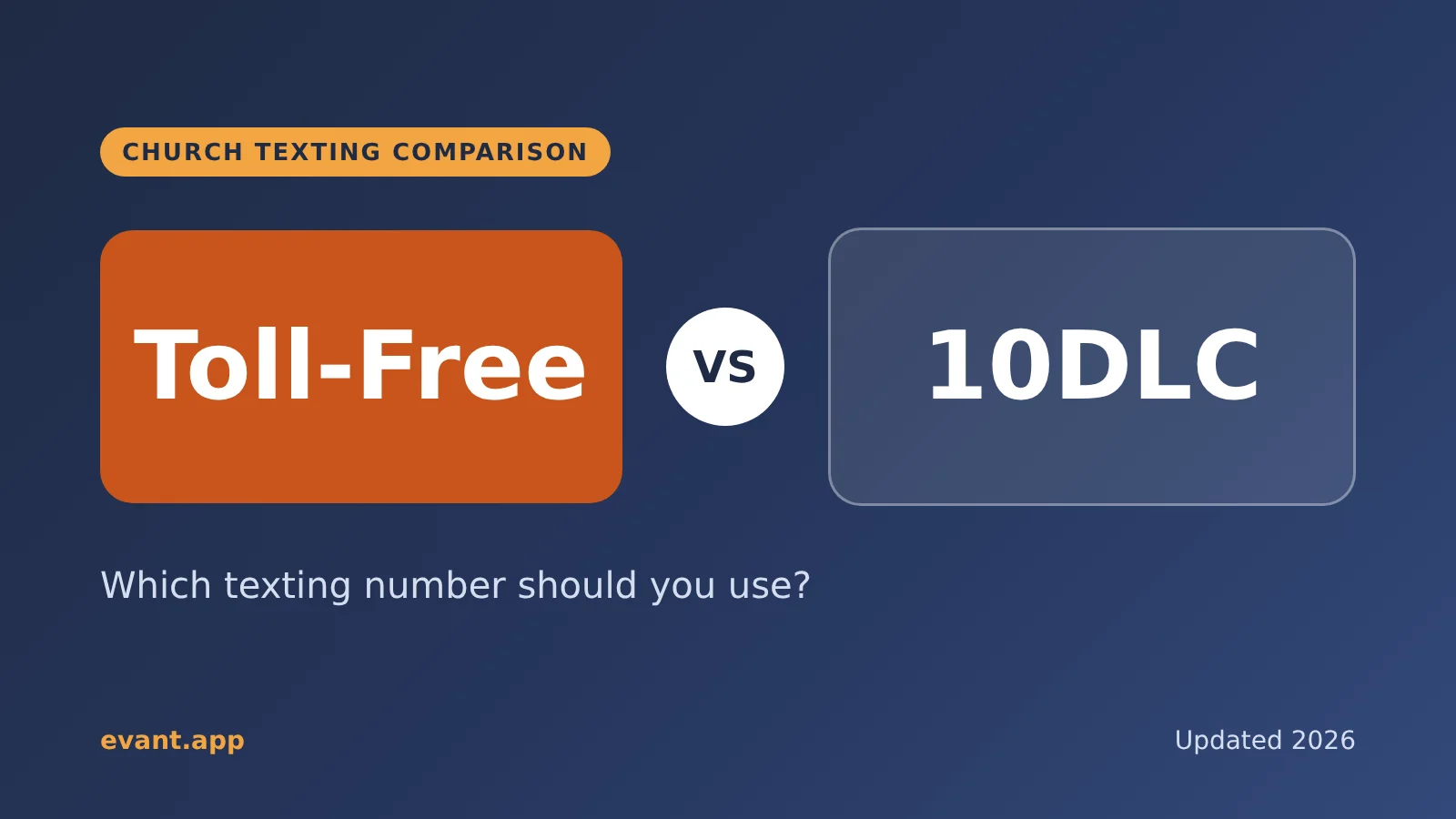
When you set up church texting, someone eventually asks: should we use a toll-free number or a local one?
Most people don't know there's a difference until their texts start getting filtered. So here's the plain-English version.
A 10DLC number is a regular 10-digit local number, like (201) 555-0123. A toll-free number starts with 800, 888, 877 and so on. Both can send texts. They just get approved differently and land differently with people.
Checked November 2026 against Twilio and Bandwidth documentation. Carrier rules change, so check with your provider before you register.
The short version
Use a local 10DLC number if you want people to recognize you and reply. That's most churches, synagogues and nonprofits.
Use toll-free if you send to a national audience or need very high volume without per-carrier daily caps.
What people see
This is the part I care about most.
When someone in your congregation gets a text from a local area code, it looks like it's from someone nearby. When it comes from an 800 number, most of us assume it's a company. Maybe spam.
Twilio's number-type guide calls 10DLC "the only number type to provide you with a local identity." For a church or a shul, that's the whole point.
Approval and timing
Both need approval before you can text at scale.
10DLC means registering your organization (the brand) and what you'll text about (the campaign). Twilio says anyone texting from a 10DLC number to the US must register, and unregistered traffic gets extra carrier fees. Its guide says registration can take up to 3 to 5 weeks.
Toll-free goes through toll-free verification instead, which Twilio's guide says typically takes about 5 to 14 days. Bandwidth says the gap between the two was negligible in its own survey, so don't pick toll-free just to save time.
Either way, you'll need opt-in wording, HELP and STOP replies, and a privacy policy. Our free 10DLC compliance generator writes those for you.
Cost
Bandwidth says toll-free verification is essentially free, while 10DLC has registration costs and an ongoing monthly fee per campaign. Toll-free numbers themselves cost more to get than local numbers.
For one church with one campaign, the difference is small. It adds up if you run lots of separate campaigns.
Volume
Twilio lists 10DLC throughput at 3 to 180 messages per second depending on your Trust Score, with daily caps set by T-Mobile. A low-volume brand gets about 2,000 texts a day to T-Mobile.
Toll-free starts at 3 messages per second and has no daily volume limit.
Most churches never get close to these limits. If you're texting a few hundred or a few thousand people, either works.
What we use at Evant
Evant gives every organization a local 10-digit number and handles the 10DLC registration for you. You text and call from the same number, and people see a local area code. Plans start at $20/month.
👉 Start your free trial. No credit card. Or read our full 10DLC registration guide.
FAQ
What is the difference between a toll-free number and 10DLC?
A 10DLC number is a regular 10-digit local number with a local area code. A toll-free number starts with 800, 888, 877 and so on. Both can send texts in the US, but each has its own approval process.
Do churches and nonprofits need to register for 10DLC?
Yes. Twilio says anyone sending messages from a 10DLC number to the US must register, and unregistered traffic gets extra carrier fees. Toll-free numbers go through toll-free verification instead.
How long does approval take?
Twilio's number-type guide says 10DLC registration can take up to 3 to 5 weeks because of vetting, and toll-free verification typically takes about 5 to 14 days. Bandwidth says it found the difference to be negligible in practice.
Which gets a better response for a church?
For most churches, a local 10DLC number. Twilio calls 10DLC the only number type that gives you a local identity, and a local area code looks familiar in a way an 800 number doesn't.
More church texting comparisons
Related Blogs

Clearstream vs Text In Church: Which Is Right for Your Church? (2026)
Michael PedoeemClearstream is built for volume and integrations. Text In Church is built for guest follow-up. Here is how they compare on price, calls and features.
Flocknote vs Text In Church: Which Church Texting Tool Fits? (2026)
Michael PedoeemFlocknote and Text In Church are two of the biggest names in church texting. Here is how they compare on price, guest follow-up, calls and giving.
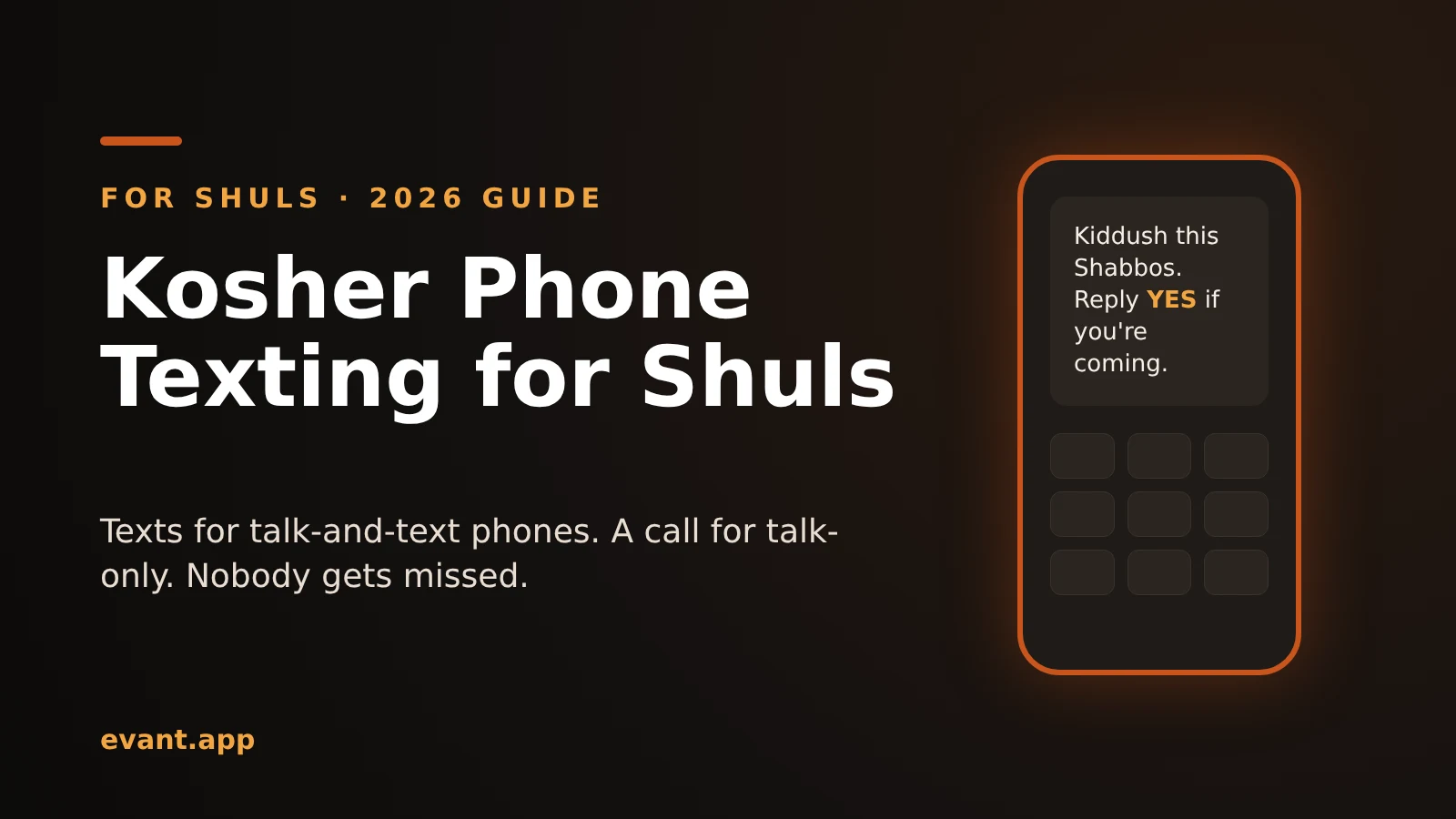
Kosher Phone Texting for Shuls: How to Reach Every Member (2026)
Michael PedoeemPlain texts reach talk-and-text kosher phones. Talk-only phones need a call. Here's how to reach every shul member, plus how the tools compare.