A Better Welcome Starts With Listening
Families are busy. Work, childcare, transportation, and school schedules can turn a worthwhile event into one more thing that is hard to fit in. A reminder may help, but attendance is not just a messaging problem.
The more useful starting point is to ask families what would make showing up feel relevant and manageable. Research-backed guidance from the Institute of Education Sciences recommends shaping events around family priorities, offering personal invitations, and explaining what participants can gain.
That is a practical approach, not a promise of a specific attendance increase. The available sources offer strategies and broader research on family engagement, but no measured before-and-after result for a named school’s event attendance.
Schools can listen, address practical barriers, and build a calendar around topics families value. Then timely, concise messages can make the next step clear. For event teams, Evant brings SMS RSVPs and event check-ins together, helping organizers manage communication and participation in one place.
Build Engagement Around Trust and Belonging

Strong family engagement is not a stream of announcements sent from school to home. It is a relationship in which schools listen, respond, and make room for families to shape activities and decisions. Caregivers know their children and communities; treating that knowledge as an asset helps schools plan events that feel relevant and welcoming.
Start with a warm first contact, then keep communication clear, consistent, and accessible in families’ preferred languages and formats. Personal conversations can uncover what families value and what makes participation difficult. Offer varied ways to take part, including in-person and virtual gatherings, at-home activities, and meeting times that account for work and caregiving.
Give families meaningful roles, too. Invite caregivers to help plan events, advise on priorities, or welcome other families. These practices reflect guidance from the Institute of Education Sciences, which recommends personal invitations, relevant activities, and family leadership opportunities. Evant’s SMS RSVP and targeted messaging tools can support those invitations and make it easier to hear back.
A school family engagement plan should name whom the school hopes to reach, set participation goals, identify barriers, and assign outreach responsibilities. It should also budget for access needs, schedule varied activities, and define measures such as RSVPs, attendance, repeat participation, and family feedback. Review results regularly with families and staff, then adjust.
Research summarized by the Harvard Graduate School of Education associates effective family-school-community partnerships with better student attendance and other benefits. This is evidence about student outcomes, not proof that a particular school’s family events drew more attendees.
For a practical starting point, ask families which topics, formats, and times would make school activities worth attending. Then share what changed because of their input. That follow-through shows that participation is a partnership, not a one-way request.
Design Events Families Value
A full calendar does not guarantee families will show up. An event is worth their time when it answers a real question, fits their schedule, or gives them a meaningful way to connect with their child’s school.
Ask caregivers what they want to learn, which formats work for them, and when they are available. A short survey, a conversation at pickup, or a text asking for suggestions can help schools plan around family priorities instead of repeating the same traditional gatherings.
The Institute of Education Sciences recommends focusing events on useful topics, such as student progress, assessments, learning at home, and where to get help. It also advises offering events for groups with particular needs, publishing a yearly calendar that explains what each event offers, and pairing learning with activities that build relationships. Its family engagement event recommendations offer a practical planning guide.
What are some practical family engagement activities? Schools can host family math or learning nights, workshops, informal meet-and-greets, and student-art showcases. A math activity followed by a gallery walk, for example, gives caregivers both a useful learning experience and time to connect with students and staff.
Make participation possible in more than one way. Offer sessions at different times or online, and share take-home activities for families who cannot attend in person. A yearly calendar helps caregivers plan ahead, while clear descriptions set expectations about what they can learn or do.
Invite caregivers to join planning teams, help organize activities, or shape event topics. Their experience can make gatherings more relevant and gives families a real role in school life. Evant supports event coordination with SMS RSVPs and check-ins, helping staff manage participation without relying only on paper sign-up sheets. The goal is not to add more events, but to make each one useful, welcoming, and shaped by the people it is meant to serve.
Make Attendance Easier to Achieve

How can schools increase family attendance at events? Start by asking families what they want to learn, which formats feel useful, and what times fit their schedules. Then build the event around those answers, rather than expecting families to make room for a gathering whose purpose is unclear.
Share a yearly calendar and explain what families can expect to gain from each event. For gatherings tied to a student’s learning, a personal invitation from a familiar educator can make attendance feel valued, not just requested. The Institute of Education Sciences’ family engagement strategies recommend advance calendars, clear event purposes, and personal invitations.
Make the practical details easy to act on: include the location, arrival instructions, accessibility information, and a simple way to RSVP. Offer meeting times that account for work schedules, and consider transportation or childcare support where available. Translated materials, virtual access, or an at-home activity can give families another way to take part when attending in person is not realistic.
An event can also be a chance to meet teachers and other families, help shape future gatherings, or contribute in a role that suits each person. Evant’s SMS RSVP and event check-in tools can support a simple response and a clear arrival process, while targeted messages can share relevant logistics. Afterward, ask what worked and what got in the way, then use that feedback to improve the next event. IES offers planning recommendations, not measured results for a named school, so attendance gains should be assessed locally.
For more practical ways to reduce friction between an invitation and arrival, see how SMS RSVP tools can support event attendance.
Use SMS for Timely Event Communication

How can SMS reminders help increase attendance at school events? A text can put a short, useful prompt where families may see it quickly, while email or an event page can hold details they may need to revisit. This makes SMS a practical complement to other channels, not a replacement for them.
Plan a small sequence around what families need to do. Send an early invitation explaining the event’s purpose, then a reminder with essential logistics, followed by a day-of update only when it adds useful information. Include the event name, date and time, location or access link, and a clear way to RSVP or ask a question.
Keep each message personal, concise, and timed for families’ schedules. Ask for consent before sending texts, make the information accessible, and avoid repeating details without adding value. Guidance from the Office of Planning, Research, and Evaluation recommends learning about participants’ needs and preferences, choosing useful timing, and tracking engagement.
That guidance draws in part on the STREAMS evaluation of a voluntary relationship-education workshop in Florida. Simple reminders increased attendance at the first session compared with no reminders or enhanced messages, but this was not a school-event study, and the finding does not guarantee the same result elsewhere.
Tools such as Evant can connect SMS RSVPs, targeted messaging, event check-ins, and analytics, helping organizers coordinate communication and review who registered and attended. The data can inform future outreach, but a platform alone cannot remove barriers or ensure families will come.
For a detailed event message, use email or an event page; use a text for a timely prompt or change. This channel mix follows the same practical approach described in SMS communication alongside other channels.
Learn From Each Event
A full room is only one signal. Record each event’s format, invitations, RSVPs, check-ins, repeat participation, and family feedback, then compare patterns across gatherings. Evant’s SMS RSVPs, event check-ins, and analytics can help organize those measures.
Use the numbers to spot friction, not to guess at its cause. Pair participation trends with conversations about timing, language, transportation, or event value. The Institute of Education Sciences’ event-planning guidance recommends making events relevant to families and involving them in planning.
The available guidance supports relationship-building, thoughtful event design, and carefully timed reminders. It does not document a named school’s measured increase in family event attendance. Treat each gathering as a chance to strengthen connections, learn what families need, and make the next invitation more relevant and accessible.
Turn Every Gathering Into a Next Step
Family attendance grows when events feel relevant, relationships feel genuine, and practical barriers are addressed. Clear invitations and useful reminders help families act, but trust and belonging make participation worth repeating. The Institute of Education Sciences’ event-planning guidance puts family priorities and personal connection at the center.
Digital tools can coordinate invitations, SMS RSVPs, reminders, check-ins, and follow-up. Evant brings those event tasks together, while schools keep family input and a welcoming experience at the heart of each gathering.
Related Blogs
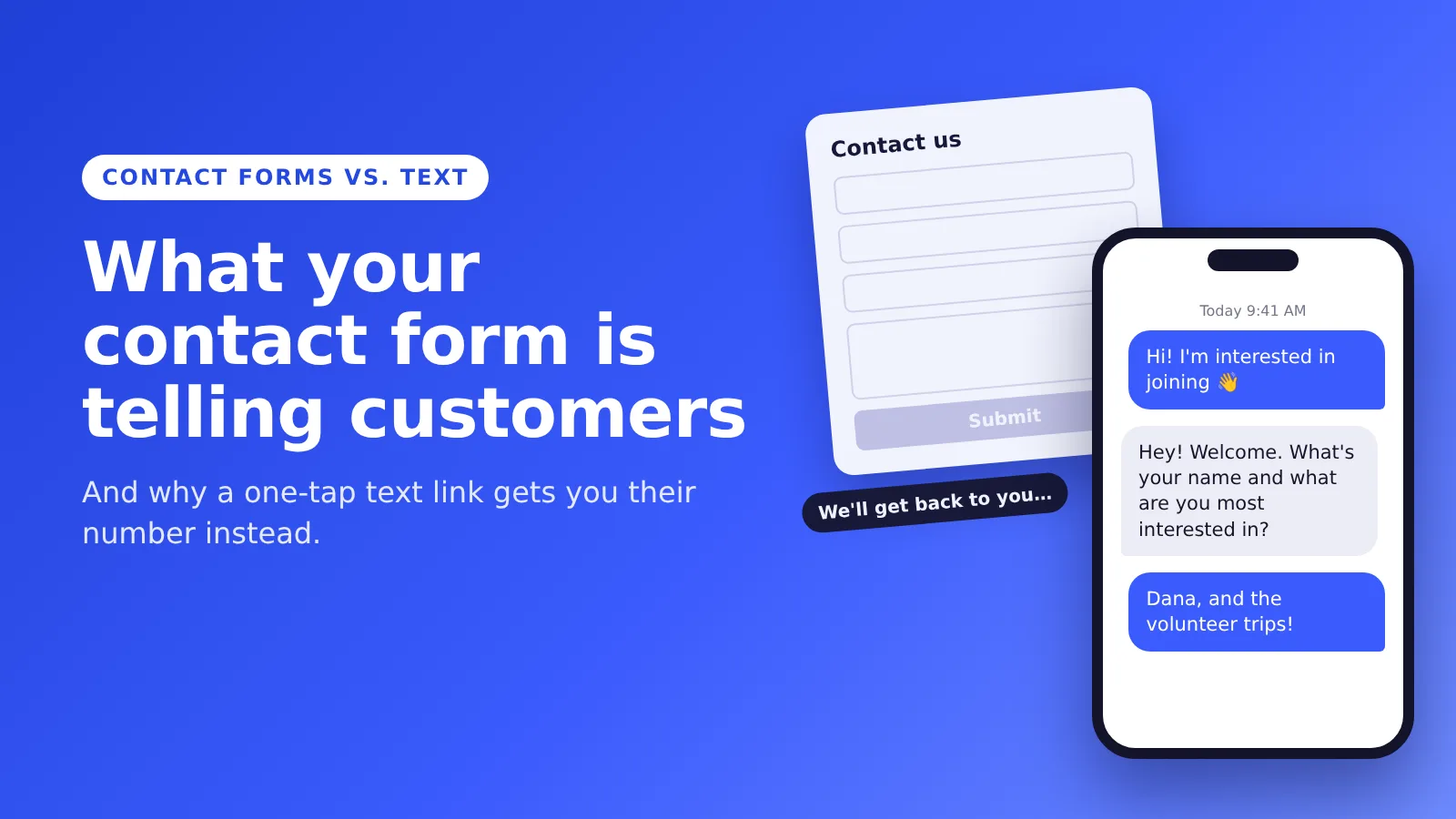

What Your Contact Form Is Telling Customers
Michael PedoeemA contact form tells people to fill out boxes and wait. A text link opens their messages app with your number ready, and gets you their number in one tap.

Best Texting App for Church Youth Groups in 2026: GroupMe, Remind, Flocknote and Two Others Compared
Michael PedoeemGroupMe, Remind, Flocknote, SimpleTexting and Evant compared for youth groups: price, parent contacts, safe-environment rules and texts without an app.

Church & Community SMS Glossary: 53 Texting Terms in Plain English (2026)
Michael PedoeemA2P 10DLC, opt-in, segments, keywords, text-to-RSVP and 48 more texting terms for churches, shuls, schools and nonprofits, explained plainly.





Get the Evant app



