
Why Text Messaging Is a Nonprofit Game-Changer
Cellphone ownership among adults 18 to 49 is effectively at 100%, and 70% of people aged 50 and over use smartphones regularly. That reality creates a direct line to supporters that other channels can’t match.
Text messages deliver a 98% open rate, with most read within three minutes. Compare that to email’s sub-30% opens, and it’s clear why SMS has become the preferred channel for real-time communication.
For nonprofits, this immediacy translates into measurable gains. Adding text messaging to an existing email strategy can increase revenue per person by 30%. The same campaigns that used to rely on email blasts now get instant responses, higher click-through rates, and stronger donor retention.
Evant brings this capability together in a single platform designed for nonprofits. It handles everything from event reminders and RSVPs to volunteer coordination and targeted donor messaging, giving teams the tools they need without requiring a dedicated IT department.
Best Strategies for Nonprofit Text Campaigns
Most nonprofits run text campaigns as one-off blasts: a push for Giving Tuesday, a reminder before the gala, then radio silence. Scattershot texting burns through your opt-in list because supporters do not know what to expect or why they should stay subscribed.
A coherent year-round plan turns SMS into a relationship channel instead of a megaphone. Map out your calendar so supporters receive a predictable rhythm: impact updates, volunteer spotlights, early-access offers, event invitations, and an occasional ask. The goal is roughly four value-add messages for every direct fundraising request — a ratio, which keeps engagement high without triggering opt-outs.
The mechanics matter as much as the calendar. Rather than asking people to fill out multi-page forms on their phones, use targeted SMS tools that let supporters RSVP or check in with a single reply. A text campaign that links straight to an SMS RSVP system — like what Evant.app provides — makes registration feel instant and frictionless, which lifts attendance rates far above what email or paper sign-ups deliver.
| Communication Approach | Typical Staff Effort | Expected Engagement Outcome |
|---|---|---|
| Scattershot blasts | Low planning; high frequency per event | High opt-out rate; low long-term retention |
| Year-round plan with RSVP tools | Moderate calendar work; low per-message effort | Stable list growth; 2-4x higher event turnout |
Turning Event Reminders Into Higher Attendance
A pre-event SMS reminder does more than refresh a memory — it signals that the event is worth showing up to. A simple text with the date, time, and location can reduce no-shows significantly; a 2023 study by the Journal of the American Medical Association found that text reminders cut appointment no-shows by 45%. Systems like Evant turn this into an automated workflow: send a confirmation right after registration, a reminder 48 hours out, and a day-of text with parking or log-in details.
Planned sequences are important, but so is the ability to react fast. When a speaker changes or the venue shifts, SMS gets the update to every attendee within minutes — something email can't match. A quick "Room changed to Ballroom B" or "New keynote added" keeps your event top of mind and shows supporters you respect their time.
Building Momentum With Real-Time Event Updates
On the day of an event, momentum is everything. A packed room of engaged attendees can turn into a distracted crowd the moment a speaker runs late or a session moves rooms. Email blasts land too slowly, and printed schedules become obsolete the second plans change. SMS fills that gap instantly.
A simple text like "Next session just moved to Room 204 — see you there in 5 min" reaches every attendee in seconds. For multi-speaker events, alerts about who's going on stage next keep people from wandering off between sessions. These real-time nudges don't just solve logistics — they signal that the organization is organized and that the event deserves attention.
The same immediacy works for registration deadlines and new benefits. When a workshop fills up or an early-bird cutoff approaches, a quick "Only 12 spots left for the afternoon breakout with Dr. Owens" creates urgency without feeling like a hard sell. Nearly seven out of 10 event professionals believe that using technology to improve guest experiences is here to stay — and nothing improves experience like knowing exactly where to be and when.
Post-Event Follow-Up That Sustains Engagement
The event is over, the auction items have been picked up, and the last volunteer has checked out. For many nonprofits, this is when the relationship goes quiet until next year. The organizations that build lasting supporter connections do the opposite: they treat the post-event moment as a fresh starting point.
A well-crafted thank-you text sent within a few hours of an event does two things at once. It validates the attendee's choice to show up (worthwhile, noticed) and keeps your cause top-of-mind while the experience is still warm. The same SMS channel that drove registration can deliver impact summaries, photo highlights, and a simple link to a feedback form — all without crowding an inbox.
Evant makes this kind of continuity simple. Instead of relying on email catch-up campaigns that arrive days late, your team can send event highlights and thank-you messages immediately from the platform that handled RSVPs and check-ins. Those follow-ups land with recipients still holding their phones from the event, turning a single touchpoint into an ongoing conversation.
Shift Changes and Emergency Alerts

One of the strongest uses of SMS in volunteer coordination is scheduling shift changes and filling last-minute gaps. When a volunteer cancels or a weather event disrupts plans, a quick group text can reach the entire roster instantly, letting people respond with a simple yes or no. Unlike email, which often goes unread for hours, text messages are opened within minutes, making them ideal for time-sensitive coordination. Evant's SMS features let you send targeted blasts to specific volunteer segments, so the right people get the right message without cluttering everyone's inbox.
Emergency alerts are another critical function where text messaging shines. Whether it's a sudden venue closure, a security concern, or a natural disaster, getting word out fast can keep your volunteers safe and your event from descending into chaos. SMS has a 98% open rate, and it's the most direct channel to reach people who are on the move. Evant's platform allows you to send urgent updates with a single tap, and because you can mix in automated check-ins, you can confirm that every volunteer has received the message before you proceed.
Volunteer Coordination at Your Fingertips
Schedule confirmations and finding replacements via SMS don't have to be a headache. With Evant, you can set up automated SMS reminders and RSVPs that reduce no-shows and keep your calendar full. A simple text like "Can you cover the 2 PM shift? Reply YES or NO" makes it easy for volunteers to commit on the spot. You can also use SMS to send follow-up instructions, parking directions, and check-in details, cutting down on the back-and-forth that typically eats up staff time. For nonprofits already using tools like CharityEngine, Evant offers a more direct, cost-effective way to handle the same tasks without complex integrations or per-message fees.
When you need to find a replacement quickly, a broadcast to the full volunteer list often works better than calling one person at a time. Evant's group messaging lets you launch a request and track responses in real time, so you always know whether you need to keep looking. That same immediacy carries over to emergency alerts, where a pre-written template can be sent to everyone with one click. Best of all, these tools are built with the same mobile-first approach that drives the high open rates of SMS, so you're not asking anyone to download an app or check a portal.
| Volunteer Use Case | SMS Approach | Evant Platform Advantage |
|---|---|---|
| Shift coverage | Broadcast 'Need a sub' texts | Targeted segments, no clutter |
| Emergency alerts | Pre-written urgent templates | Instant delivery, read receipts |
| Schedule confirmations | Automated RSVP reminders | Fewer no-shows, less staff time |
Text-to-Give Strategies That Drive Donations
Text-to-give turns a simple reply into a donation. Supporters text a keyword (like GIVE) to your short code, and the gift is charged to their phone bill or a linked card. No app download, no typing a URL, no digging for a donation page. That friction is exactly why text-to-give converts so well.
The mechanics are straightforward, but the strategy around them determines your results. Set a clear keyword, promote it everywhere you can, and make the reply experience instant and mobile-friendly. Nonprofits that pair SMS campaigns with their other channels see better response rates because text messaging gets through where email often gets buried. For example, SMS boasts a 98% open rate and around 45% response rate, far outpacing email's sub-30% open rates.
Set Up Text-to-Give the Right Way
Choose a short code that's memorable and spelled out. Use a dedicated number for text-to-give only, so you can track replies and segment supporters. Most SMS platforms, including Evant, make it easy to set up and manage a text-to-give flow: you pick a keyword, set an auto-reply, and route the donation link or payment page.
Your auto-reply should confirm the text received, thank the donor, and provide next steps. If you're taking donations via SMS payment link, keep the link short and the landing page simple. Text-to-give works best when it's part of a larger SMS strategy, not a one-off ask.
Promote Your Text-to-Give Everywhere
You can't rely on a single announcement. Promote your text-to-give in your email signature, on your website homepage, in social media bios, and in event programs. Add it to your direct mail pieces and your printed materials. The more places the keyword appears, the more donations you'll capture.
- Event signage with a URL or short code
- Social media posts with a clickable link
- Email newsletters with a text-to-give CTA
- Volunteer and staff emails with a reminder
- Your text-to-give landing page shared in SMS blasts
A key is to make it easy to give in the moment. When someone texts in at an event, they're already engaged. If your venue has poor Wi-Fi or you're using a printed flyer, SMS removes those barriers.
Make the Donation Experience Fast and Mobile-Friendly
A text-to-give flow that takes more than a couple of taps will lose donors. Your donation page must be mobile-optimized and load quickly. The payment link should go straight to a form with minimal fields. If you can pre-fill name and email from the donor's SMS, even better.
Also, consider offering fixed amounts like $25, $50, or $100 as a text reply. That removes the need for typing a custom amount and speeds up the process. Integrating payments directly into your SMS flow means donors can give in under a minute, which is the sweet spot for impulse donations.
SMS Open Rate. SMS messages typically see a 98% open rate, compared to email's sub-30% open rate. Source Response Rate. SMS response rates average around 45%, versus about 6% for email. Source
Non-Ask Texts That Retain Donors
Nonprofits that treat every text as an ask risk burning out their most loyal supporters. The antidote is a deliberate mix of non-ask messages that deliver value, celebrate wins, and deepen relationships. These messages work because they meet donors where they already are: on their phones, often within arm's reach, and with a 98% open rate to match. When you reserve SMS for pure appeals, you lose the trust that makes those appeals effective in the first place.
The most effective non-ask texts fall into three practical categories. They are not abstract ideas; they are templates you can adapt this week.
Impact updates. Send a photo or short video of a beneficiary, a field report, or a quick stat showing what a recent gift accomplished. For example, a food bank might text, "You helped provide 1,200 meals last weekend. Here's a photo from the line." This turns an abstract donation into a tangible scene of change.Anniversary messages. Mark the date a supporter first gave or first volunteered. A simple "Happy 3 years of supporting our mission, Sarah!" accompanied by a milestone-specific thank-you can reignite that original spark. It shows you remember them beyond the transaction.Personalized thank-yous. A genuine, non-generic thank-you sent within 24 hours of a gift or volunteer shift. Avoid the same "Thanks for your support" template for everyone. Mention the specific event, the impact, or a detail about their participation. It reinforces that you see them as individuals, not just data points.
Why This Works: The Psychology of Reciprocity
These non-ask touches work on a basic behavioral level. By giving value first, you activate a sense of reciprocity. Supporters who receive consistent, meaningful updates feel more connected and are more likely to respond when a genuine ask does come. This is the principle behind donor retention strategies that prioritize stewardship over solicitation.
For a practical framework, consider how a church or school schedules its communications. You can apply the same rhythm: one non-ask text for every two or three event or donation messages. Tools like Evant make this automatic, letting you schedule impact updates and anniversary messages ahead of time, so the thank-you's never slip through the cracks.
Real-World Examples and Ideas
Event-driven organizations see this play out in real time. A nonprofit hosting a gala might send a series of behind-the-scenes texts in the week before the event: a photo of the venue, a teaser of the program, or a note from the emcee. This builds anticipation and makes attendees feel like insiders. For more structured ideas, the team at DonorPerfect shares similar strategies for weaving SMS into the donor journey.
The key is to keep the emphasis on the donor's impact, not on your organization's needs. That distinction separates a thoughtful update from a veiled appeal. When done right, non-ask texts are the glue that holds your entire SMS strategy together.
| Message Type | Communication Purpose | Example Sending Trigger |
|---|---|---|
| Impact update | Show tangible results | After a campaign completes |
| Anniversary message | Celebrate the relationship | On the date of first gift |
| Personalized thank-you | Reinforce donor worth | Within 24 hours of a gift or event |
The Power of a Conversation-Like Voice
The Power of a Conversation-Like Voice
Generic blasts read like spam and get muted. For Evant customers, the real payoff comes from SMS that sounds like a thoughtful text from a friend. When a nonprofit moves from one-way announcements to two-way, conversation-like messaging, supporters respond in kind. SMS already delivers a 98% open rate, and SMS-based RSVP platforms like Evant make it easy to pair that reach with a personal voice.
Why a Conversational Voice Beats a Broadcast Tone
Most nonprofit texts sound like they were written by a robot: "Your RSVP is confirmed. Reply with your name." That kind of copy gets a polite click at best. A conversational voice, by contrast, invites a reply and builds a genuine two-way channel. It turns a logistical update into an actual exchange, which is why top SMS guides for event engagement stress the value of talking like a person.
Conversational voice. A writing style that mimics natural one-on-one texting: short sentences, contractions, and a friendly, direct tone. It increases response rates because it feels like a human reached out, not a system.Broadcast tone. Mass-marketing language used in emails and robocalls. It features formal phrasing, calls to action like "Act now," and a general audience. Supporters often ignore it because it feels impersonal.Two-way messaging. An SMS setup where supporters can reply and expect a real answer. This is the backbone of authentic engagement and a core feature Evant uses to turn one-way blasts into conversations that boost event attendance.
Practical Copy Tips for Nonprofits
Writing conversational SMS starts with a few habits. Use the supporter's first name, drop formal pleasantries, and imagine you are texting a busy colleague. Keep every message under 160 characters when possible, and ask a question that invites a reply: "Can you make it, or should I send the calendar invite?" This approach works; SMS marketing guides for nonprofits consistently highlight that engagement rises when messages ask for a response rather than a passive read.
- Open with the recipient's name and a friendly greeting like "Hey" or "Hi" to set a personal tone.
- Use contractions and teachable, everyday language instead of formal jargon.
- Ask one clear, single question per message to encourage a reply.
- Keep the call to action specific — "Reply YES to claim your spot" beats "Please respond."
- Bring in a callback to a previous interaction (Loved your question at the last meeting...) to show you remember.
The Power of a Conversation-Like Voice
Reading your copy out loud before sending catches robotic phrasing. If it doesn't sound like something you'd text a friend, rewrite it. For event RSVPs, this human frame matters more than length. Nonprofits that adopt this style see a lift in participation, which is why Evant's platform is built around two-way messaging that supports authentic engagement, not just mass blasts.
A conversational voice also helps with vulnerable moments like volunteer coordination or donation follow-ups, where tone makes or breaks trust. Pairing that voice with actionable next steps and a clear request keeps the human feel while still driving action. This combination is why text-based event management tools for nonprofits outperform email-centric alternatives in getting RSVPs back.
| Communication Aspect | Broadcast-Style SMS | Conversational SMS |
|---|---|---|
| Tone | Formal, one-way, urgent | Friendly, two-way, personal |
| Open rate | Still high, but ignored quickly | Feels like a text from a friend |
| Response | Low reply rate, one-off | Natural reply, builds a thread |
| Result | Confirmed RSVP at best | Deeper donor relationship |
Consent and Compliance Essentials
When your nonprofit sends text messages, the line between a helpful reminder and an unwanted interruption comes down to permission. The Telephone Consumer Protection Act (TCPA) — a U.S. federal law regulating telemarketing calls and texts requires you to get prior express written consent before sending marketing texts to wireless numbers, and that consent must be documented and traceable. Failure to maintain that proof can lead to class-action lawsuits and fines of hundreds of dollars per message, so building a compliant opt-in system from day one protects both your reputation and your budget.
The strongest approach is a double opt-in, where a supporter first submits their number through a web form or text-to-join keyword, then confirms their choice via a reply or a follow-up link. This two-step verification does more than satisfy regulators; it filters out mistyped numbers and people who weren't paying attention, so your SMS campaigns reach an audience that genuinely wants to hear from you. As part of that process, your initial message must clearly identify who you are and spell out that message and data rates may apply, and each campaign should include simple opt-out language such as "Reply STOP to unsubscribe."
Consent Language and Documentation
Your consent request can't be buried in fine print or hidden inside a sweeping terms-of-service agreement. The TCPA and the CTIA expect you to state the specific purpose of your texts, name your organization, and tell people how to opt out at any time. Keep a timestamped record of every opt-in, including the phone number, the date, and the exact wording the supporter saw.
Many nonprofits pair this with a text-to-join keyword, like "TEXT GIVE to 12345," which instantly captures consent and makes it easy for supporters to start a conversation. Just be sure your keyword campaigns include clear instructions for opting out and for getting help, and remember that consent is tied to the specific campaign and sender identity you disclosed. If you plan to send messages about a different topic later, you'll need fresh permission.
Practical Compliance Steps for Your Next Event
- Use a dedicated opt-in keyword or web form so every new number has a clear, documented trail of consent.
- Send a confirmation message immediately after sign-up, asking the supporter to confirm their choice.
- Include your organization's name, the message frequency, and standard text-messaging disclaimers in every first message.
- Provide a working STOP or opt-out keyword and honor opt-out requests right away, ideally within 24 hours.
- Maintain a central log of all opt-ins, opt-outs, and the exact consent language used.
Alongside these steps, keep your audience's preferences in mind: an SMS marketing guide reminds nonprofits to segment their lists and only send messages that are genuinely relevant to each supporter's relationship with your organization.
Building a Compliant Opt-In List With Evant
Evant's SMS tools make it straightforward to implement a compliant opt-in flow without a big engineering lift. You can collect numbers through text-to-give forms, send an immediate confirmation, and automatically store the proof of consent for every contact in your account. Because Evant tracks opt-in timestamps and the exact campaign wording, your records stay audit-ready for every event and appeal you send.
That same setup helps you personalize outreach: since your list is already segmented by consent and engagement, you can send tailored reminders to volunteers, donors, and attendees without ever guessing who actually wants to hear from you. And when you combine compliance with relevance, you'll see better responses and fewer unsubscribes.
Compliance Checklist for SMS Campaigns
| Compliance Requirement | Practical Meaning | Why It Matters |
|---|---|---|
| Prior express written consent | Get explicit, documented permission before texting | Avoids TCPA penalties and demonstrates good faith |
| Disclosure of message frequency and rates | State how often you'll text and that data rates apply | Builds trust and meets FCC guidelines |
| Simple opt-out mechanism | Honor STOP or HELP requests promptly | Prevents legal complaints and list abuse |
| Timestamped records | Log consent date, time, and wording | Provides proof if challenged |
| Segmented lists | Only text contacts who consented for that topic | Raises engagement and reduces spam reports |
Bringing It All Together for Sustainable Engagement
The average nonprofit event attracts only 30-40% of its registered guests on the day. A well-run SMS campaign can change that math by meeting supporters where they already are: their phones. Below are practical, repeatable strategies to boost attendance, using tools like Evant to handle the heavy lifting.
- Segment your list first. Send different messages to first-time guests, repeat donors, and volunteers. A new attendee needs a welcome and directions; a returning donor may respond better to a VIP upgrade or a volunteer pitch. Pair each segment with a specific call-to-action.
- Use SMS RSVPs with a twist: confirm, remind, then confirm again. Send an immediate confirmation, a 48-hour reminder, and a same-day "last call" with a live event-check-in link. According to Evant's SMS RSVP guide, this triple-touch pattern lifts attendance by an average of 20-30%.
Practical SMS Wins for Your Nonprofit
Volunteer coordination often falls apart inside the usual group-thread chaos, with lost updates and the slow churn of spreadsheets. Swapping those channels for a single, organized texting workflow lets you send shift reminders, coordinate rides, and follow up after events without anyone drowning in message overload. It keeps every conversation in one searchable thread, so nothing slips through the cracks.
Nonprofits that rely on SMS see real results where email falls flat. SMS messages post an eye-popping 98% open rate and roughly a 45% response rate, far outpacing email's sub-30% open rates and minimal replies, as Evant highlights in its guide to SMS-based event tools. That immediacy is exactly what you need when a volunteer falls through at the last minute or a shift needs filling that afternoon.
The Last-Minute Swap
Blanket blasts and endless reply-alls slow teams down at the exact moment they need speed. A reliable system keeps every thread organized by shift or role, so a quick broadcast reaches the right people instantly and responses land in one view. Evant's automated SMS RSVP system eliminates the back-and-forth: a simple keyword like "SHIFT" triggers sign-up and confirmation texts, which works far better than relying on email chains that go unread for days.
The process becomes even more straightforward with the right tooling. Volunteers confirm their spot, get shift details and reminders sent straight to their phone, and coordinators see the whole picture in a dashboard. A tool like Evant.app centralizes these tasks neatly, and Evant's SMS features make it so a single correct phone number substitutes for the usual fractured approach of separate chat apps and spreadsheets.
Related Blogs



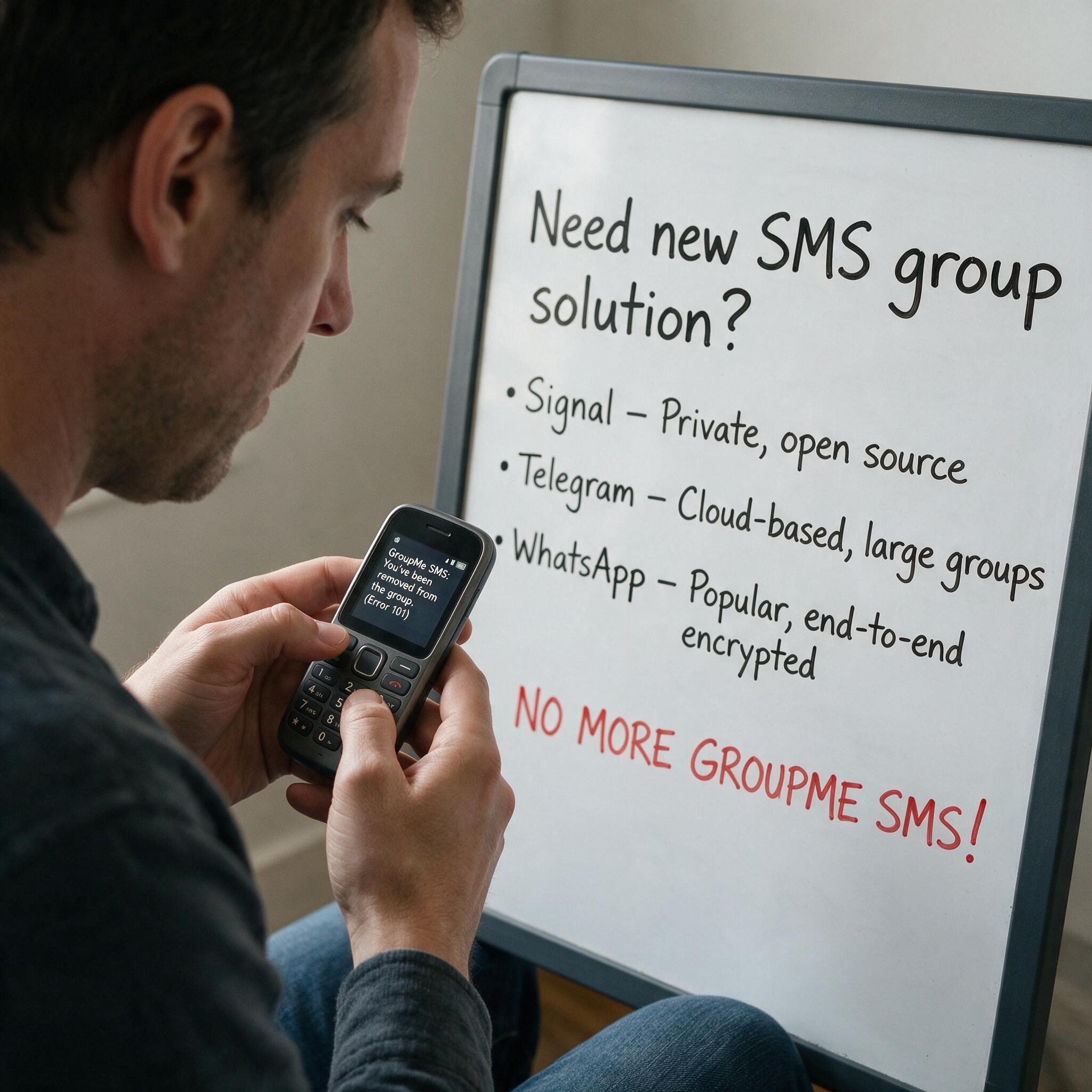
Got Kicked Out of GroupMe? Look to Evant.
Michael PedoeemGot Kicked Out of GroupMe? The Best GroupMe SMS Alternative for Jewish Communities