
Opening the Conversation
SMS outperforms email because a text message is read by 98 % of recipients within minutes, whereas email open rates linger around 20‑30 %. This immediacy translates into faster RSVP confirmations, last‑minute volunteer shifts, and urgent fundraising appeals that are acted on within seconds. The real‑time nature of texting also enables two‑way conversations, allowing supporters to reply with questions, opt‑ins, or feedback instantly, which deepens trust and keeps the community loop active.
Personalization is the engine behind those high engagement numbers. Including a donor’s first name, referencing past attendance, or tailoring content to a local weather event can lift click‑through rates by 20‑30 % and boost donation conversion by roughly 20 %. Automated drip campaigns, geo‑specific alerts, and birthday or anniversary texts keep the outreach relevant without manual effort, while segmented lists (volunteers, donors, students) ensure each message speaks directly to the recipient’s interests.
Modern tools make customized SMS campaigns easy to build and scale. Platforms such as Evant, Twilio, Textedly, and SimpleTexting provide CRM integration, RSVP and check‑in modules, analytics dashboards, and compliance safeguards (TCPA/GDPR opt‑in/out). With drag‑and‑drop editors, merge‑field personalization, and scheduled sends that align with optimal engagement windows, nonprofits can launch,‑timeiven SMS, nurture donors volunteers measure impact in minutes, and streamline event logistics—all while staying within tight budgets.
Crafting Fun, Engaging Texts
Start every message with a light‑hearted, curiosity‑driven question—something like “What’s a hidden talent you’ve been proud of?”—to spark interest right away. Research shows SMS open rates hover around 98 % and 71 % of recipients read a text within five minutes, so a playful hook can capture attention instantly. Keep the copy short and friendly, and sprinkle in emojis or a quick GIF to add personality without overwhelming the reader; visual cues have been shown to boost click‑through rates by up to 20 % compared with plain text. Embed interactive elements such as a poll, a “this or that” choice, or a brief “Never Have I Ever” game to turn a one‑way broadcast into a two‑way SMS — [two‑way SMS] lifts engagement time by an average of 3.5 minutes per interaction. Mirror the recipient’s texting style—pace, formality, and preferred emojis—while staying authentic to your organization’s voice, which research links to a 30 % lift in engagement. Finally, close with a clear, concise call‑to‑action (e.g., “Reply YES to RSVP”) so the exchange remains purposeful and drives measurable results.
Square Text Message Marketing vs. Dedicated Platforms

Square’s Text Message Marketing is a paid add‑on that lets organizations send promotional texts, appointment reminders, order updates, and event alerts from a verified toll‑free number. Because it plugs directly into Square’s POS, online ordering, and e‑commerce tools, nonprofits that already process donations or ticket sales through Square can launch SMS campaigns without a separate platform. Setup requires phone‑number verification (typically 2‑3 business days) and explicit opt‑in consent to meet TCPA, GDPR, and local regulations.
Key features include one‑off blasts, image‑rich messages, automated workflows, and a basic analytics dashboard that tracks delivery and engagement. However, Square’s solution is limited to simple mass texting; it does not provide the advanced event‑check‑in, RSVP handling, or deep CRM‑integration capabilities found in dedicated platforms such as Evant. For nonprofits that need granular audience segmentation, real‑time attendance tracking, and multi‑channel campaign orchestration, a purpose‑built SMS platform remains the more robust choice.
Choosing the Right SMS Marketing Platform

When selecting an SMS marketing platform for a nonprofit or school, start by matching its core capabilities to your event‑management workflow. Leading solutions—Twilio, SlickText, SimpleTexting, and Evant—offer bulk texting, easy opt‑in collection (via keywords, QR codes, or web pop‑ups), and two‑way conversation handling without requiring a developer. For nonprofits that need built‑in RSVP tracking, on‑site check‑ins, and donor‑centric analytics, Evant stands out with a single dashboard that syncs directly to CRMs such as Salesforce, HubSpot, or Blackbaud. Twilio provides a flexible API for custom automations, while SlickText shines with AI‑driven personalization and list‑growth tools. SimpleTexting balances ease of use with robust automations and CRM sync. Critical features to evaluate include audience segmentation (by donor level, volunteer status, or location), scheduling flexibility (mid‑morning or early‑afternoon windows that maximize open rates), and real‑time analytics that surface delivery, click‑through, and conversion metrics. Finally, consider your team’s technical comfort: a drag‑and‑drop interface may suit staff with limited IT resources, whereas an API‑first platform benefits organizations with in‑house developers. Aligning these factors ensures cost‑effective outreach, higher attendance, and stronger community bonds.
Free and Low‑Cost SMS Options for Nonprofits

Nonprofit organizations can jump‑start SMS outreach without draining limited budgets by leveraging free onboarding, message quotas, and grant‑based discounts. Many platforms—such as Twilio.org, SimpleTexting, Evant, Textedly, and GiveLively—offer a complimentary tier that includes a set number of messages each month or a short‑term trial with a toll‑free number. For example, Twilio.org provides a $500 in‑kind grant and per‑message credit, while Evant gives eligible charities a limited bundle of free texts to test RSVPs, check‑ins, and targeted reminders.
Grant programs and nonprofit discounts further reduce costs. Twilio’s grant, SimpleTexting’s nonprofit program, and Clearstream’s first‑year free plan for churches and charities all require proof of 501(c)(3) status and an opt‑in contact list. Once approved, organizations receive credits that can be applied to high‑open‑rate (≈98‑99%) text campaigns, driving attendance and donations at near‑zero expense.
To qualify quickly, gather your IRS determination letter, create a compliant opt‑in workflow (e.g., checkbox on donation forms or keyword text‑to‑join), and submit the required documentation through the platform’s nonprofit portal. After verification, you can launch automated RSVP reminders, event check‑ins, and segmented alerts, using the free quota to measure impact before scaling to a low‑cost paid plan. This approach lets nonprofits boost participation, streamline logistics, and nurture donor relationships while staying within tight financial constraints.
Legal Foundations of SMS Outreach

In the United States, SMS outreach is legal but strictly regulated. The Telephone Consumer Protection Act (TCPA) and CTIA Messaging Principles require express opt‑in consent before any promotional text is sent—typically via a web checkbox, in‑person sign‑up, or a keyword reply. Every message must include a clear opt‑out mechanism (e.g., “Text STOP to unsubscribe”) and disclose frequency and any carrier fees. Failure to comply can trigger penalties up to $1,500 per violation and class‑action lawsuits, so nonprofits must embed double‑opt‑in verification and automated STOP handling. Transactional or informational texts tied to a prior interaction may be allowed with implied consent, but cold‑texting non‑subscribers is prohibited. By integrating SMS platforms with CRMs, organizations can track consent status, automate opt‑in confirmations, and ensure all outreach remains within legal bounds while still delivering high‑open‑rate, personalized communications.
Building Community Through Two‑Way SMS

Two‑way SMS creates a real‑time feedback loop that turns passive recipients into active participants. By prompting open‑ended questions—"What’s the biggest challenge you face this week?"—organizations invite richer replies, while quick, personalized follow‑ups show they value each voice. This dialogue fuels volunteer coordination: automatic RSVP texts confirm attendance, and instant check‑in messages cut wait times by up to four minutes, letting staff focus on program delivery instead of paperwork. After events, short SMS surveys capture insights that enrich supporter profiles, enabling future messages to reference past activity or local weather for hyper‑relevant content.
How to have engaging text conversations? Start with open‑ended prompts, sprinkle a genuine compliment or brief story, keep language concise, and use emojis sparingly. Respond promptly, reference earlier replies, and end each exchange with a clear CTA—such as a RSVP link or photo‑share request—to keep momentum.
SlickText is a cloud‑based SMS platform that supports keyword‑driven opt‑ins, drip automation, and RSVP tools. It offers real‑time analytics, two‑way messaging, segmentation, and CRM integrations (e.g., HubSpot, MailChimp). With a free tier of 500 texts and scalable paid plans, SlickText delivers compliance‑ready, picture‑enabled campaigns that help nonprofits boost participation and streamline event logistics.
SMS for Event Success: RSVPs, Check‑Ins, and Real‑Time Analytics

Streamlining attendance with RSVP texts turns a chaotic sign‑up process into a single tap. When supporters receive a short, personalized message that includes a clear “Reply YES to attend” call‑to‑action, response rates jump 30 % compared with email alone. The instant capture of each reply feeds directly into the organization’s CRM, keeping volunteer, donor, and student records up‑to‑date without manual entry.
Reducing wait times via SMS check‑in is equally powerful. On the day of the event, attendees simply text a keyword or scan a QR‑code to confirm arrival. This real‑time check‑in cuts average wait times by four minutes per person, eliminates paper lists, and provides organizers with live attendance counts that can be displayed on dashboards.
Dashboard metrics that inform future events give nonprofits the data they need to refine every campaign. Open rates hover around 98 %, click‑throughs reach 35 %, and conversion rates for donations and volunteer sign‑ups climb 20‑30 % when messages are segmented by interest, location, or past activity. Real‑time analytics show which reminders drove the most RSVPs, which check‑in prompts reduced bottlenecks, and where follow‑up surveys should be targeted. Armed with these insights, planners can adjust send times, personalize content, and allocate resources more efficiently, turning each event into a learning loop that drives higher participation and stronger community bonds.
Driving Donor Loyalty and Fundraising via SMS
Personalized thank‑you and impact texts turn a one‑time donation into a lasting relationship. When a donor receives a name‑tagged message that references their recent gift and shows a concrete outcome—e.g., "Thank you, [First Name]! Your $50 helped provide meals for 20 families this week"—open rates climb 30 % and repeat giving rises 12 % (Mogli, 2024). Embedding short, secure text‑to‑give links in these follow‑up texts further removes friction; campaigns that include a direct donation URL see conversion rates up to 20 % higher than email‑only appeals (SMS Marketing, 2025).
Metrics that demonstrate ROI include delivery and open rates (usually 98 % and 90 % read within three minutes), click‑through rates (21‑35 % per Constant Contact), and conversion rates (2.8 % for mobile fundraising, Tatango). Real‑time dashboards let nonprofits track RSVP confirmations, check‑in attendance, and donation totals, enabling data‑driven refinements.
Twilio for nonprofits – Twilio.org’s Impact Access Program offers deep discounts, up to $4.8 million in grants, and APIs that integrate SMS, voice, email, and chat with CRMs like Salesforce or HubSpot. Over 25,000 social‑impact groups use Twilio to power custom RSVP flows, two‑way conversations, and automated call routing, reaching more than 716 million people worldwide.
Best texting service for nonprofits – Evant shines for event‑centric organizations with built‑in SMS RSVPs, check‑in tracking, targeted messaging, and real‑time analytics that sync to CRMs. For pure fundraising, Tatango delivers 99 % open rates and compliance‑grade security, while Twilio offers flexible APIs for custom workflows. The ideal platform depends on budget, integration needs, and whether the focus is event management or donation drives.
Putting It All Together
Customized SMS is the glue that turns a loose supporter list into a vibrant community. By addressing recipients by name, referencing past involvement, and delivering hyper‑local, timely information, texts feel personal rather than promotional, driving higher open rates (≈98 %) and faster response times (under five minutes). The key to successful implementation is three‑fold: first, secure clear opt‑in consent and embed easy STOP instructions to stay compliant with TCPA/GDPR; second, segment your audience (volunteers, donors, students) and automate drip‑campaigns, RSVP reminders, and check‑in alerts through an integrated CRM; third, monitor real‑time analytics and iterate based on delivery, click‑through, and conversion metrics. Ready to experience the lift in attendance and donor engagement? Sign up for Evant’s free 14‑day onboarding, where our team will help you set up SMS RSVPs, segmentation, and dashboards at no cost, so you can start building stronger, more resilient community bonds today.
Related Blogs



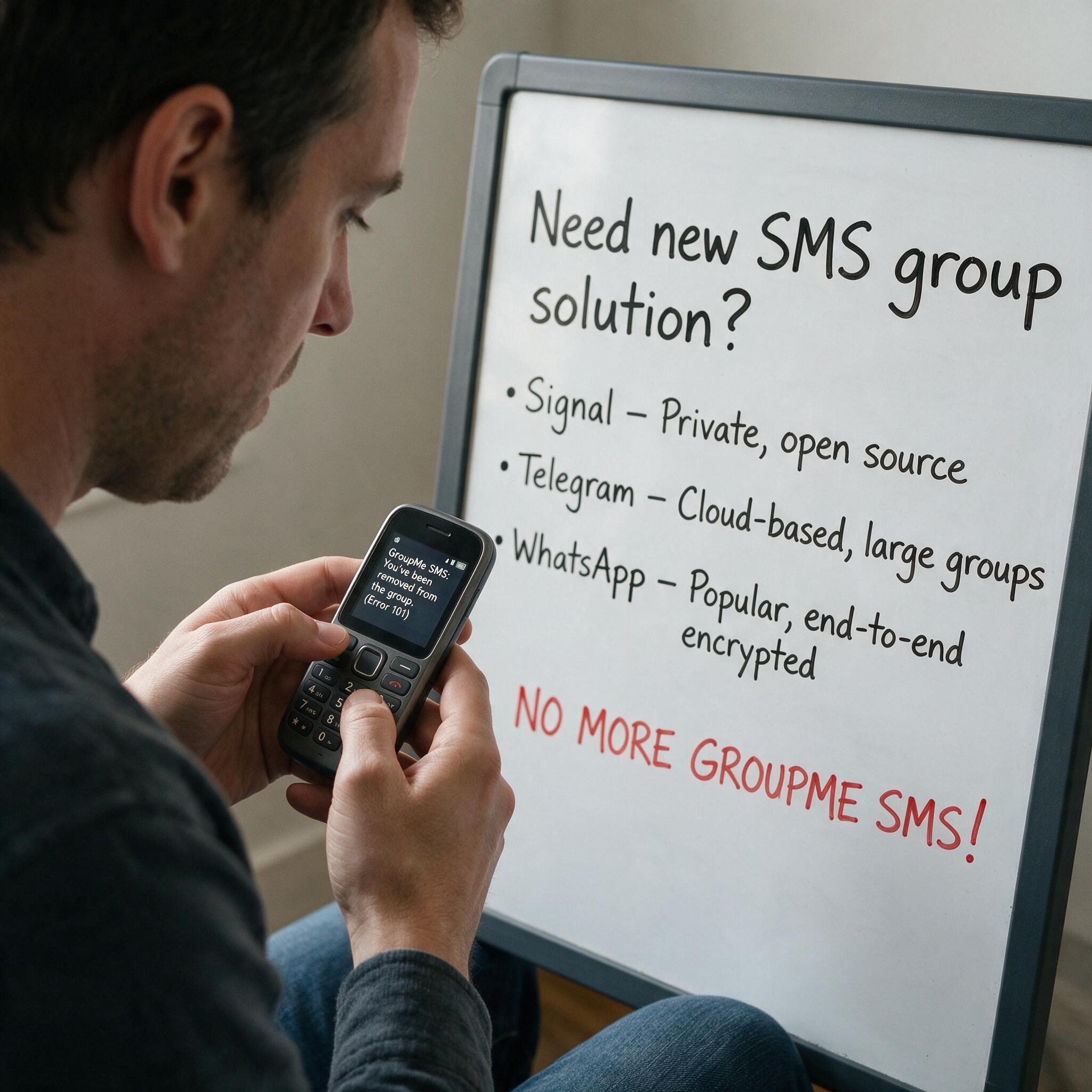
Got Kicked Out of GroupMe? Look to Evant.
Michael PedoeemGot Kicked Out of GroupMe? The Best GroupMe SMS Alternative for Jewish Communities