
The Attendance Challenge
A nonprofit schedules a fundraising gala, spends weeks on email invitations and social media posts, and then watches only 30 percent of the people who RSVP'd actually walk through the door. For many organizations, that gap between "I'll be there" and "I showed up" is the norm, not the exception.
Tupelo Children's Mansion (TCM), a Mississippi-based nonprofit serving at-risk youth, saw this pattern firsthand. The organization relied heavily on direct mail and email to promote events and fundraisers, but turnout rarely matched the buzz they had built. Follow-through was the missing piece: supporters needed a nudge at the exact moment when a reminder mattered most.
The team decided to try SMS. They started small — sending text reminders a day before events and during key fundraising windows. The result was an immediate shift. Angela Parker, TCM's Director of Administration, put it plainly: "When we send out a text reminder, we get immediate responses and donations." The SMS channel turned a chronic shortfall into a reliable outcome.
For any nonprofit facing a similar attendance gap, the lesson is straightforward. Email and social media build awareness, but a text message — the one channel supporters almost always open — closes the distance between intention and action.
Why SMS Works for Community Engagement
SMS gives community organizations a direct line to supporters that email and social media cannot match. Messages arrive alongside personal conversations and are almost always seen: the average open rate for nonprofit SMS is 98%, and the typical recipient reads a text within three minutes of delivery.
This speed and reliability makes SMS ideal for time-sensitive outreach. A reminder about a volunteer shift, a last-minute venue change, or a donation deadline reaches supporters exactly when they need it, without relying on them to check an email inbox or scroll through a social feed.
Two-way SMS turns one-way announcements into conversations. Supporters can reply to RSVP for an event, ask a question about a campaign, or provide feedback on a program, all through the same channel. This interactivity builds trust and keeps the community engaged beyond passive reading.
Compared to email's 20–30% open rate and social media's algorithmic uncertainty, SMS offers a predictable, high-reach channel. For nonprofits and educational groups operating on tight budgets, this means every message sent has a high probability of being seen and acted upon, making SMS a cost-effective complement to existing outreach strategies.
Platforms like evant.app apply these strengths to community event management, enabling automated reminders, two-way RSVPs, and follow-up messaging that keeps engagement high from registration through check-in.
The SMS Reminder That Doubled Attendance
The webinar coordinator Kody Duncan at Growth Tools faced a common problem: 70–80% of registrants who signed up never clicked the join link. After introducing SMS reminders sent through Mobile Text Alerts, attendance jumped from 25% to 50% overnight.
The most effective message went out 10 minutes before the webinar and contained each registrant's personalized Zoom join link. Removing the friction of searching for a link at the last moment made joining easy and immediate.
Over time, Growth Tools saw attendance hold steady between 40% and 60%, proving the lift was not a one-time spike. The SMS list grew to nearly 15,000 people, becoming a marketing channel that generated $20,000 in seven days from a single text.
For in-person events, the same principle applies. Send a personalized link or check-in code the day before and again the morning of. An event platform like Evant makes this routine by automating timed SMS with each attendee's unique RSVP link, removing the manual work and delivering the same attendance lift for galas, volunteer meetups, or community gatherings.
Building a List Through Opt-Ins and Consent
Every SMS you send must start with a legally compliant opt-in. The Telephone Consumer Protection Act (TCPA) requires prior express written consent before sending automated marketing texts — even to business phone numbers. For nonprofits, the penalty for a non-compliant message can reach $500–$1,500 per message. Compliance is not optional.
Collecting Opt-Ins
Nonprofits can gather consent through several practical channels: embed an opt-in checkbox on your website's donation form, add a QR code to printed flyers or event signage, and promote a text-to-join keyword (e.g., "Text JOIN to 12345") at events and in email signatures. Each method creates a clear, documented record of permission.
Evant.app's platform supports these collection methods directly, allowing organizations to capture consent seamlessly during event registration or donor sign-up flows.
Double Opt-In for a Cleaner List
A double opt-in strategy adds a second step: after someone submits their phone number, they receive a confirmation text asking them to reply YES. This extra verification filters out mistyped numbers and accidental sign-ups, producing a list of genuinely engaged supporters. The result is higher deliverability and lower opt-out rates.
Industry benchmarks show opt-out rates for nonprofit SMS run between 0.2% and 0.6% — very low compared to email. A clean list built on double opt-in keeps those numbers low and avoids message fatigue.
Keeping Opt-Outs Low
Every message must include a simple opt-out instruction (e.g., "Reply STOP to unsubscribe"). Beyond compliance, the best way to retain subscribers is to respect their attention. Send relevant, timely content — event reminders, impact updates, exclusive previews — and limit frequency to 2–4 messages per month. Supporters who feel valued are far less likely to leave.
Legal Foundation. TCPA mandates prior express written consent for automated marketing texts. Manual, informational messages may have looser rules, but documented opt-in remains the safest practice for any nonprofit. Collection Methods. Website checkboxes, QR codes on print materials, and text-to-join keywords at events all produce clear, auditable consent records. Double Opt-In. A confirmation text (reply YES) filters errors and ensures only engaged supporters are added, improving deliverability and lowering opt-out rates. Opt-Out Management. Include STOP in every message. Keep content valuable and frequency to 2–4 per month to maintain average opt-out rates of 0.2–0.6%.Platform Support. Evant.app streamlines opt-in collection and compliance during event registration and donor sign-ups, helping nonprofits build high-quality lists from day one.
Crafting the Perfect Event Reminder
The moment someone RSVPs, the clock starts on your reminder sequence. A single text the day before an event can double or even quadruple attendance. A well-timed series of messages is even more effective.
The Four-Message Sequence
Save-the-date. Send this a week or two before the event to put it on supporters' calendars. Keep it light and include the date, time, and a "more details coming soon" promise.Registration reminder. A few days before the event, nudge anyone who hasn't registered yet. Add a clear link to the RSVP form or donation page.Day before reminder. This is the big one. Confirm the time, location (include a map link), parking details, and what attendees should bring.10-minute warning. Send the individual Zoom link or check-in code 10 minutes before start time. This is the text that drove Growth Tools' attendance from 25% to 50%.
Each message should be under 160 characters and personalized with the recipient's first name. Use a URL shortener to keep links tidy and include only one call-to-action per text.
To boost RSVPs, add a small incentive. A VIP reward, a sweepstakes entry, or a "first 50 attendees receive a gift" tagline creates urgency. Text messages that include a VIP privilege or exact deadline tend to drive higher conversion rates than generic reminders.
Measuring Success: Key SMS Benchmarks
The best way to know if your SMS strategy is working is to track the numbers that actually matter. Nonprofit and charity SMS campaigns consistently post a 98% average open rate, meaning supporters almost always read the messages sent to them. The average delivery rate lands between 98% and 99%, so nearly every text reaches its destination.
Engagement beyond the open tells a fuller story. The average click-through rate (CTR) for nonprofit SMS falls between 8% and 12%, showing how often recipients tap links in appeals or event invitations. The conversion rate — the share of recipients who complete a donation, sign-up, or another desired action — averages 0.5% to 1.2%. While that may seem small, it represents a focused audience already primed to act. The average response rate runs 18% to 28%, and the average response time is just 90 seconds, illustrating how quickly supporters reply when they feel a direct connection.
Tracking these metrics helps you refine message timing, segment lists more carefully, and keep opt-out rates low — typically between 0.2% and 0.6% for trusted organizations. With an average time-to-read of three minutes and a bounce rate of only 1% to 2%, SMS remains the most reliable channel for reaching your community at the moment they are ready to engage. A platform like Evant, which provides analytics alongside features like SMS RSVPs and event check-ins, makes it straightforward to monitor these numbers and adjust your approach for stronger attendance and fundraising outcomes.
From Attendance to Fundraising: Text-to-Give
The same SMS channel that drives event attendance can generate donations directly. Text-to-give allows supporters to donate by sending a keyword to a short code or by tapping a link in a text message. This mobile-friendly method reduces friction between the impulse to give and the act of giving.
Real-world results make the case. After the 2010 Haiti earthquake, the American Red Cross raised $500,000 in one hour through a text-to-give campaign. Tupelo Children's Mansion raised $75,000 using Evant for its first SMS campaign, enough to reduce reliance on costly direct mail. When a text reminder arrives at the right moment, donors act immediately.
Text-to-give also supports post-event stewardship. After a fundraising gala or giving day, an automated thank-you text can include a link to see the impact of the donation. This turns a one-time gift into the start of a longer relationship. Organizations that pair a timely ask with a sincere follow-up see higher retention and more repeat gifts.
SMS + Email: A Powerful One-Two Punch
Relying on a single channel limits your reach. The Humane Society tested this by splitting its audience into two groups: one receiving only email appeals, the other receiving both SMS and email. The group that got texts was 77% more likely to donate. The data is clear — SMS and email work best as a pair, not competitors.
Each channel has a natural strength. SMS is ideal for time-sensitive asks: event reminders, last-minute matching-gift alerts, and deadline-driven donation pushes. Email can carry the longer stories, impact reports, and rich visuals that build donor relationships over time. A multi-channel strategy covers both the urgent and the relational.
The numbers back this up. DonorPerfect users who integrate with Constant Contact see email open rates rise by 19% and click-through rates jump by 180%. When SMS drives attention and email delivers depth, the whole engagement loop tightens. The same supporter who ignored a standalone email opens the next one after a text reminder creates the context.
Putting this into practice is simple. Use Evant's SMS RSVP tools to send the short, timely nudges that get people in the door, then follow up with an email that tells the full story of what happened and how they helped. The combination turns a one-time attendee into a repeat supporter, and a passive donor into an active advocate.
Volunteer Coordination via SMS
Coordinating volunteer schedules, covering open shifts, and handling last-minute cancellations can consume a coordinator's entire day. SMS turns these logistical headaches into simple, two-step exchanges.
Shift confirmations via text are nearly instant. A coordinator sends the schedule, the volunteer replies "Yes" to confirm or "No" to decline, and the gap is immediately visible. For unexpected openings, a mass text to a volunteer segment can fill a shift in minutes rather than hours of phone tag. Organizations that combine texts with email see a significant boost: the Humane Society found that supporters receiving both channels were 77% more likely to donate, and the same principle applies to getting butts in seats for volunteer slots.
Emergency Alerts and Recruitment
When a venue closes due to weather or an urgent need arises, a broadcast text reaches the entire volunteer pool within an average of 90 seconds. The high open rate means critical updates are not missed. For recruitment, a simple text containing a link to a mobile-friendly sign-up form lets supporters join a volunteer team without leaving their phones. The nonprofit People in Need adopted SMS to allow volunteers to communicate across different schedules, demonstrating how text messaging can streamline coordination for organizations with dispersed teams.
Using a platform like Evant that integrates SMS with volunteer management data keeps contact lists, opt-ins, and response histories in one place. A coordinator can segment volunteers by availability or skill set and send targeted messages without juggling spreadsheets. This makes recruitment and scheduling feel less like manual overhead and more like a natural part of the engagement cycle.
Automation and CRM Integration
Manual texting works for a handful of supporters, but it does not scale. Automated workflows let organizations send the right message at the right moment without a staff member typing every word.
The most common automation is the welcome message: the moment someone opts in, an immediate text thanks them, sets expectations for future messages, and often delivers a small reward (a download, a discount code). This first touchpoint sets the tone for the entire relationship.
Triggered Action Texts. When a supporter donates, registers for an event, or RSVPs, an automated confirmation arrives in seconds. No one has to draft it; the system reads the CRM event and fires the appropriate template. A follow-up text can arrive 24 hours later with a parking map or a link to a mobile-friendly donation form.Two-Way Conversations. Automation does not mean one-way. A supporter who replies with a question can trigger a notification to a staff member, who picks up the conversation from the same thread. The CRM logs the entire history, so context is never lost.
This is where CRM integration becomes essential. Platforms like Raiser's Edge NXT and CharityEngine allow nonprofits to sync consent data, giving history, and event participation directly into the texting tool. Segmented lists update automatically when a donor's status changes — a first-time giver receives a different nurture sequence than a monthly donor.
The best SMS solutions plug into the CRM rather than asking staff to maintain a separate contact list. When the data lives in one place, triggered messages feel personal and timely instead of generic blasts.
Evant's platform follows this same unified-data approach, automating event confirmations and targeted messaging from the same system that tracks RSVPs and attendance.
Respecting Supporters and Avoiding Fatigue
The biggest risk with SMS is overwhelming the people who care most. Send too many messages and supporters will opt out, unsubscribe, or simply stop paying attention. The goal is to be a welcome presence, not a notification that gets ignored.
Finding the Right Frequency
Industry research suggests sending two to four texts per month to keep supporters engaged without driving them away. This cadence is covered in detail in the article on respecting supporters and avoiding fatigue. At that rate, organizations see opt-out rates of only 0.2 to 0.6 percent, a sign that supporters remain loyal and trust the communication.
Every single text must include a clear opt-out instruction, such as "Reply STOP to unsubscribe." This is not just a best practice; it is a legal requirement under the TCPA and the CTIA's messaging principles. Failing to provide an easy exit erodes trust and can lead to regulatory penalties.
Segmenting to Stay Relevant
Not every supporter needs every message. Segmenting your contact list by donor type, giving history, or area of interest lets you tailor content so that each person receives only what matters to them. A volunteer does not need a fundraising appeal for a campaign they already skipped, and a major donor does not need a general invite to a community picnic. Sending targeted messages instead of blasting the entire list reduces fatigue and improves engagement.
Adding Visual Impact with MMS
Plain text can become monotonous. Including an image or a short video via MMS can break through the noise and re-engage supporters. A photo from a recent event, an infographic showing where donations went, or a quick thank-you video from a staff member makes the message feel personal and worth opening.
| Tactic | Why It Works | Example |
|---|---|---|
| 2–4 texts/month | Keeps you top-of-mind without being a nuisance; opt-out rates stay low | One event reminder, one volunteer call, one fundraising ask, one thank-you |
| Always include opt-out | Builds trust and satisfies legal compliance | "Reply STOP to unsubscribe" in every message |
| Segment lists | Each supporter receives only relevant content, reducing perceived noise | Volunteer list gets shift openings; donor list gets impact updates |
| Use MMS | Visual content is more engaging and memorable than plain text | Photo of a completed project, short video of a beneficiary story |
SMS as a Core Engagement Tool
The story from Growth Tools is not an outlier. When Kody Duncan started sending SMS reminders with individual Zoom links ten minutes before each webinar, attendance jumped from 25% to 50% overnight. A single text message, sent at the right moment with the right link, doubled turnout.
You do not need a complex rollout to see similar results. Start small: pick one upcoming event, collect opt-ins from registrants, and send a reminder sequence using an SMS platform. Measure attendance against a past event that relied only on email. Once you confirm the lift, expand to more events and add automated follow-ups.
Technology amplifies your message, but the personal touch makes it stick. SMS works best not as a broadcast blast but as a respectful, timely nudge from an organization the supporter already trusts. A simple “Thank you for signing up — here’s your link” feels personal when it comes from a real name, not a robotic sender.
Platforms like Evant are built for exactly this balance. They combine automated reminders, RSVP tracking, and CRM integration so you can maintain a human tone at scale. Try a free pilot with a single event. Within a few weeks you will have the data to decide whether SMS becomes your organization’s core engagement channel.
Related Blogs



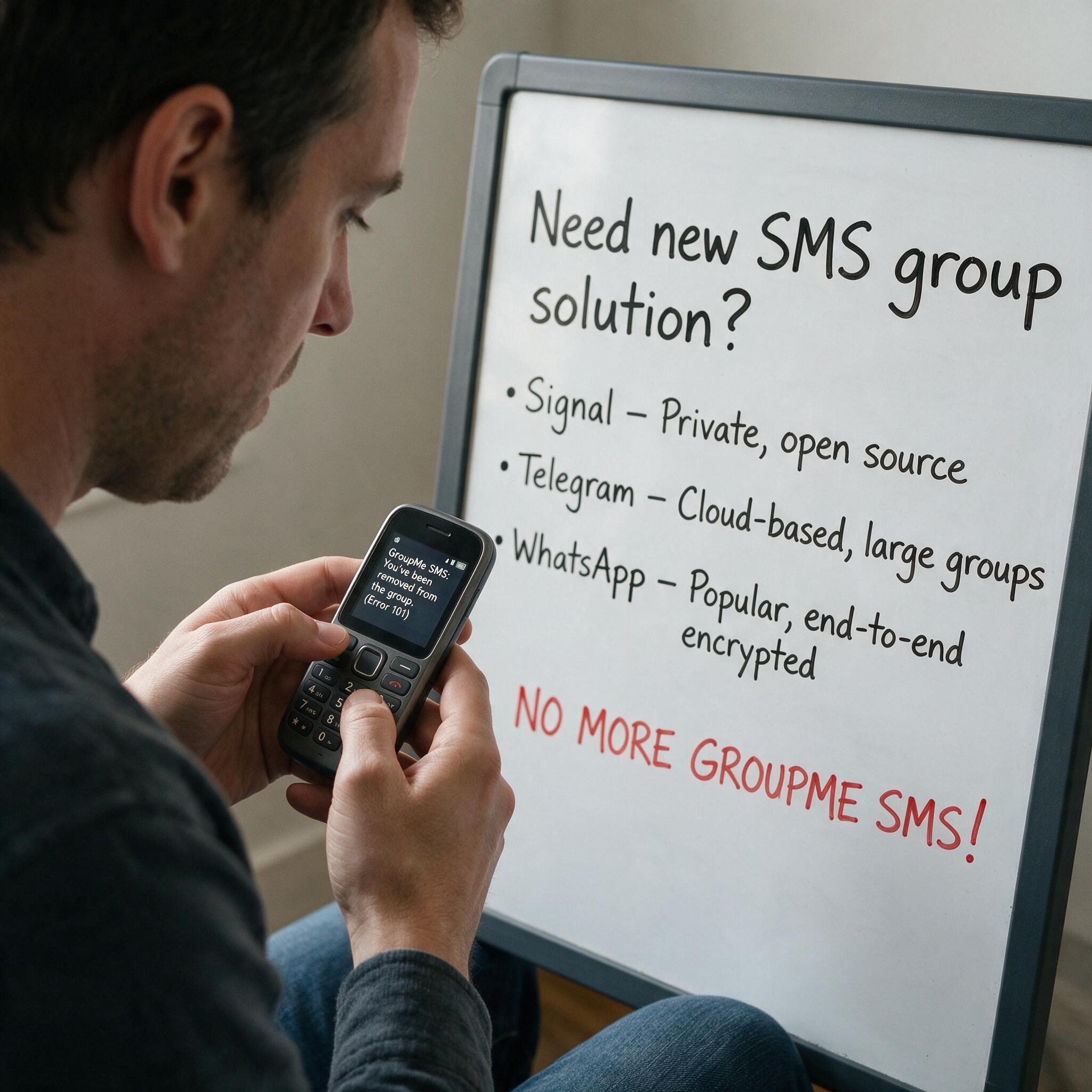
Got Kicked Out of GroupMe? Look to Evant.
Michael PedoeemGot Kicked Out of GroupMe? The Best GroupMe SMS Alternative for Jewish Communities