The Hidden Cost of Manual RSVP Management
Every fundraiser, volunteer appreciation dinner, or community class starts the same way: a round of phone calls, a stack of paper cards, and a spreadsheet that never quite stays synced. For most nonprofit organizers, this manual RSVP process is the single biggest administrative time sink before an event even starts.
Relying on email inboxes, scattered phone messages, and physical guest lists creates a cascade of hidden costs. Staff hours disappear into data entry, follow-ups get missed, and the risk of duplicate or lost responses grows with each new attendee. For a 200-person event, a single staff member can spend 15 to 20 hours on RSVP tasks alone — time that could have been spent on mission-driven work.
Automated RSVP systems flip this equation. By handling responses, reminders, and guest list updates in real time, they save organizers hours per event and deliver accurate headcounts that prevent overspending on catering and supplies. For nonprofits, where every dollar counts, those savings directly support the mission.
This article explores how SMS-based and digital RSVP platforms are helping organizations cut administrative overhead while improving engagement. Evant’s Text-to-RSVP feature, for example, lets invitees confirm by texting a keyword, eliminating the need for link-based forms or phone tag. The goal is simple: less time chasing replies, more time connecting with your community.
Understanding the Scope of Admin Overhead in Events
For nonprofits, every dollar and minute spent on administration is a dollar and minute not spent on the mission. Overhead costs — rent, utilities, insurance, and administrative salaries — are necessary to keep the lights on, but they can balloon quickly when staff time is consumed by manual, repetitive tasks.
Event planning is a major hidden drain. A single 200-person event managed manually requires 15-20 hours of staff time just to handle RSVPs: printing and sorting paper cards, logging replies into spreadsheets, making phone calls, and chasing down missing responses. That is half a work week consumed by data entry and follow-up, not by connecting with the community.
Breaking down those hours reveals the real cost. For every 100 guests, manual reminders eat up 3-4 hours, data entry takes 2-3 hours, creating attendance reports uses another 1-2 hours, and managing follow-ups with non-respondents adds 2-3 more hours. Across a calendar of events, these hours stack into weeks of lost productivity.
Automating RSVP workflows with a platform like Evant directly reclaims that time. By letting guests respond via text message — no app download needed — staff eliminate the manual loop of calls and spreadsheet updates. Real-time response tracking and automated reminders to non-responders replace hours of admin work with a few clicks.
The result is more than just time saved. It is a shift in how an organization operates: fewer hours spent on postage and paper, less budget wasted on over-ordered catering, and more energy directed toward building relationships and advancing the mission. Reducing administrative overhead does not mean cutting corners; it means redirecting resources to where they matter most.
Manual vs. Automated RSVP: A Clear Comparison

The difference between manual and automated RSVP management comes down to a trade-off: personal touch versus staff sanity. Manual methods rely on paper cards, email inbox management, spreadsheets, and phone calls. A staff member tracking responses for a 200-person event typically spends 15-20 hours on these administrative tasks.
That time carries hidden costs. Manual data entry risks duplicate entries and missed responses. Limited reporting means organizers assemble numbers by hand before each meeting. Scaling up for larger events multiplies these problems. Nonprofits that run frequent events will hit these limits quickly.
Automated systems use software to collect responses, track attendance, and manage communication. Core features include online forms, digital reminders, real-time attendance tracking, a guest information database, and response analytics. The result is quicker processing, more accurate data, and significant staff time savings. For organizers who want those benefits without asking guests to click links, Evant offers Text-to-RSVP where invitees simply text a keyword to confirm attendance.
How SMS RSVP Works for Nonprofit Events

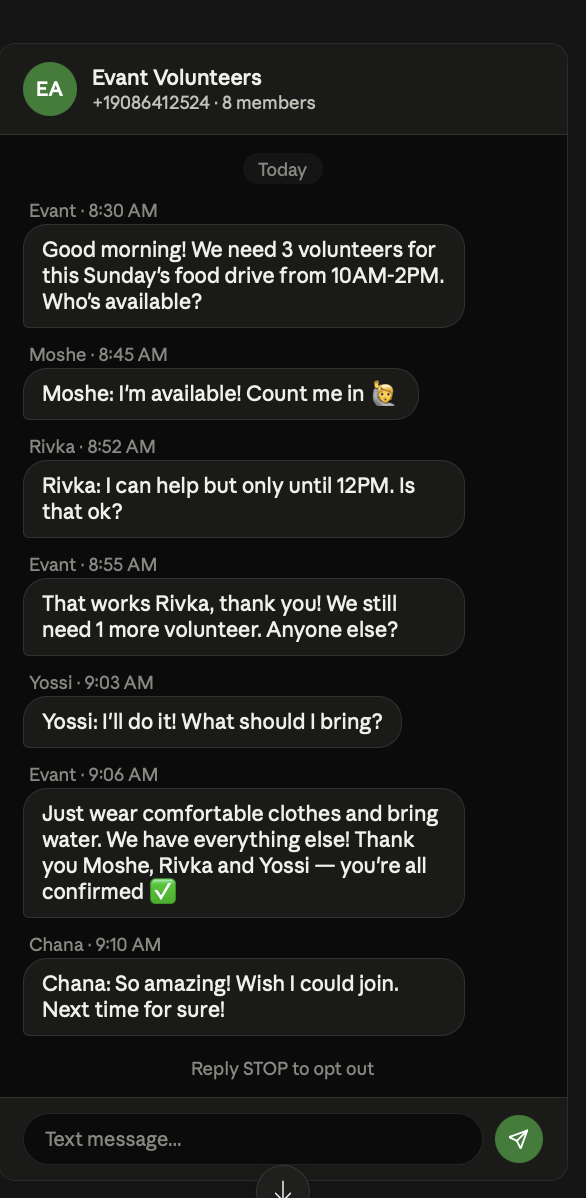
The process starts with a broadcast text sent to supporters who have already opted in to receive messages. Each text includes a simple call to action, such as "Reply YES to attend the gala" or "Text NO to decline."
When a supporter texts back, the response is automatically captured and logged in the event management system. The system immediately sends a confirmation message and adds the attendee to a real-time check-in list. No manual data entry or spreadsheet updates are needed.
SMS achieves open rates around 98%, with most texts read within three minutes, compared to email's typical 20% open rate. Guests do not need to download an app — they simply reply with a keyword from their existing text messaging app. Platforms like Evant make this workflow seamless, integrating responses directly with CRM data and live analytics.
Automating Key Event Workflows
Manual RSVP management is not just about collecting names and counts. The hidden overhead lies in the dozen small workflows that follow: sending reminders, checking guests in at the door, chasing no-shows, and updating attendee status across spreadsheets. Each task pulls a staff member away from higher-value work.
Automated Reminder Systems
Automation turns a weekly burden into a hands-off process. Instead of manually reviewing a guest list and typing reminder emails, a platform like Evant lets you schedule a series of texts that go out automatically. The system sends reminders only to guests who have not yet responded, saving hours per event and removing the guesswork from follow-ups.
Streamlined Check-In and Targeted Follow-Ups
On the day of the event, mobile check-in apps and QR codes replace printed name lists and manual recording, cutting check-in time to seconds. Afterward, the system enables targeted messaging to specific groups: send a "thank you" to confirmed attendees, a link to event photos to checked-in guests, or a "we missed you" survey to non-responders. Every message fits the recipient's status without manual sorting.
Calendar Sync for Higher Show-Up Rates
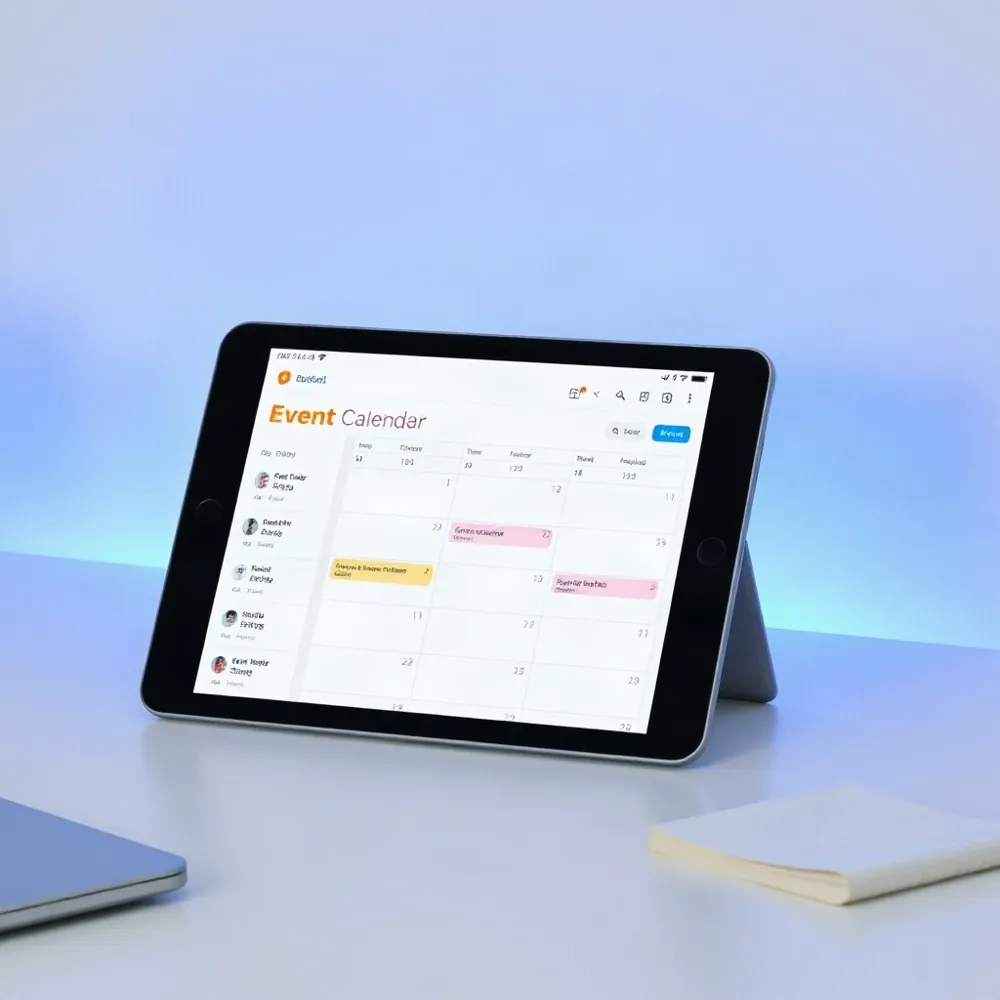
Combining RSVP confirmation with an add-to-calendar prompt (Google, Apple, and Outlook) removes one more barrier to attendance. When a guest RSVPs "yes," they can instantly add the event to their calendar. Evant's SMS RSVP features handle both the confirmation and the calendar link in a single text message.
These connected workflows replace a patchwork of manual steps with a single automated system. The result is less chasing, fewer errors, and more time for the mission.
Measurable Time and Cost Savings
For a 200-person event, a single staff member typically spends 15-20 hours on manual RSVP administrative tasks. Per 100 guests, the breakdown is clear: 3-4 hours go to sending reminders, 2-3 hours to data entry, 1-2 hours to report creation, and another 2-3 hours to follow-up management. An automated system eliminates nearly all of that.
The savings scale with the event. One RSVPify user reports saving up to 60 hours per event by setting up registration sites and scheduling all emails and reminders ahead of time, rather than remembering to do them weekly. For nonprofits and faith-based groups running multiple events each month, that reclaimed time goes directly toward mission work.
Accurate headcounts from a high response rate also cut spending on over-ordered food and supplies. Evant users see a 95% RSVP rate, reducing wasteful over-preparation. Mike Simmons, from Avon-Miami Lodge #542, says switching to Evant was a game changer: not only do they get RSVPs quicker, they see an increase in attendance.
Integrating RSVP with CRM Systems
When manual RSVP data stays in a spreadsheet and your donor records live in a CRM like Salesforce or HubSpot, someone has to copy names, update statuses, and correct typos by hand. That double-entry work is where minutes turn into hours and small errors become big tracking gaps.
An automated sync between your RSVP tool and CRM eliminates that step. Every new RSVP, dietary preference, or plus-one populates the right contact record instantly. Platforms like Evant offer CRM integration built for nonprofits, pulling engagement data like attendance history and message responses straight into your CRM so staff can see a full supporter timeline without reopening a spreadsheet.
The result is a single source of truth for attendee profiles. When a donor RSVPs to a gala, their record shows past giving, event attendance, and communication preferences side by side. Staff can segment by event activity, track which donors need follow-up, and plan fundraising outreach based on real behavior rather than memory.
Tools like Zapier extend this even further, connecting your RSVP platform to 5,000+ other apps. A single zap can send new registrants to a Mailchimp list, add their name to a Google Sheet for catering, and log a task in Trello for the welcome team. Each automated bridge removes one more manual handoff, cutting the redundant work that creeps into event planning week after week.
Choosing the Right Platform for Your Nonprofit
Selecting the right event platform means weighing SMS capabilities, CRM integration, and pricing. Below are four strong options, each excelling in a different area.
| Platform | Best For | Pricing Model | SMS Capabilities | CRM Integration |
|---|---|---|---|---|
| Evant | SMS-driven engagement | Free trial, then subscription | Text-to-RSVP, targeted messaging | Yes |
| RSVPify | Full-featured event management | From $19/mo + transaction fees | Email + QR, no native SMS | Salesforce, HubSpot |
| Eventleaf | Large conferences | Pay-per-attendee (starts free) | Basic | Salesforce Nonprofit Cloud |
| Givebutter | Fundraising events | Free tier + optional tips | Text-to-donate, QR codes | Limited |
For SMS-driven engagement, Evant's Text-to-RSVP lets guests reply with a single keyword, eliminating the need to click a link. No app download is required, and organizers see responses in real time. The platform also offers targeted messaging to segment attendees by interest or event history, making follow-ups personal without manual sorting.
For fundraising events, Givebutter provides free ticketing and registration with optional donor tips. Its peer-to-peer fundraising tools, auction integration, and Text-to-Donate feature make it a strong pick for gala-style events. The free tier keeps costs low for small nonprofits.
For comprehensive conferences, Eventleaf offers session management, live Q&A, and speaker profiles on a pay-per-attendee model. Its integration with Salesforce Nonprofit Cloud means attendee data flows directly into donor records, reducing manual entry. RSVPify fills the mid-range with a flat $19/month entry point, though it lacks native SMS — it compensates with Zapier connectors for email and QR check-in automation.
Each platform serves a different use case. Nonprofits that rely on SMS to reach mobile-first audiences will find Evant's Text-to-RSVP and targeted messaging hard to beat. Organizations running multi-track conferences should evaluate Eventleaf. And groups that need a free ticketing layer for fundraising events can start with Givebutter, then layer on SMS engagement as their community grows.
Legal Compliance and Best Practices for SMS
Nonprofits can legally send mass text messages for event management, but they must follow the Telephone Consumer Protection Act (TCPA) and related state laws. The TCPA requires that you obtain at least "express consent" from each recipient — meaning they have directly provided their phone number to your organization. To minimize legal risk, secure express written consent through a clear opt-in process before sending any messages.
Every message must clearly identify your organization, and you must honor opt-out requests immediately. For organizations that contact individuals in California, the California Consumer Privacy Act (CCPA) adds additional requirements. Following these rules keeps your event communications fully compliant.
Best practices include keeping messages short, using the recipient's name, sending timely reminders, and using simple keywords like "YES" or "NO" for responses. These practices, combined with a clear opt-in process, help you use SMS effectively while staying within legal guidelines.
Benefits of an Event App for Community Engagement
Juggling spreadsheets, email blasts, and separate check-in tools creates busywork that pulls staff away from the people they serve. An event app built for community engagement, like Evant, centralizes event logistics, RSVPs, check-ins, and communication into a single platform. Instead of switching between screens to update a guest list, send a reminder, or pull attendance numbers, an organizer does everything from one place.
For attendees, the experience is just as frictionless. They respond to a text message, no app download required, and receive updates automatically. SMS boasts a 96% read rate within three minutes, and 58% of people say texting is the most effective way to reach them quickly. This immediacy replaces the uncertainty of email invites and the hassle of paper sign-up sheets, making it easier for community members to say yes.
A centralized platform also enables personalized messaging. Segmenting a contact list by past attendance or interests lets an organization send targeted follow-ups rather than a generic blast. A volunteer who missed the last two events gets a friendly nudge; a regular donor receives a personalized thank-you. This intentional communication builds stronger community connections over time.
Finally, integrated analytics transform raw response data into actionable insights. Tracking which messages drive the most RSVPs and which event types draw the highest attendance allows organizers to make smarter decisions for future events. Over several months, these engagement patterns reveal what the community actually wants, helping nonprofits allocate resources where they have the most impact.
Future Trends in RSVP Technology
The future of RSVP technology is being shaped by the reality that mobile devices are the primary channel for event communication. Over 70% of event responses now come from mobile devices, which means future systems will prioritize simplified interfaces and instant response options. Platforms like Evant already embrace this shift by allowing attendees to RSVP via SMS with a single keyword, no app download required.
QR codes are becoming a standard feature for touchless check-in, replacing paper lists and manual name searches. At the event entrance, a single scan can confirm attendance, pull up guest details, and trigger an automated welcome. This cuts the check-in bottleneck and reduces volunteer staffing needs.
AI-driven predictive analytics will help organizers plan more accurately. By analyzing past attendance data, the system can forecast how many guests will actually show up, allowing event teams to adjust catering orders, seating arrangements, and staffing levels ahead of time. Automated workflows can then further streamline the process by capturing invitee details, sending reminders only to non-responders, and syncing attendance data directly with CRM systems.
The shift to digital RSVPs also supports sustainability goals by reducing paper waste from printed invitations and physical sign-in sheets. For nonprofits that track environmental impact, this can be a compelling part of their reporting to eco-conscious donors.
| Trend | Technology | Primary Benefit for Nonprofits |
|---|---|---|
| Mobile-First RSVPs | SMS-based invitations and responses | Higher response rates (98% SMS open rates) |
| QR Code Check-In | Scanable codes for instant entry | Reduced volunteer time at registration |
| AI Predictive Analytics | Attendance forecasting from past data | Lower food and supply waste |
| Eco-Friendly Digital Options | Paperless invites and forms | Aligns with sustainability goals |
Implementation Tips for a Smooth Transition
Moving from manual RSVP tracking to an automated system does not need to be disruptive. The organizations that get the best results treat the rollout as a gradual shift, starting with a small, low-stakes event to test the platform before committing to full-scale use. This trial run lets staff identify any hiccups in the invitation flow or response tracking without the pressure of a large audience.
Most groups need about two months to make a clean transition from their old process. During this window, schedule at least three training sessions spread over several weeks so every team member can build confidence with the new tools rather than struggling through a single crash course. Evant's platform is designed to be intuitive, but dedicated training ensures staff know how to use targeted messaging and automated reminders from day one.
Set your RSVP deadline 2-3 weeks before the event (4-6 weeks for large conferences). This buffer gives you room to chase late responses and adjust catering or seating without last-minute scrambling. Before any guest sees your system, run a full internal test: send a test invitation to colleagues, confirm that confirmation messages arrive correctly, and verify that the guest list updates in real time. Starting with a small event, allowing two months to transition, and investing in training are the steps covered in the implementation guide.
Reducing Overhead Beyond RSVPs
The same automation logic that slashes RSVP admin time applies across your entire operation. Many nonprofits manage scheduling, invoicing, and payroll through separate manual processes, each creating its own drag on staff time. Consolidating those tasks under a single cloud-based platform can produce compounding savings.
Project management tools like Asana or Trello help teams spot workflow redundancies and centralize task tracking, so nothing falls through the cracks. For specialized functions such as IT support or accounting, outsourcing to a dedicated provider often costs less than a full-time salary and benefits package. The savings free up budget for mission work instead of office overhead.
Nonprofits can also cut IT infrastructure costs by moving to cloud-based SaaS solutions, which replace expensive on-premise servers with predictable monthly subscriptions. Cultivating a cost-conscious culture through periodic audits and budget reviews ensures these savings stick. When staff see where money goes, they make smarter spending decisions day to day.
Evant itself is a good example of how one platform can reduce overhead across multiple areas — its SMS RSVP and targeted messaging tools centralize event communications, and integrations handle data collection without manual entry. Applying this kind of automation beyond RSVPs to scheduling, invoicing, and payroll can multiply the hours your team gets back.
Embrace Automation to Amplify Mission Impact
Manual RSVP management pulls staff away from the people they serve. Automated SMS tools like Evant offer a direct path back to mission-focused work.
Organizations that adopt automated RSVPs report accurate headcounts, engaged communities, and actionable data without the overhead of spreadsheets and follow-up calls. With SMS response rates near 100%, the message reaches supporters instantly.
For nonprofits and educational organizations, the choice is clear. Invest time now to set up an SMS-driven system and reclaim hours each week that can go toward fundraising, programming, and the relationships that sustain your mission.
Related Blogs