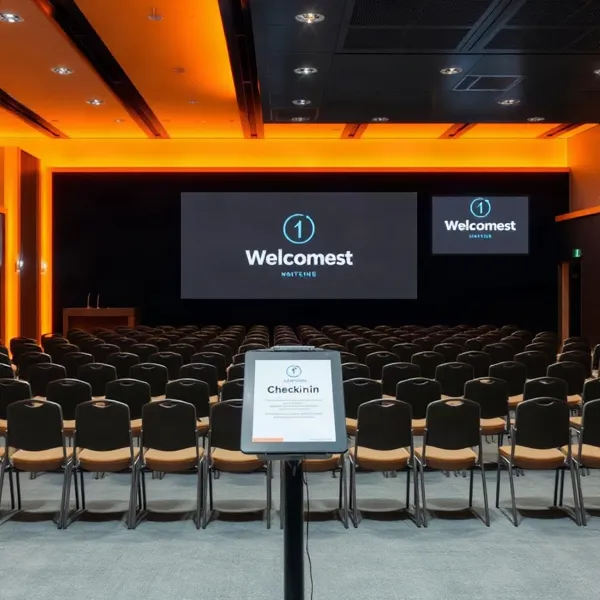
Turn Interest Into Attendance
An event can sound worthwhile and still lose people between the invitation and the door. They need to hear about it, decide to come, and know what to do next. A timely text can make that next step easier, whether it is replying YES or NO, opening directions, or checking a schedule.
For nonprofits, schools, and faith communities, SMS works alongside email, social posts, and personal outreach. Evant connects SMS RSVPs and targeted messages with event check-ins and CRM integration, helping organizers carry attendance information into event-day logistics.
Research offers a reason to test reminders, not a promise of turnout. A randomized trial in Malaysian primary-care clinics found fewer missed appointments among patients who received SMS reminders than among those who received none, but healthcare appointments are not community events. A U.S. program study also found simple texts improved first-session attendance in one voluntary workshop, while noting that message timing and audience needs matter. These findings support thoughtful experiments, not guaranteed results for every event or group.
Start with one clear invitation and a simple response, then send practical details to people who opt in. Track replies and attendance to learn whether the messages help your own community follow through.
Build an Invitation People Can Act On

A useful invitation makes the next step obvious. Name your organization and event, give the date, time, and location, explain why the gathering matters, then ask for one action: reply YES to attend or NO if they cannot. For an RSVP link, keep the form short and easy to use on a phone.
Replies and link submissions give organizers a clearer estimate of turnout, which can inform staffing, room setup, and supplies. Evant brings SMS RSVPs together with event check-ins and CRM integration, so responses can connect to the practical work of managing attendance.
Make invitations relevant instead of sending every event to every contact. A volunteer may need a shift or task detail, while a past attendee may respond to a reminder of the event’s community impact. Segmenting by role, interest, or prior participation helps keep the message focused.
SMS works best as part of a coordinated invitation plan, not as the only channel. Combine it with email, social media, direct mail, and personal invitations from board members, volunteers, or community partners. The Administration for Children and Families’ attendance guidance recommends shaping reminders around participants’ needs and circumstances.
Address practical barriers in the invitation: include clear directions, accessible timing, affordable or free registration, and virtual access when available. Nonprofit attendance guidance also points to using several outreach methods rather than expecting one channel to reach everyone (NonProfit PRO).
Before sending a text, obtain appropriate permission, identify the organization, explain how to opt out, and honor opt-out requests. Requirements vary by jurisdiction and message type, so confirm the rules that apply to your campaign. A clear invitation earns attention; respectful contact helps preserve it.
Make Every Reminder Useful

A reminder should help someone take the next step, not make them sort through a second invitation. Name the event, give its date and start time, include the time zone when people may be joining from different places, and provide the venue or a direct online link.
Add arrival details only when they solve a real problem. Directions, parking, check-in instructions, or what to bring may be useful; several links and competing requests are not. Keep the text concise, branded, and centered on one action.
For example: “Reminder: The community fundraiser is tomorrow at 6 PM ET at 123 Main St. View directions and event details: [link]” The example uses one link and one clear purpose, while giving attendees the information they need to arrive.
An immediate confirmation and a later reminder do different jobs. Send confirmation after registration, with event details and an Add to Calendar link. Email can hold the fuller agenda; SMS can deliver a timely prompt. A 24-hour reminder and a closer-to-start message may suit some events, but timing and frequency should reflect the audience and logistics, not a fixed formula. A U.S. clinical trial found fewer missed appointments with SMS reminders than with no reminder, but those results do not establish the same effect for nonprofit events. The study also excluded people unable to read or understand texts, a reminder that SMS may not reach everyone.
Day-of messages can alert the relevant opted-in attendees to a schedule or venue change, weather issue, or check-in instruction. Evant connects SMS RSVPs and event check-ins with targeted messaging, so organizers can coordinate attendance information instead of treating every text as a general blast. For practical guidance on making each message focused and actionable, see how to make every reminder useful.
Guests can also RSVP by replying YES or NO, or by using a link to confirm attendance and guest count. Collect responses centrally, send a confirmation, and follow up only with people whose response calls for it. Text only people who have agreed to receive messages, and make opting out clear.
Use Evidence Without Overpromising

Research can show why reminders are worth testing, but healthcare findings should not be treated as an event-attendance forecast. A randomized trial in two Kuala Lumpur clinics found non-attendance rates of 23.0% with no reminder, 15.6% with SMS, and 13.7% with telephone reminders. The difference between SMS and phone calls was not statistically significant. The trial supports reminders in that chronic-care setting, not a guaranteed increase for a nonprofit gathering.
A separate trial across seven Malaysian clinics reported attendance of 59.0% with text reminders and 48.1% with no intervention. Attendance did not differ significantly between the text and phone reminder groups. Both studies involved healthcare appointments in Malaysia, so their results make SMS reminders plausible, but do not establish a turnout increase for U.S. events.
Evidence from a different setting points in the same cautious direction. In the ELEVATE voluntary workshop study, simple texts improved attendance at the first session compared with no reminders or enhanced messages containing motivational content. The Administration for Children and Families STREAMS brief describes a particular five-session program, not a universal formula for events.
For organizers, the practical value is that a timely text may help someone who has forgotten or is unsure about the venue, arrival time, or what to bring. The message still needs to fit its audience: check that recipients can access and read texts, and ask what timing and wording they prefer. Evant combines SMS RSVPs and targeted messaging with event check-ins, giving teams ways to connect outreach with attendance records and learn what works for their community.
Keep the Conversation Going
A thoughtful follow-up can turn a one-day event into an ongoing relationship. Send attendees a brief, personal thank-you soon after the event, then share one useful item, such as photos, takeaways, or an impact update. A Meeting Professionals International guide to event texts recommends using SMS for post-event feedback and guest engagement.
Invite a quick reply or short survey, and use what people say to improve the next gathering. Keep the ask focused: one question about what worked or what they would change is easier to answer than a long questionnaire. For more ideas on thanking supporters and sharing impact, see post-event stewardship through text messaging.
Follow-up should reflect why someone attended. A volunteer may welcome a service opportunity, while a family might prefer another community activity. Evant supports targeted messaging, SMS RSVPs, event check-ins, and CRM integration, which can help organizers connect event participation with relevant next steps.
Registrants who missed the event need a different message. Offer a concise recap, recording, or resource, then invite them to a future event without implying they attended. Keep every text concise, send only to people who consented, and make opting out easy. One useful message is more likely to preserve goodwill than a sequence that assumes everyone wants the same follow-up.
Choose Tools That Reduce Friction
The right platform should make event work easier to coordinate, not add another place for staff to check. Look for SMS replies and online RSVP forms, scheduled reminders, targeted messages, event-day check-in, attendee lists, and reporting. Evant brings SMS RSVPs, targeted messaging, check-ins, and CRM integration into an event workflow.
An RSVP reminder app can bring invitations, responses, and attendee details into one dashboard. Staff can see who has confirmed, who is undecided, and who cannot attend without reconciling separate spreadsheets and group texts. That shared view can help teams estimate turnout, plan arrivals, and send schedule changes to the relevant attendees.
Scheduled reminders can reduce manual follow-up, while targeted messages help keep updates relevant to members, volunteers, or donors. The STREAMS guidance on text reminders recommends shaping messages around participant needs and preferences, then tracking delivery and engagement. Evant’s SMS RSVP and event tools connect replies with check-ins and contact records.
On event day, staff can check guests in using a phone or tablet and update attendance records as people arrive. This is a workflow benefit, not a promise of higher turnout: it gives organizers a current view of arrivals and a record to use afterward. Reporting can help teams review RSVP and attendance patterns and plan follow-up.
CRM integration and contact segmentation can keep records current and help tailor messages, but the available integrations and features vary by provider. Before choosing, check whether the platform fits your existing systems, staff capacity, budget, message limits, support needs, and expected usage. A small team should be able to manage communications and event logistics without taking on unnecessary administrative work.
Evaluate Service Fit and Compliance
Start with the work your organization needs the service to do. Event promotion, volunteer coordination, fundraising, and program updates may call for different message flows, audiences, and response options.
Then check the practical fit: Can staff grow and segment contact lists, personalize messages, schedule campaigns, automate reminders, and manage replies? Look at analytics, CRM and event-tool integrations, customer support, pricing, nonprofit discounts, and message limits. Evant brings SMS RSVPs, targeted messaging, event check-ins, CRM integration, and analytics together for event and community workflows.
Consent and opt-out controls need close attention. Check how the service records permission, handles unsubscribe requests, and keeps contact records. Requirements vary by jurisdiction and message type, so review applicable guidance rather than assuming a platform’s defaults meet your organization’s obligations. The FCC's guidance on revoking consent is one reference for U.S. rules, though organizers should confirm which rules apply to their messages.
Avoid choosing a platform based on promotional open-rate claims or assuming every service includes the same features. Ask how it stores and protects contact data, and whether staff have time to operate the tools. A small pilot can reveal what works for your audience: track delivery, replies, RSVPs, attendance, and opt-outs, then adjust the messages and timing. The STREAMS guidance on program attendance reminders recommends planning content and timing around participants’ needs and assessing engagement.
Make the Next Step Easy
SMS works best as one useful, permission-based part of event communication, not a replacement for every other channel. Invite people clearly, make the RSVP simple, send reminders that help them arrive, then follow up with thanks or a short question. Research on text reminders found improved attendance in specific program settings, but results are not a promise for every event or audience (STREAMS attendance guidance).
Start with one upcoming event. Choose the audience, test a concise opt-in invitation and easy RSVP path, then review attendance and replies before changing the next campaign. Tools such as Evant’s SMS RSVPs and event check-ins connect communication with practical event logistics, so the next step stays clear from response through arrival.
Related Blogs
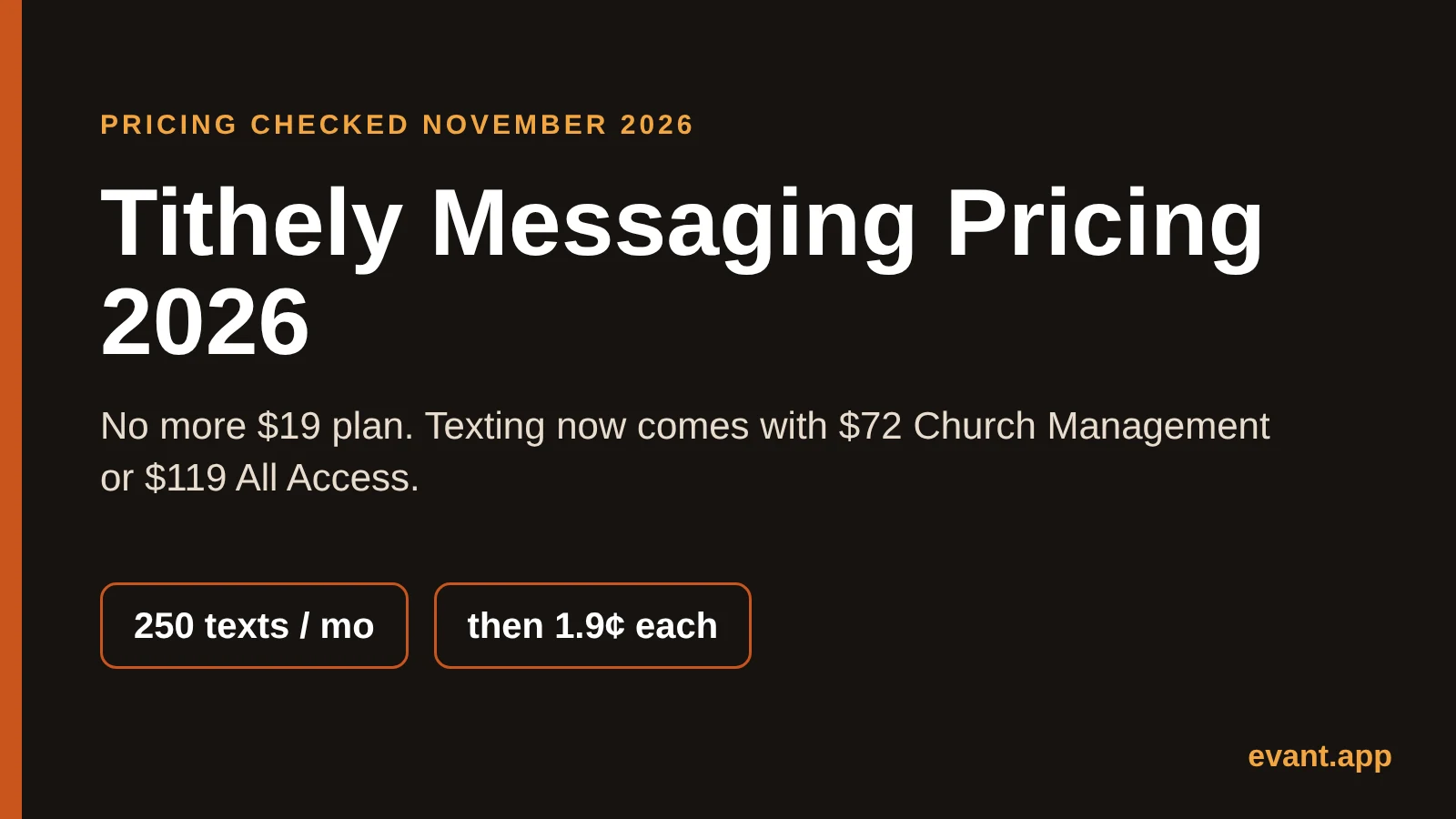

Tithely Messaging Pricing 2026: No More $19 Plan, What Texting Really Costs Now
Michael PedoeemTithely Messaging no longer has a $19 plan. Texting now comes with $72 Church Management or $119 All Access: 250 texts, then 1.9¢ each.
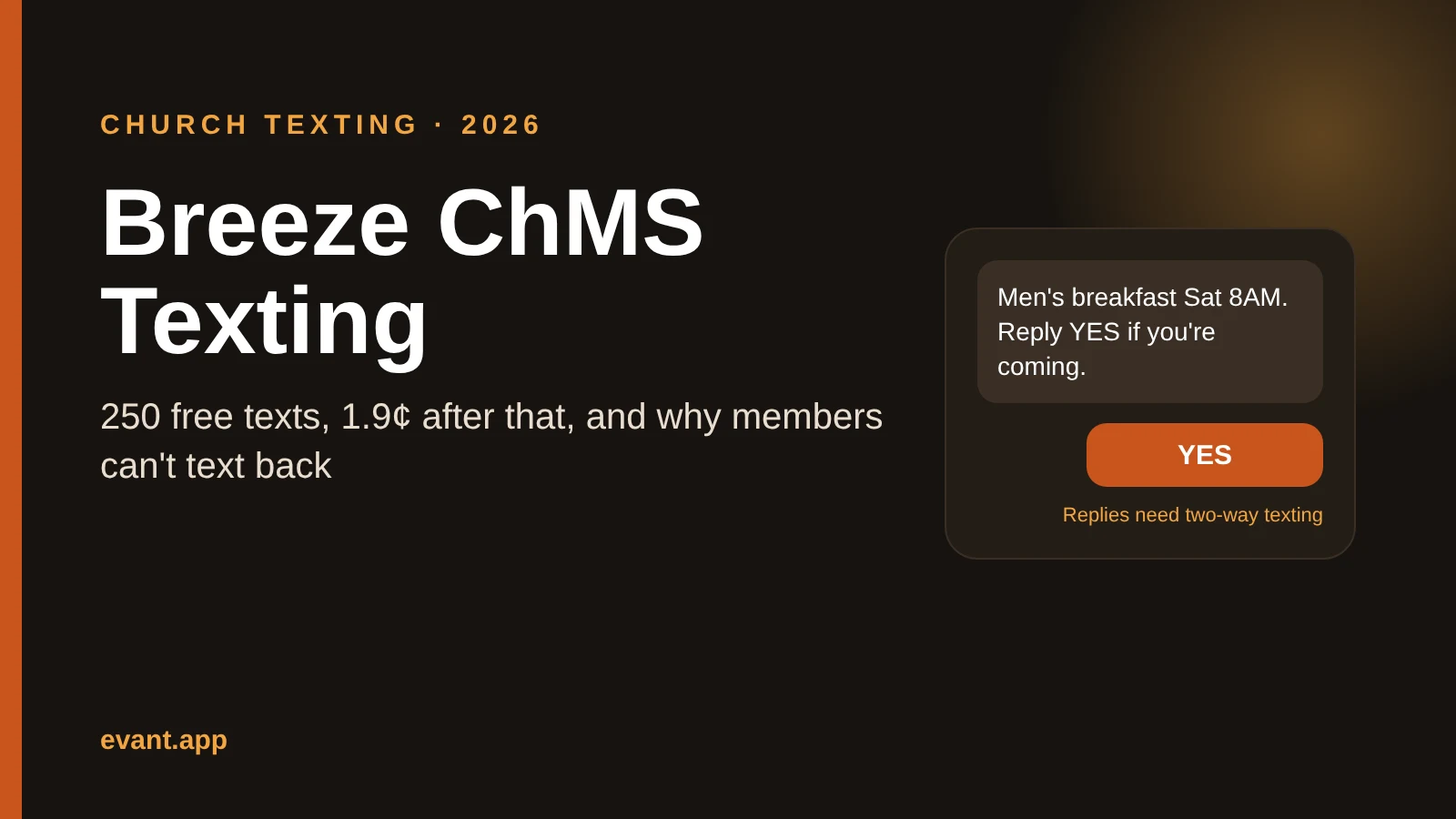
Breeze ChMS Texting in 2026: 250 Free Texts, One-Way Messages and When to Add a Texting Tool
Michael PedoeemBreeze ChMS texting gives you 250 free texts, then 1.9¢ each. Here's the fine print, why members can't reply, and when to add a texting tool.

Text-Em-All vs Clearstream for Churches: Pay per Person or per Text? (2026)
Michael PedoeemText-Em-All charges by group size and includes calls. Clearstream charges by credits and fits Planning Center churches. What a 150-person church pays.





Get the Evant app



