Why Every Event Needs a Clear Communication Plan
Event communication is a deliberate process of connecting with your audience before, during, and after the main event. Whether you're planning a community fundraiser, a church picnic, or an educational workshop, the way you share information directly shapes participation and turnout. A thoughtful strategy covers the full journey: invitations that build excitement, reminders that reduce no-shows, and thank-you messages that build lasting relationships. When attendees understand what's happening and feel personally valued, they're far more likely to show up and engage. This framework becomes essential for any event where attendance requires intention on the participant's part.
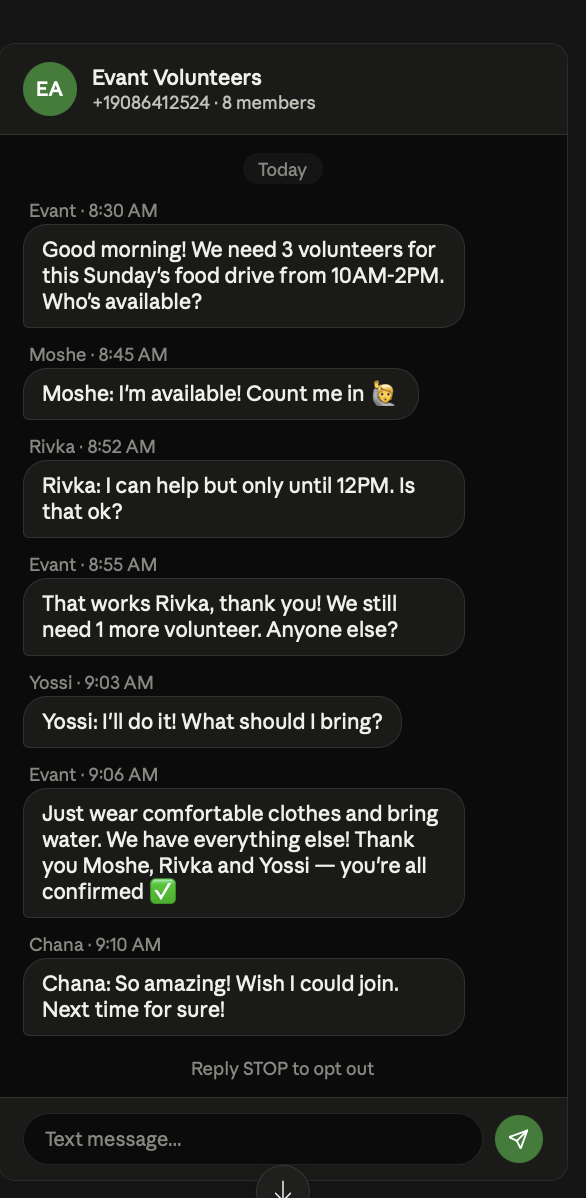
However, event communication is rarely a single-message job. From initial announcements to last-minute changes, each touchpoint requires clarity and timing. This is where platforms like evant.app come into play, offering a dedicated suite for SMS-based engagement. Unlike generic tools that treat communication as an afterthought, evant.app integrates RSVPs, reminders, and follow-ups into one workflow. With features like event check-ins and targeted messaging, you can automatically handle the repetitive parts of attendee outreach. This frees you to focus on the human aspect of gathering people together, rather than drowning in manual updates. The result is a seamless experience for both organizers and attendees.
Clear: Making Every Message Understandable
Clarity is the foundation of effective event communication. Every message you send should answer the five W's: who is hosting, what is happening, when it starts, where it's located, and why someone should care. Ambiguity leads to confusion and, ultimately, lower attendance. Before hitting send, review your copy for jargon, vague language, or missing details. For example, instead of saying "Join us on Saturday," be specific: "Join us Saturday, March 15th, at 2 PM at the Community Center, 123 Main St." This removes friction for the attendee. A clear message respects their time and increases the likelihood of a positive response.
Concise: Respecting Attention Spans
In a world of constant notifications, brevity wins. Event updates delivered via SMS naturally overcome the challenge of crowded inboxes, as texts are read within minutes. A concise message gets to the point quickly: "Reminder: Volunteer meeting tomorrow, 10 AM, Room 204. Reply YES to confirm." This style is particularly effective for time-sensitive updates like a change in room location. By keeping messages short, you make it easy for attendees to absorb the information on the go. Long paragraphs, on the other hand, get skimmed or ignored.
Consistent: Maintaining a Reliable Rhythm
Consistency builds trust. Your communication cadence should follow a predictable schedule: an invitation, a reminder, a follow-up, and a thank-you. This establishes expectations and reduces anxiety about missing crucial details. A reliable rhythm also helps with attendance, as attendees can anticipate when to expect next steps. Whether you're using manual sends or automated workflows, a consistent tone and frequency across all touchpoints reinforces your brand's reliability. For organizers, this predictability simplifies planning and reduces stress.
Caring: Personalizing the Attendant Experience
People attend events to feel part of something larger. Caring communication tailors messages to the individual's interests and needs. This could mean segmenting your audience based on their registration type or past attendance history. For instance, returning volunteers might receive information about new initiatives, while first-time attendees get a welcome guide. This personalization shows that you see them as individuals, not just a name on a list. It directly influences engagement, as attendees are more likely to participate when they feel the content speaks directly to them. By personalizing every interaction, you transform a transaction into a relationship.
Command: Guiding Action with Authority
Every communication should guide the attendee toward a clear call to action. Whether it's registering for sessions, downloading a map, or replying to a survey, you need to tell them exactly what to do next. This is where targeted alerts and reminders shine. Effective communication commands attention without being pushy, offering value in exchange for action. For example, a focused SMS can remind attendees of a critical deadline with a simple "Register Today" button. By making your calls to action specific, measurable, and timely, you ensure your messages don't just inform, but also convert.
Clarity. The message leaves no room for misinterpretation.Conciseness. Every word serves a purpose; no fluff.Consistency. A predictable flow from start to finish.Personalization. Content that feels tailored to each recipient.Action Orientation. The message prompts a clear, intended response.
The 5 C's of Event Management

Running a successful event, whether a community fundraiser, a conference, or a church service, rarely comes down to luck. It comes down to a structured approach that keeps every stakeholder aligned from the initial idea to the final follow-up. One of the most practical frameworks for achieving this is the five C's of Event Management, a model that helps organizers break down complex projects into manageable, repeatable phases.
The framework consists of five distinct yet interconnected stages: Concept, Coordination, Control, Culmination, and Closeout. Each step builds on the previous one, creating a logical flow from identifying the event's purpose to measuring its success. When applied consistently, the 5 C's not only simplify planning but also reduce last-minute chaos and improve the attendee experience.
Understanding the Five Stages
Concept is the foundation. This is where you define the event's purpose, target audience, and desired outcomes. Ask yourself: Is this a networking mixer, a training session, or a community cleanup? A clear concept answers the "why" and guides every subsequent decision. Without a strong concept, your Coordination efforts will lack direction.Coordination is the operational heart of the event. This includes scheduling, budgeting, securing speakers or performers, and assigning roles to your team. Communication is critical here. Sending confirmation texts and reminders via SMS can save hours of manual follow-up, as noted in how to cut event planning time in half with SMS. Coordinating vendors and volunteers becomes smoother when everyone receives the same real-time updates.Control refers to managing the event in real time. This is where you monitor check-ins, handle walk-ins or cancellations, and address on-the-day issues like a speaker running late. A well-planned communication strategy helps you stay in control. You can broadcast important announcements instantly to segmented attendee groups, a capability that SMS platforms for event management make possible. Control also means anticipating risks and having a backup plan for common problems.Culmination marks the peak of the event experience. This is the moment attendees actually engage with the content or each other. Your role shifts from planning to facilitating smooth delivery. Focus on ensuring that every guest feels welcomed and informed. Quick, targeted messages can enhance the experience, such as reminding attendees about a keynote or directing them to an overflow seating area.Closeout is the often-overlooked final phase. It involves breaking down the venue, collecting post-event feedback, and assessing performance against your original concept. This is also the time for follow-up communication. Sending a thank-you text with a survey link not only builds goodwill but also provides valuable data for your next event. Effective Closeout turns a one-time success into a repeatable process.
Applying the 5 C's to Your Next Event
To put the framework into practice, start by documenting your concept clearly and communicating it to your team. During the Coordination phase, centralize your communication using SMS for reminders and announcements, which ensures high visibility. The framework's real power lies in how it forces you to think about the entire event lifecycle, not just the day of the event. This holistic view helps you identify potential bottlenecks early.
When you master Control, you can navigate last-minute changes with confidence. For example, if a vendor is delayed, a quick text update can keep attendees informed without interrupting your team's flow. This level of responsiveness is what separates a stressful event from a smooth one. You can learn more about this proactive approach in how to handle last-minute changes.
The beauty of the 5 C's is its flexibility. Whether you're planning a small workshop or a large conference, the same principles apply. By following this framework, you'll find it easier to delegate tasks, manage your time, and deliver an event that meets your goals. The result is less chaos for your team and a more memorable experience for your attendees.
| Stage | Focus | Key Communication Action |
|---|---|---|
| Concept | Defining purpose, audience, and goals | Clarify the "why" with your team |
| Coordination | Scheduling, budgeting, vendor management | Send confirmations and reminders |
| Control | Real-time event management and issue resolution | Broadcast instant updates and alerts |
| Culmination | Attendee experience and engagement | Send targeted messages to enhance experience |
| Closeout | Post-event feedback, debrief, and follow-up | Send thank-you texts and surveys |
Incorporating the 5 C's into your planning process is a smart way to bring structure to an otherwise chaotic task. For event organizers looking to streamline communication across all five stages, a tool that automates SMS engagement can be a significant asset. By applying this framework consistently, you can ensure that no detail is overlooked and that your next event runs smoothly from concept to closeout.
Building Your Communication Plan Structure
A strong communication plan keeps everyone informed before, during, and after your event. To make it operational rather than aspirational, event organizers can build their plan around five core elements: clear objectives, concise content, consistent timing, correct audience, and a clear call to action. Each of the five C's addresses a specific part of the communication process, and together they form a practical checklist you can apply to any SMS-driven outreach.
Clear objectives. Define what each message should accomplish, whether that's driving an RSVP, sharing a schedule change, or nudging a no-show. When you know the desired outcome, you can craft each update around a single goal, reducing confusion for both your team and your attendees.Concise content. SMS messages have a natural brevity that suits event updates. Keep each text under 160 characters when possible, and put the most important information, like date, time, or location change, at the start. This respects your audience's time and ensures the core message gets read even if they only glance at the notification.Consistent timing. Establish a cadence that balances staying top-of-mind with avoiding notification fatigue. Send an initial invitation, a reminder a few days out, a same-day schedule highlight, and a post-event thank-you. Save urgent changes for a separate, clearly labeled alert so attendees know which messages require immediate action.Correct audience. Segment your lists based on registration status, ticket type, or interest area so each recipient receives only what's relevant. This prevents irrelevant messages from diluting your open rates and helps you target specific groups, such as first-time attendees or VIPs, with tailored follow-ups.Clear call to action. Every SMS should tell the recipient what to do next, whether that's replying YES to confirm, clicking a link to update their RSVP, or responding to a poll. A clear call to action reduces friction, which matters for last-minute changes and livestream logistics where quick decisions are critical.
Using a platform like Evant simplifies each of these steps. Its SMS tools support targeted messaging and automation, so you can schedule reminders and broadcast updates without manual effort. To see how this plays out in practice, Evant's post on sending targeted alerts during live events walks through real scenarios for keeping attendees informed.
Building Your Communication Plan Structure
Turning the five C's into an operational document means defining who owns each message, what response you expect, and how you'll measure success. This goes beyond a basic timeline: it's a plan that assigns clear responsibilities and links each communication to a measurable outcome, such as RSVP confirmation rate or poll participation. Formalizing this process ensures that no announcement slips through the cracks.
Your plan should also include contingency steps for handling changes. For example, if an event venue shifts or a session runs late, a predetermined SMS template and a responsible sender make last-minute updates immediate. This structure positions SMS as your primary channel for urgent notifications, since text messages get read more reliably than email, according to how SMS open rates compare, nearly all messages are opened within minutes of arrival.
| Component | Purpose | Measurement | Example Interaction |
|---|---|---|---|
| Clear objectives | Define message goal | Confirmation rate | 'RSVP by Friday' |
| Concise content | Keep under 160 chars | Read time | 'Doors at 6pm, hall B' |
| Consistent timing | Reduce fatigue | Opt-out rate | Reminder 3 days out |
| Correct audience | Relevance for segments | Click-through rate | Send to VIPs only |
| Clear call to action | Drive next step | Response rate | 'Reply YES to attend' |
Once your structure is in place, keep it agile. Events change, and your communication plan should allow for same-day adjustments without losing consistency. For practical tips on handling unexpected shifts, refer to Evant's guide on managing last-minute event changes and compare it with competitor platforms that offer generic templates but often lack the same level of two-way integration or real-time analytics.
Timing Your Attendee Messages Right

A clear communication timeline keeps attendees informed without overwhelming them. The right rhythm of messages reduces confusion, cuts no-shows, and makes guests feel cared for from registration to follow-up. For planners juggling multiple moving parts, a structured schedule also frees up time to focus on logistics instead of remembering who needs what when.
Most event teams see strong results when they match message timing to where attendees are in their journey. A simple, repeatable framework works best: confirm immediately after purchase, send a “what to expect” message two to four weeks before, follow with a reminder one week ahead, and finish with a ticket reminder 24 hours prior. During the event, short operational updates handle last-minute changes, and a post-event note thanks attendees and asks for feedback. For a deeper breakdown of each stage, Timing Your Attendee Messages Right walks through the full cadence.
The same principles apply whether you’re managing a community gathering, a conference, or a nonprofit fundraiser. Confirmation messages set expectations and reduce anxiety. Pre-event messages build anticipation and give attendees time to arrange travel or childcare. Reminders cut no-shows by giving people a clear reason to show up. During the event, short updates keep everyone aligned if timing shifts. Post-event follow-up turns one-time guests into repeat supporters.
Adapting the Timeline to Your Event Type
Different events call for different pacing. A multi-day conference might need more frequent reminders about session changes, while a small workshop can get by with just a confirmation and a day-before nudge. The key is to match message frequency to attendee needs, not to overwhelm them. For live events, targeted alerts during the event can be especially useful for last-minute room changes or speaker updates.
How Evant Fits Into the Picture
Evant simplifies this entire process. Instead of manually tracking who got which message, the platform lets you schedule SMS reminders, send segmented updates, and see analytics on engagement. This means less time managing spreadsheets and more time improving the event itself. Whether you’re using SMS RSVPs to reduce no-shows or handling last-minute changes with a quick text, Evant gives you the tools to communicate clearly without adding extra work.
For teams new to SMS, even a basic timeline makes a difference. Start with the confirmation and a single reminder, then build out additional touchpoints as you learn what resonates with your audience. The goal is consistency, not complexity. A well-timed message can be the difference between an empty seat and a full room.
Leveraging SMS and Push Notifications
An effective event communication plan rests on several core components that work together before, during, and after the occasion. Two-way channels help you respond to last-minute attendee questions and share real-time updates, while segmenting your audience lets you send targeted alerts to specific groups. Many organizers lean on SMS because it reaches attendees instantly, and an SMS-first approach pairs naturally with the rest of your toolkit to keep everyone informed without overwhelming them.
Why SMS Leads the Communication Mix
SMS stands out because it is direct and immediate: most consumers text daily, and messages get read within minutes. That makes it ideal for event reminders, last-minute changes, and targeted alerts during the program. Beyond open rates, SMS supports quick RSVPs, check-ins, and follow-up surveys, all from the attendee's phone. Pairing a dependable SMS channel with email and push notifications gives you a balanced plan that reaches people where they actually pay attention.
Mapping Out the Event Timeline
A strong plan separates communication into three phases. Before the event, send save-the-dates, registration confirmations, and reminders to build anticipation and reduce no-shows. During the event, use live updates and targeted alerts to guide attendees to sessions, vendors, or schedule changes. After the event, follow up with thank-you messages, surveys, and highlights to sustain engagement. This phased structure keeps messaging relevant and prevents information overload.
| Phase | Timing | Example Messages |
|---|---|---|
| Pre-event | Weeks to days before | Save-the-date, reminders, logistics |
| During event | Day of | Live session alerts, real-time changes |
| Post-event | Hours to days after | Thank-you, feedback request, recap |
Tools and Testing for Seamless Delivery
Choosing the right platform simplifies execution. The best solutions offer SMS RSVPs, automated check-ins, and analytics, so you can track what works and adjust on the fly. Before the big day, test your messaging end to end to ensure links work and opt-outs are handled properly. Planning for last-minute changes, like weather or speaker cancellations, means you have a backup route ready, whether that is a group SMS or a targeted alert to affected segments.
Two-way messaging. Lets attendees reply directly with questions or dietary requests, cutting down on back-and-forth email chains.Segmentation. Groups attendees by ticket type, interests, or location so each message feels personal and relevant.Analytics. Tracks open rates, RSVP conversions, and attendance trends to sharpen your next event's strategy.
Adapting on the Fly While Staying Compliant
Even the best plan needs flexibility. If a speaker cancels or a session runs long, you can send a targeted SMS to all attendees or just those affected, keeping everyone on the same page. At the same time, respect consent and privacy: ensure every message includes an opt-out, and honor unsubscribes immediately to stay compliant with regulations like the TCPA. Keeping your plan simple, tested, and personable ensures your communication works for both your team and your attendees.
Managing Last-Minute Changes and Notifications
Even well-planned events can face last-minute disruptions, from a canceled venue to a shifted speaker slot. How you handle these changes often matters more to your attendees than the original schedule. SMS is uniquely suited for this scenario because it cuts through inbox noise and reaches attendees instantly on their mobile devices.
The most effective approach is to combine real-time SMS broadcasts with targeted segmentation. Instead of sending a single generic alert to everyone, group attendees by the sessions they've RSVP'd to or by their arrival time. For example, you can notify only those affected by a room change or a delayed shuttle. This prevents alert fatigue and respects everyone's inbox.
When a change occurs, act within minutes: send a concise update that states what changed, the new location or time, and a clear call to action (such as a reply option or a link to the updated itinerary). SMS platforms like Evant make this fast by letting you build a message once and distribute it to a pre-defined group, while also enabling two-way responses for questions like “Where is the overflow seating?”
Handling Venue and Schedule Shifts
For venue changes or delays, reinforce the update with a second reminder shortly before the new start time. This reduces no-shows and confusion. Pair this with a brief follow-up that confirms receipt — for example, “Reply YES to confirm you'll join us at the new location.”
Also, keep your communication plan resilient by having pre-drafted templates for common scenarios, such as weather-related postponements or speaker no-shows. This ensures you can respond quickly without scrambling for words. For more structured guidance, see this communication-plan overview and best practices for live event alerts.
- Send a broadcast as soon as the change is confirmed, not after the original start time.
- Segment alerts by affected groups to avoid unnecessary messages.
- Include a clear call to action (reply or link) in every update.
- Follow up with a confirmation request to reduce ambiguity.
- Archive all communications in one place for team reference.
| Scenario | Recommended SMS Action | Example Message |
|---|---|---|
| Venue change | Immediate broadcast to all attendees | New location: 123 Main St. See map: [link] Reply OK to confirm. |
| Speaker cancellation | Targeted alert to session registrants | Workshop moved to Room B. Thanks for your flexibility! |
| Weather delay | Rescheduled time + confirmation request | Start moved to 2 pm. Reply YES to confirm you're joining. |
Post-Event Follow-Up and Feedback
Event communication is not just about sending reminders; it's about building a complete system that informs, engages, and reassures attendees at every stage. For nonprofits and educational organizations, where trust and participation matter deeply, a structured approach can be the difference between a well-attended gathering and a sparse one. The most reliable frameworks organize this around five core principles, all of which become significantly easier to execute when you have the right SMS tools in place.
Clarity: Eliminating Confusion in Every Message
Clarity starts with the essential details: what, when, where, and how to RSVP. Ambiguous messages lead to missed sessions and frustrated guests. A simple, direct text that includes a clear call-to-action, like a one-tap RSVP link, reduces friction. SMS communication stands out here because it reaches about 98% of messages within minutes, ensuring your clear instructions are actually seen, unlike email which often sits unread in a crowded inbox [https://www.evant.app/blog/how-sms-platforms-can-streamline-your-entire-event-management-process].
Consistency: Building Trust Through Reliable Updates
Attendees trust organizers who communicate on a predictable schedule. Sending a confirmation immediately after registration, a reminder 48 hours before, and a final check-in two hours prior establishes a rhythm. This consistency not only reduces anxiety but also minimizes the number of “Is it still happening?” inquiries. Using a platform that allows you to schedule these messages in advance ensures you never forget a touchpoint, even during the busiest planning phases.
Customization: Delivering the Right Message to the Right Person
Not all attendees are the same. A first-time guest needs orientation details, while a returning volunteer needs logistics and shift times. Customization means segmenting your audience and tailoring content accordingly. For example, you can send targeted alerts to different groups during a live event [https://www.evant.app/blog/how-to-send-targeted-alerts-during-live-events]. This personalized approach makes every recipient feel valued and directly increases the likelihood of them acting on your call-to-action, whether that’s attending a workshop or responding to a survey.
Conciseness: Respecting the Attendee's Time
In the event space, brevity is a form of respect. Long paragraphs are ignored; short, punchy messages get results. Stick to the facts and a single next step. For instance, a message like “Lunch is served in the Main Hall until 1 PM. Reply HELP if you need directions” is effective. This approach aligns with the best practices for event communication, which emphasize keeping attendees informed without overwhelming them [https://www.cvent.com/en/blog/events/event-communication]. A concise text respects the reader’s time and honors the importance of the message itself.
Compassion: Handling the Human Side of Change
Plans change, and how you communicate those changes defines the attendee experience. A compassionate message acknowledges the inconvenience and offers a solution. If a session is moved, apologize, state the new time clearly, and provide a direct line for questions. This is where two-way SMS shines, allowing for immediate Q&A [https://www.evant.app/blog/cut-event-planning-time-in-half-with-sms]. Being empathetic in these moments builds loyalty, as guests remember how you handled the stress far longer than the original schedule.
| The 5 C's | Core Focus | SMS Example in Action |
|---|---|---|
| Clarity | Clear details & CTAs | RSVP link, date, time, location |
| Consistency | Scheduled touchpoints | Confirmation, reminder, final alert |
| Customization | Segmented messaging | Targeted volunteer vs. guest updates |
| Conciseness | Short, actionable text | "Doors open 6 PM. Reply YES to attend" |
| Compassion | Empathetic changes | Apology + new time + support number |
Measuring Success and Streamlining Operations
Tracking the right metrics separates a well-run event from one that feels chaotic. By monitoring delivery rates, error rates, and click-through performance, organizers can spot issues before they escalate. For example, a high error rate might indicate invalid phone numbers, while a low click rate on your SMS links could mean your message timing or content needs adjustment.
Core Metrics to Monitor
Start with the basics: delivery rate, error rate, and opt-out rate. These three tell you whether your messages are reaching the right people. A delivery rate above 98% is typical for SMS, but if yours dips, check your list hygiene. Error rates above 5% signal data quality problems that need immediate attention.
- Delivery rate: percentage of messages successfully sent to recipients
- Error rate: share of messages that failed due to invalid numbers or carrier issues
- Click-through rate: how many recipients clicked links in your SMS
- Completion rate: attendees who finished a desired action (e.g., RSVP or check-in)
- Ticket use rate: proportion of registered tickets actually scanned at the door
- Attendance rate: percentage of confirmed guests who showed up
- Opt-out rate: how many recipients unsubscribed after each message
Beyond the basics, track engagement with specific calls to action. If you send a reminder with a link to download an event app, monitor how many recipients click and then complete the action. This helps you refine your messaging for future events. For a deeper look at tracking these numbers, review our guide on measuring SMS event campaign success.
How to Use Metrics for Continuous Improvement
Collecting data is only half the battle. Use your metrics to iterate: if open rates are high but attendance is low, your event timing or value proposition might be off. If click rates are strong but completions lag, simplify your registration flow. Send test messages to a small segment first, then scale what works. For event organizers using SMS platforms like Evant, real-time analytics dashboards make it easy to spot trends and adjust mid-campaign.
| Metric | What It Tells You | Action to Take |
|---|---|---|
| Delivery rate | If under 95%, list quality issues | Clean your contact list |
| Error rate | Invalid numbers or carrier blocks | Validate numbers before sending |
| Click-through rate | Message relevance and timing | A/B test subject lines and times |
| Completion rate | Friction in your call-to-action | Simplify forms and reduce steps |
| Opt-out rate | Message frequency or content fatigue | Adjust send cadence and segment |
When your metrics reveal a problem, act fast. For last-minute changes, SMS provides a direct line to attendees. Tools like Evant let you send targeted updates to specific segments, ensuring critical information reaches the right people. For more on handling mid-event shifts, see our guide on sending targeted alerts during live events.
Tracking and Analytics in SMS Event Campaigns
Finally, integrate your SMS metrics with your broader event analytics. Most platforms, including Evant, connect with CRM systems to tie communication data to attendance and revenue. This holistic view helps you calculate return on investment and justify your event budget. For a complete breakdown of which metrics matter most, consult our SMS analytics guide.
Bringing It All Together for Seamless Events
A communication plan is only as good as its results. The most reliable way to assess yours is to compare your intended outcomes against what actually happened. Start by listing the specific goals you set during planning, such as a target registration number or a certain attendance rate, then pull the data from your event management platform to see where you landed. For example, if you aimed for 80% of registered guests to attend and you hit 65%, that gap tells you exactly where to focus your next effort. Tracking these numbers after every event turns guesswork into a repeatable improvement process.
Next, look at the quality of the conversation, not just the volume. Did attendees feel informed and welcomed, or confused and left out? Review the questions you received, the tone of replies, and how many people opened your messages. SMS-based tools like evant.app give you visibility into open rates and response patterns, so you can see which messages resonated and which ones fell flat. If most of your last-minute questions were about parking or directions, for instance, your next plan should move that information earlier in the timeline. Pairing your quantitative metrics with this qualitative feedback gives you a fuller picture of what worked.
Then, score your performance against the five C's of event communication: clarity, conciseness, consistency, compassion, and call-to-action. Did your messages have a single clear purpose? Were they short enough to read in a few seconds on a phone? Did your tone stay supportive even when plans changed? Did the same information appear consistently across all channels? And finally, did every message nudge the reader toward the next step, whether that was confirming a meal choice or inviting a friend? Scoring each of these on a simple scale, like one to five, makes your strengths and weaknesses immediately obvious.
Clarity. Each message should have one clear purpose. If attendees have to guess what you need them to do, the plan is not working. Use plain language and avoid jargon.Conciseness. People skim messages on their phones. Keep every text or email short, focused, and scannable. Long paragraphs are a sign you are trying to say too much at once.Consistency. Whether you use email, SMS, or a mobile app, the same details should appear everywhere. Conflicting times or locations erode trust quickly.Compassion. Plans change and attendees get anxious. A compassionate tone acknowledges their needs and reduces stress. For example, when a session is delayed, offer a helpful alternative rather than just an apology.Call-to-action. Every message should push the reader toward the next step, whether that is replying to an RSVP, downloading a map, or completing a survey. A plan without a clear next step leaves attendees passive.
Once you have evaluated your current approach, the next step is to identify what to improve for your next event. Prioritize changes that will have the most visible impact, such as adding an SMS reminder sequence if you noticed many no-shows, or simplifying your language if attendees frequently asked clarifying questions. Evant.app makes it easy to test and iterate on your communication because its SMS tools let you schedule, segment, and adjust messages without manual follow-up. Instead of waiting for your next event to fail, you can build a better plan right now.
Related Blogs