A Welcome Beyond Sunday
A friendly greeting at the door matters. But once a visitor leaves, they may still wonder what happens next: where to find a small group, who to ask about children’s programs, or whether anyone would notice if they came back.
Texting can bridge that gap, not replace the people and conversations that make a church feel like a community. Evant supports targeted messaging, event RSVPs, and check-ins, giving churches practical ways to share relevant invitations and help newcomers take part in person.
The welcome should continue at a human pace. A thoughtful follow-up can thank someone for visiting, invite a question, or point to one suitable next step. Messages work best when they are personal, useful, and sent only to people who have agreed to receive them.
This section looks at how churches can make arrival easier, turn follow-up into conversation, and use event messages to encourage participation, while treating consent as part of hospitality.
Make Every Arrival Feel Welcoming

A first visit should not feel like solving a wayfinding puzzle. Mark guest parking clearly, post signs to the worship space, children’s area, and restrooms, and place greeters where visitors can find them. Practical details like these help guests settle in without having to ask for directions at every turn. For more ideas on making the journey from parking lot to worship space clear, see this guide to welcoming church arrivals.
Train volunteers to introduce themselves, answer questions, and walk with visitors to a destination rather than pointing from across the room. A friendly escort can be especially useful for families looking for children’s rooms. The goal is to offer help without making newcomers feel watched or singled out.
Worship information should be easy to follow. Explain unfamiliar practices, avoid insider language, and make printed or spoken instructions accessible to people who may not know the order of service. Guests can participate more comfortably when they understand what is happening and what, if anything, they are invited to do.
After the service, a welcome center, coffee, or an invitation to lunch can create a natural opening for conversation. Keep the setting relaxed and let visitors decide whether they want to stay. Do not ask guests to stand or identify themselves publicly, and do not treat sharing contact details as a condition of being welcomed.
A useful next step should be clear, specific, and optional. A visitor who wants to continue connecting might receive an invitation to a community gathering, with an SMS RSVP to make responding simple. Evant’s SMS RSVP and event check-in tools can connect an invitation with practical participation details, while preserving the visitor’s choice to take part.
The welcome does not end at the door. A brief, personal thank-you after the visit can open a conversation and offer one low-pressure next step, without turning hospitality into a demand for a return visit.
Turn Follow-Up Into Conversation
A thank-you text should feel like the start of a conversation, not a follow-up campaign. Send it only after the visitor has agreed to receive texts, and do so soon after the visit while the details are still fresh. Use their name, identify who is writing, and thank them for coming.
Keep the first message simple: “Hi, Maya, this is Jordan from the welcome team. Thanks for joining us today. Do you have any questions, or is there something we can pray for?” One easy question gives the guest room to respond without pressure.
If they are interested in connecting, offer one next step that fits the conversation: a newcomers’ gathering, a small group, or an upcoming event. Include useful details, such as when and where it meets, or a registration link. Avoid sending a menu of programs before you know what matters to them.
Two-way texting works only when someone is ready to answer. A shared inbox lets staff see replies and respond personally, instead of leaving a visitor to reply to one-way announcements. For more ideas on making texts part of church engagement, see how churches can use SMS to boost engagement and attendance.
Templates, scheduled messages, and automated reminders can help a small team follow through. Evant’s targeted messaging and CRM integration support coordinated outreach, while SMS RSVPs and event check-ins connect invitations with practical next steps. Route replies to a real person, and pause automated follow-up when a guest responds. A shared contact list or church management system can also help prevent duplicate messages from different volunteers.
Keep the tone warm and the pace measured. Make it easy to opt out, record contact preferences, and honor them. The aim is not to keep a sequence running; it is to make it easy for a visitor to continue the conversation if they choose.
Use Texts to Fill the Room
A church invitation works best when it feels personal and gives people a clear reason to come. Rather than sending every announcement to the whole congregation, tailor messages to people’s interests, age groups, ministries, or volunteer roles. Evant supports targeted messaging alongside SMS RSVPs and event check-ins, so invitations can lead directly to participation.
For example, invite families to a children’s event, small-group members to a service project, or volunteers to a shift that needs coverage. Include a simple RSVP link or a keyword people can text to register. Keep the message focused, with the event’s date, location, and any useful details about parking, childcare, or what to bring.
A short reminder can help registrants plan to attend. If the schedule or location changes, or weather forces a cancellation, notify them promptly with the updated details. Targeted messages can keep those updates relevant, while event responses help organizers estimate attendance and prepare.
At the event, SMS check-in can make arrival simpler than searching for a paper list. Afterward, use attendance information to follow up appropriately: thank guests and volunteers, ask for brief feedback, and share one related upcoming activity. Evant’s event tools connect messaging with RSVPs and check-ins, supporting a practical path from invitation to arrival.
The goal is not to send more texts. It is to make it easier for people to find gatherings where they can worship, serve, and build relationships. For more ideas on using texts to fill the room, connect invitations with clear next steps and event responses.
Choose Tools That Keep People Connected
A platform should help your church keep conversations moving, not just send messages to a long contact list. Start with permission and preference controls: staff need to know who agreed to receive texts, what updates they want, and how to honor an opt-out across the organization. This matters even when a visitor has shared a phone number for another reason.
Then check whether the system supports useful, human-scale communication. Two-way texting and a shared inbox let staff respond to questions, while keyword replies, scheduled messages, and automation can handle routine steps and remind someone to follow up personally. Evant’s SMS tools connect targeted messages with RSVPs and event check-ins, helping teams link communication to participation.
For events, look for SMS RSVPs, reminders, check-ins, and practical updates when plans change. Integration with the church’s contact-management or church management system can also keep records aligned and reduce duplicate entry. Evant supports CRM integration alongside targeted messaging and event management, so staff can coordinate outreach and logistics rather than manage them as separate tasks.
Reporting should show more than how many messages were sent. Look for delivery, replies, RSVPs, attendance, and engagement data that can help leaders assess which communications are useful. Pair those measures with feedback from visitors and volunteers, since numbers alone cannot explain whether a message felt welcoming.
Finally, weigh ease of use, staff access, scalability, and pricing against your church’s actual capacity. A small team may need a clear shared workflow more than an extensive feature set. Treat vendor statistics and testimonials as reported examples, not promised results. Start with one measurable use case, review the welcome process regularly, and expand only when the team can support the added work.
For a closer look at consent and preference management, see permission-based texting practices.
Build Consent Into the Process
A visitor’s phone number is not permission to text. Someone may share it to ask a question or receive a call, without agreeing to get church updates. Make the choice clear at signup, and explain who will send messages, what they will cover, and how often they may arrive.
Offer a simple way to opt in, such as a visitor or event form, a church website form, a QR code, or a keyword the visitor chooses to text. Keep the form focused on information the church needs. If someone provides a number for one purpose, do not assume that covers a different texting program or communication channel.
Record when and how each person agreed to receive texts, and keep that record with their contact details. Limit access to phone-number data to people who need it for their work, and give recipients a way to update their preferences. In Evant, targeted messaging can help churches send event details and updates to relevant groups instead of treating every contact as one audience.
Identify the church in each message, keep the content relevant, and send at considerate times. Include a direct opt-out instruction, such as “Reply STOP to stop texts.” When someone opts out, remove them from the relevant lists and workflows, and make sure the request reaches other church teams using the same contact data.
U.S. requirements can vary with the message, technology, organization, carrier guidance, and state law. Treat these practices as a starting point, not legal advice. Confirm current requirements for your church’s program with qualified counsel, and keep consent and opt-out records as part of routine contact management.
Permission should make communication more welcome, not just reduce risk. A clear signup sets expectations before the first message, while a reliable opt-out respects people who no longer want texts. Together, those habits help church teams use SMS as a considerate part of ongoing community connection.
Make Technology Serve Hospitality
A welcome text matters when it leads somewhere: to a real person who can answer a question, a clear next step, or a place to belong. The message should open a door, not stand in for the people who make a church feel like home.
Start with a manageable process. Choose who will monitor replies, decide what one useful follow-up looks like, and make event details easy to act on. Evant’s SMS RSVP and event check-in tools can connect a message with practical participation steps, while targeted messaging can help direct information to the people it concerns.
Then listen. Ask visitors what made their next step easier or where they felt unsure. Use their feedback to adjust the wording, timing, directions, or check-in process. A simple routine that staff can maintain is more helpful than an elaborate sequence no one has time to oversee.
Technology can make follow-through more dependable, but hospitality still comes from people noticing, listening, and responding with care. Let each text support that work, and let the relationships behind it shape what happens next.
Related Blogs
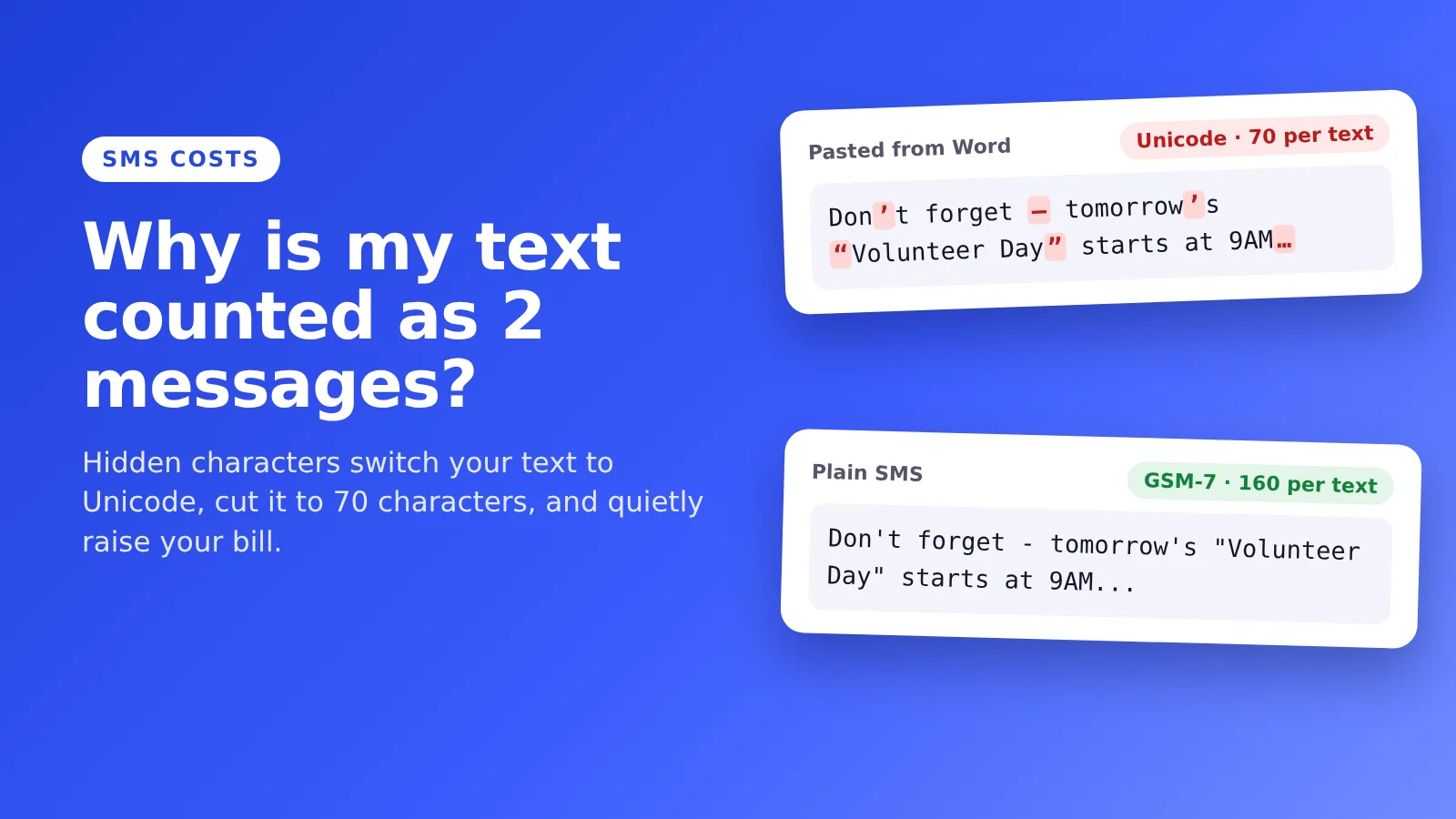

Why Is My Text Message Split Into Multiple Messages?
Michael PedoeemOne curly apostrophe can turn one text into two. Here's why hidden characters split your messages and raise your SMS bill, and how to fix them in seconds.
Text-to-Give for Synagogues: 4 Ways to Take Gifts by Text (2026)
Michael PedoeemText-to-give for synagogues: Donorbox, SecureGive, Txt2Give and Evant compared, plus Shabbat timing and a plan for kosher phones.
PastorsLine Alternatives for Small Churches: Stay for the Text In Church Move or Switch? (2026)
Michael PedoeemPastorsLine is moving into Text In Church. Here is when to stay, when to switch, and how Clearstream, Text-Em-All and Evant compare.





Get the Evant app



