The Promise and Proof of Texting
A registration is not the same as a person in the room. Plans change, reminders get buried, and practical details like parking or check-in times can slip from memory.
A timely text can put those details where attendees are likely to see them and make it easy to confirm or ask a question. For nonprofits coordinating RSVPs, check-ins, and event updates, Evant brings those tasks together with SMS RSVPs, targeted messaging, and event check-ins.
There is a limit to what the available evidence proves. The sources offer practical texting recommendations and sector benchmarks, but they do not document a nonprofit case study with measured before-and-after attendance. A benchmark can help set expectations, but it is not proof that texts caused a turnout increase.
This section takes a practical, evidence-conscious approach: use texts to support participation, then measure what happens in your own events. Track responses, registrations, attendance, and opt-outs rather than treating a delivered message as a successful outcome. For peer-to-peer events, texting strategies for participant recruitment and engagement offer useful ideas, but each organization still needs to assess its own results.
Use Texts as a Timely Engagement Channel
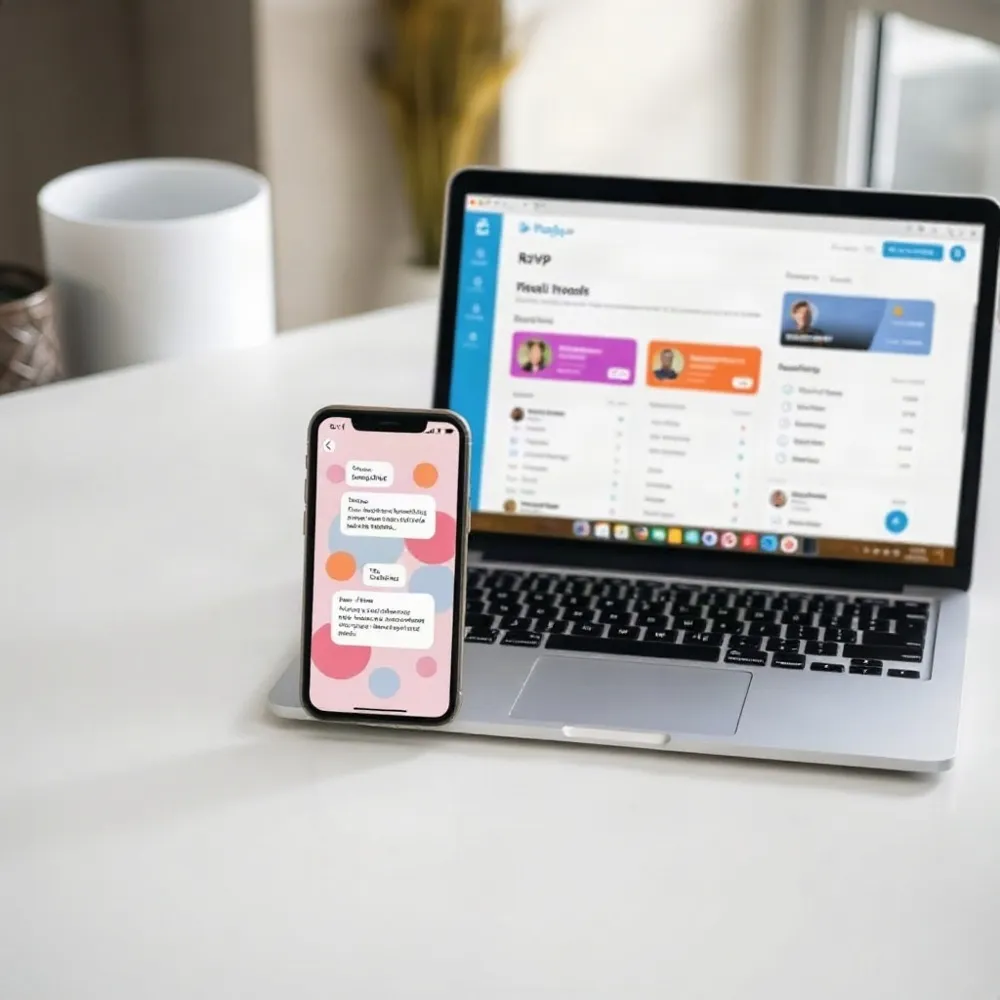
Is SMS marketing still effective for nonprofits? Yes, when messages are relevant, expected, and easy to act on. A text can put an RSVP link, a reminder, or a last-minute location change right where supporters can find it. It is a practical channel for timely event details, not proof that texting alone will increase attendance.
TextUs reports sector benchmarks of 98-99% delivery, a 98% open rate, and an 18-28% response rate for nonprofit and charity messages. These are reported averages, not an attendance study, so treat them as a guide to channel activity rather than evidence of event turnout. The nonprofit SMS benchmarks also distinguish replies from completed actions, a useful reminder to measure RSVPs and attendance separately.
Give each channel a clear job. Use text for concise reminders, logistics, and one direct action; use email for fuller explanations and social media for imagery or video. Coordinate the timing so supporters do not receive the same appeal everywhere at once. Evant supports event outreach with SMS RSVPs, targeted messaging, check-ins, CRM integration, and analytics, helping teams connect messages with event operations.
A warm, personal tone matters. Address people by name when appropriate, invite questions, and make the call to action unmistakable. A two-way exchange can help volunteers confirm a shift or let an attendee ask about parking, rather than making every text feel like another broadcast appeal. Pair timely messages with a coordinated SMS engagement plan, and review replies, RSVPs, attendance, donations, and opt-outs to learn what supporters find useful.
Build a Goal-Led Campaign Sequence

How can a nonprofit plan an effective text message campaign? Start with one measurable objective. It might be increasing RSVPs, filling volunteer shifts, or sharing an urgent change. A clear goal helps you decide who should receive a message, what it should ask them to do, and how you will judge the result.
Before drafting, make sure recipients have opted in and divide the list into useful groups, such as attendees, volunteers, and past participants. A message about arrival instructions will not help someone who is only considering registration. In Evant, SMS RSVPs, targeted messaging, and event check-ins connect communication with the event workflow.
Build a sequence that fits the event rather than treating one cadence as proven for every audience. Begin with an invitation or save-the-date. Send a closer reminder with the date, time, location, and RSVP link. On the day, share practical arrival details, such as parking or check-in instructions. Keep each text focused, with one clear action and an easy way to reply with a question or confirm attendance.
For peer-to-peer events, texts can announce registration openings or deadlines, help participants share invitations with friends, and welcome new registrants with coaching. NonProfit PRO’s peer-to-peer event guidance suggests using a welcome series for practical prompts, such as building a team or learning about the event’s mission. These are recommended tactics, not proof of a measured attendance increase by a named organization.
Afterward, compare the goal with the evidence: RSVPs, check-ins, volunteer confirmations, replies, and opt-outs. Evant’s event analytics can help teams review engagement alongside attendance, then adjust the next sequence while honoring opt-out requests promptly.
Coordinate Event Day and Follow-Up
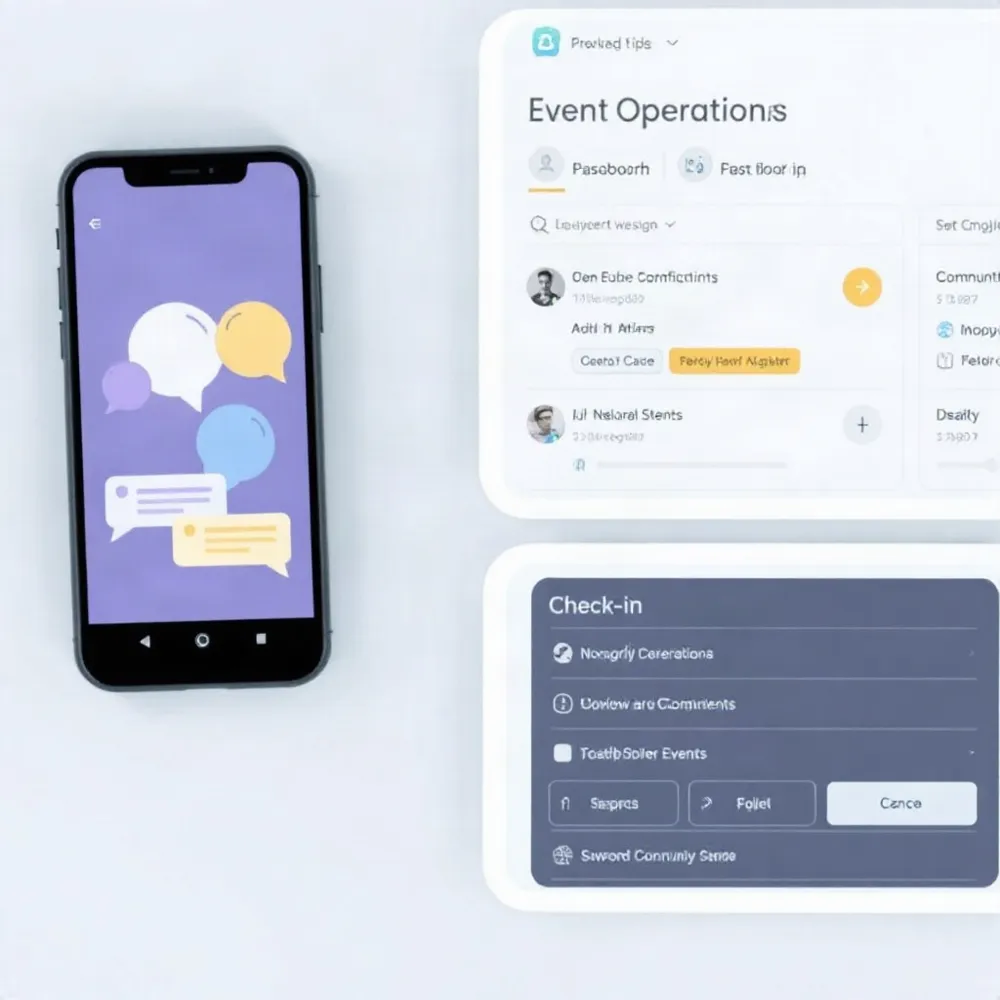
Event-day texts should answer the questions people need resolved now: where to park, how to check in, which room to enter, and whether weather or schedule changes affect the plan. A short reminder before a session or activity starts can help guests keep track without searching through email. Evant’s SMS event tools support targeted updates and check-ins, so attendees can receive practical details while staff and volunteers get their own shift instructions.
Scheduled messages reduce the scramble to send routine updates manually. Segment lists before the event so a room change reaches the affected guests, while a volunteer shift update goes only to the relevant team. For peer-to-peer events, texts can also carry a donation link or text-to-donate prompt. That supports fundraising, but a donation is not evidence that attendance increased. NonProfit PRO’s event texting guidance describes uses ranging from event-day logistics to participant fundraising.
Afterward, send a thank-you, share a brief highlight, and invite a simple reply or survey response about what worked. Evant’s messaging and analytics can connect those conversations with event check-in information, helping organizers assess more than message delivery. Compare RSVPs with check-ins or attendance, then review link clicks, replies, and opt-outs together. Opens show a message was seen, not that someone came; the combined signals offer a clearer basis for improving the next event.
Choose Tools That Fit Event Operations
A texting platform should fit the event workflow, not just send a broadcast. Start by checking whether it can handle SMS RSVPs, reminders, check-in messages, scheduled sequences, audience segmentation, two-way replies, and analytics. These features can reduce manual coordination and show which messages reached people or prompted a response. They do not, by themselves, prove that a platform caused higher attendance.
For organizations managing several event tasks in one place, Evant combines SMS RSVPs, check-ins, targeted messaging, CRM integration, and analytics. Compare those capabilities with your existing workflow, including whether staff need a shared inbox or other shared access to manage attendee replies.
Ask how the platform records consent and handles opt-outs, then check whether it connects to the CRM and other tools your organization already uses. Connected records can make it easier to keep attendee details and follow-up workflows in sync. Also consider how quickly staff can learn the system, what support is available, and whether it can handle a larger contact list or more events as your programs grow.
What should nonprofits consider when choosing an SMS platform?
Match the platform to the team’s capacity and budget. List the event tasks you need it to support, then compare ease of use, consent and opt-out controls, integrations, reporting, support, and room to grow. For a closer look at event-focused capabilities, see tools that support event operations.
What factors affect the cost of sending SMS messages?
Pricing may be based on a monthly plan, prepaid credits, or a per-message rate. The total can also depend on message volume, destination, carrier, number type, registration or carrier fees, and optional features such as automation, integrations, or analytics. Ask whether setup or monthly number charges apply.
Message length matters, too. Longer texts may be billed as multiple segments, and links, special characters, or emojis can change how a message is split. Before choosing a provider, ask how it charges for inbound replies and automated messages, then estimate costs using the kinds of texts and volume your events are likely to require.
Establish Consent and Alert Practices
How can a nonprofit set up a text alert system? Start with a clear invitation, not a contact list imported without context. Offer sign-up through a website or email opt-in, an event registration form, an in-person sign-up sheet, a text-to-join keyword, or a QR code at the venue. Explain what people will receive and how often, so subscribing is an informed choice.
Record when and how each person gave permission, along with the message types they agreed to receive. Requirements can vary by message purpose and applicable rules, especially for promotional or fundraising texts, so check current guidance rather than treating a general checklist as legal advice. Make opt-out instructions clear and honor stop requests promptly. Practical list-building and consent ideas are covered in guidance on building an opt-in list.
An alert system also needs simple operating rules. Group contacts by role or event, such as volunteers, families, and attendees, then decide who can send messages and what each alert channel is for. This helps prevent a parking update from reaching an unrelated audience or an urgent notice being buried in a fundraising appeal.
Choose a platform that can track permissions, manage segments and opt-outs, and schedule messages. Evant’s event tools include SMS RSVPs, check-ins, targeted messaging, and analytics, allowing teams to connect alerts with event operations rather than treating texting as a standalone broadcast.
Before relying on texts for a schedule change or check-in instruction, test the workflow with staff. Confirm that the right group receives the alert, replies reach someone responsible, and opt-outs are recorded. Then review delivery, replies, and clicks after routine reminders to improve future messages.
Connect Event Messaging With Giving
An RSVP text and a donation text do different jobs. Text-to-give lets a supporter start a gift by sending a campaign keyword to the organization’s designated number. Depending on the service, the reply may charge a preset amount to the supporter’s phone bill or provide a link to a mobile donation form.
At an event, print the keyword and clear instructions on signs, programs, or slides, and repeat them in relevant messages. Explain what happens after someone texts, how to choose or confirm a gift, and whether any charges apply. A clear path matters when supporters are trying to follow the program, not troubleshoot a donation.
Before promoting the campaign, choose a service, configure the keyword and donation journey, and test the steps on a phone. Check that the payment process is secure, that donation reports provide the information your team needs, and that records can connect with donor-management tools. These checks help staff reconcile gifts and follow up appropriately; they do not show whether event messaging increased turnout.
Keep the giving option distinct from attendance confirmation. Evant’s SMS event tools support RSVPs, check-ins, and targeted event communication, while a text-to-give service handles the donation transaction. For more on that distinction, see text-to-give and event messaging.
Read Opt-Outs as a Trust Signal
What is a reasonable SMS opt-out rate for a nonprofit campaign? A useful reference range is 0.2% to 0.6% of successfully delivered messages, based on nonprofit and charity SMS benchmarks. Calculate the rate by dividing opt-outs by successfully delivered messages, then multiplying by 100.
Treat that range as a guide, not a pass-or-fail score. Results can vary with audience, campaign purpose, consent, targeting, timing, and how often you send messages. A rise is a reason to review whether each text feels relevant and whether supporters understood what they were signing up to receive.
Check the message itself, the send time, and the audience list. Avoid sending every update to everyone, and make sure the message matches the expectations set at sign-up. Honor unsubscribe requests promptly, then use the feedback to improve future outreach.
Opt-outs are only one part of the picture. Review them alongside delivery, replies, link clicks, registrations, and actual attendance. Evant combines SMS RSVPs, event check-ins, and analytics, helping nonprofits compare message engagement with participation rather than treating a low opt-out rate as proof that an event campaign worked.
For a broader approach to protecting supporter preferences, see guidance on respecting opt-outs.
Measure What Happened, Not What Was Promised
Texting offers nonprofits practical ways to invite people, share timely event details, and follow up. But general advice is not proof that a particular organization increased turnout. Even NonProfit PRO’s peer-to-peer event recommendations describe tactics, not a measured attendance gain for a named nonprofit.
Treat each campaign as a test. Compare RSVPs with actual check-ins, and note which messages went to which audience and when. Use those findings to adjust future invitations and reminders, while honoring consent and opt-out preferences. Evant’s SMS RSVPs, check-ins, and analytics can help teams connect messages with event activity.
For a reported organization-specific example, Evant’s SMS Transformations case study describes one small nonprofit’s attendance results. That example is not a guarantee for other events. Clear, well-timed texts and tools that fit the workflow can reduce communication friction, but credible claims about increased turnout depend on an organization’s own evidence.
Related Blogs


Church Weather Cancellation Text Messages: 8 Templates and a 30-Second Call Script (2026)
Michael PedoeemChurch weather cancellation text messages: 8 copy-and-paste texts, a 30-second call script for landline members, and when to decide.
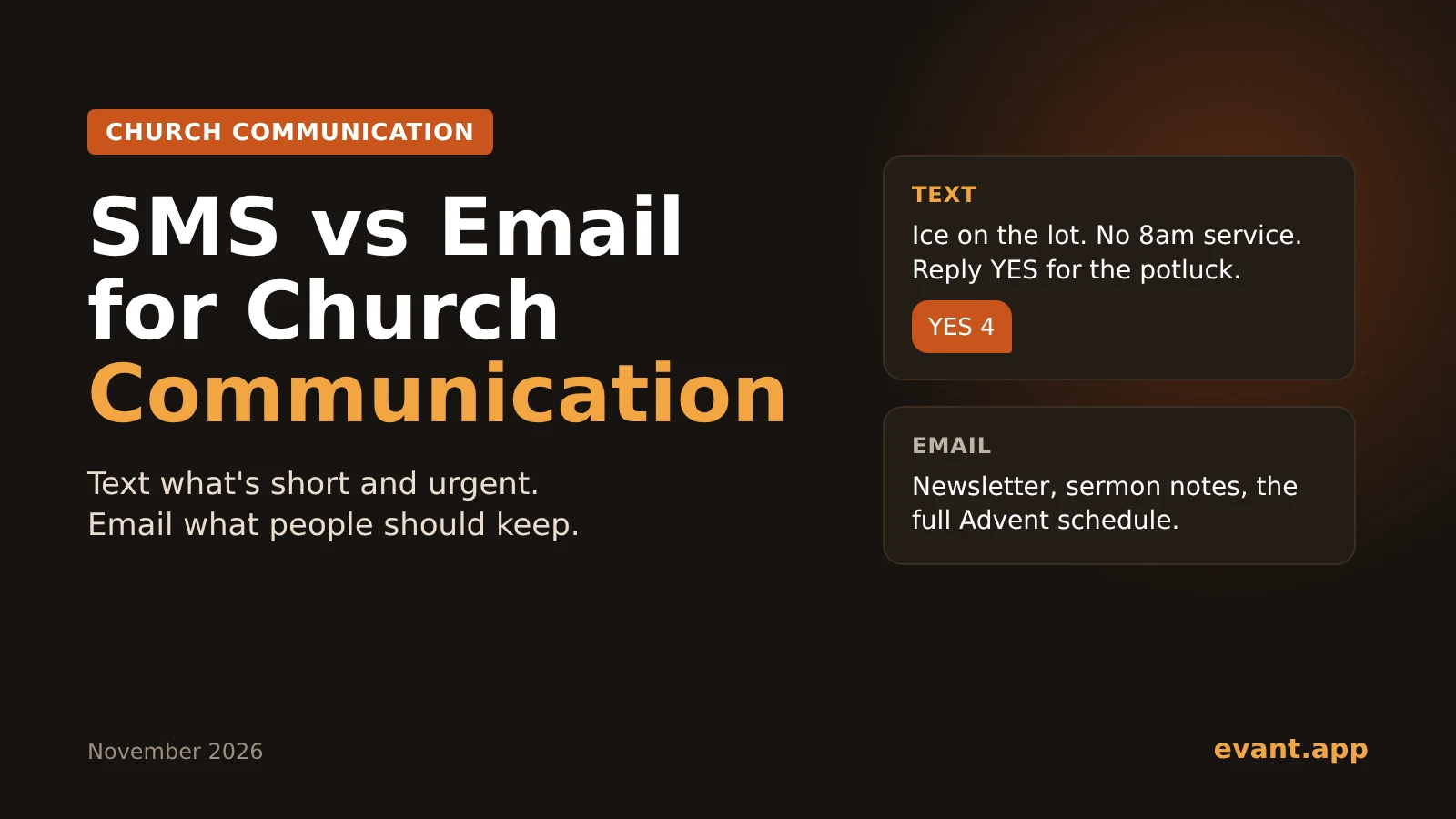
SMS vs Email for Church Communication: What to Text, What to Email (2026)
Michael PedoeemSMS vs email for churches: text what's short, urgent or needs a reply, email what people should keep. Reach, cost, consent and a simple weekly plan.
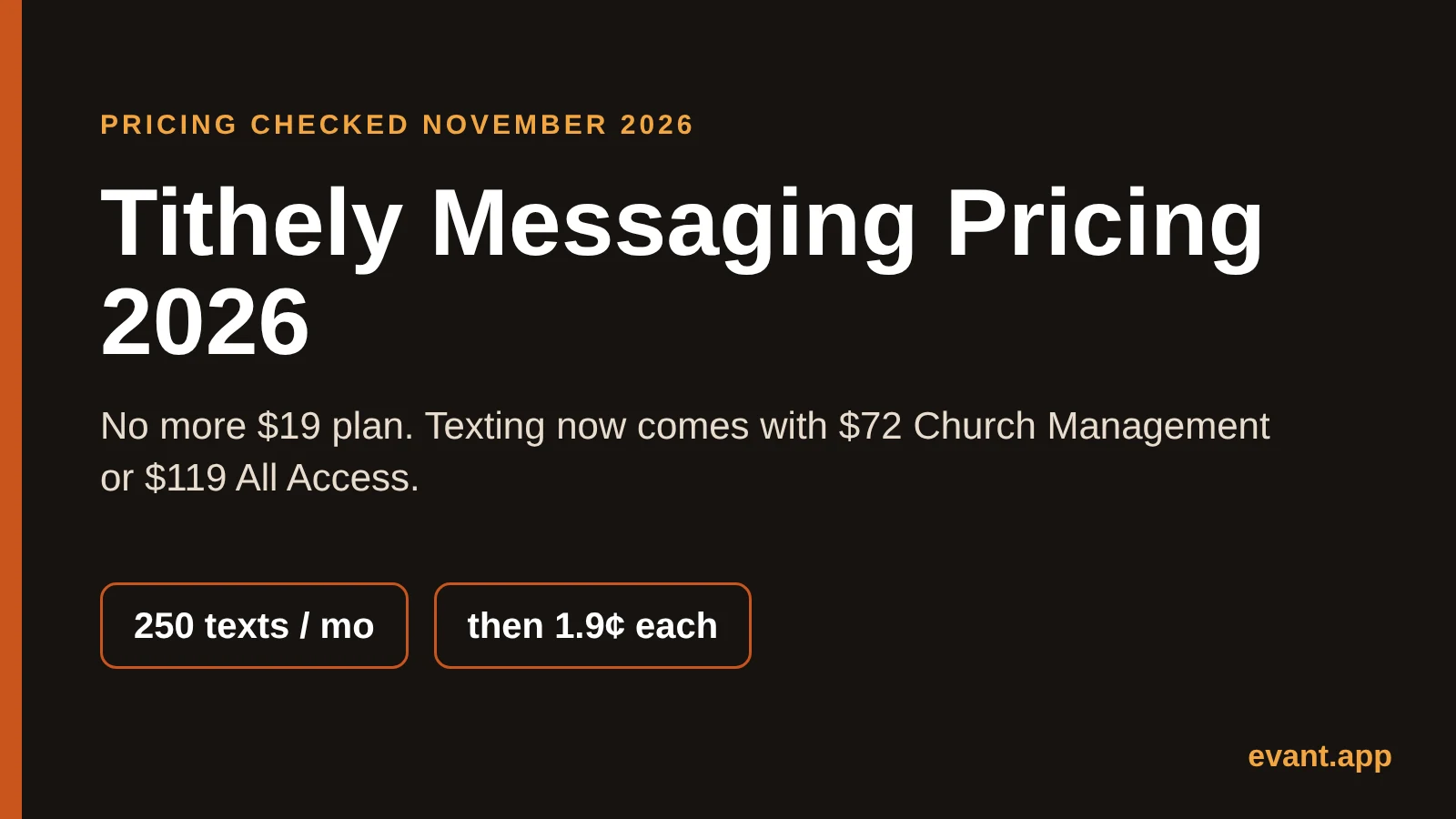
Tithely Messaging Pricing 2026: No More $19 Plan, What Texting Really Costs Now
Michael PedoeemTithely Messaging no longer has a $19 plan. Texting now comes with $72 Church Management or $119 All Access: 250 texts, then 1.9¢ each.





Get the Evant app



