

The Hidden Cost of Manual Event Tracking
Every time you manually move an attendee from a spreadsheet to your donor database, you lose ground. Nonprofit event planning is often weighed down by repetitive administrative toil. According to research from Smartsheet, over 40% of workers spend at least a quarter of their week on manual, repetitive tasks like data entry and email follow-ups. In the technical sphere, InformationWeek found that 58% of IT teams spend more than five hours every week addressing manual service requests.
This manual overhead creates a bottleneck that stifles engagement. When your staff is busy fighting with CSV exports and paper sign-in sheets, they aren't building relationships. The solution is SMS automation, a tool that modernizes how your organization manages volunteer coordination, donation follow-ups, and attendance tracking.
By shifting from manual updates to evant.app, you eliminate the administrative friction that prevents growth. Automated systems trigger RSVPs and confirmations instantly, ensuring your database is always accurate without a single manual entry. This article will show you how to replace those outdated, labor-intensive processes with automated workflows that actually boost participation.
What Is SMS Automation?

SMS automation is software that triggers prewritten text messages based on specific user actions, incoming keywords, or pre-set schedules. It is a tactical layer that removes repetitive manual work from your event logistics. While traditional email blasts often get lost in crowded inboxes, SMS automation leverages 98% open rates to ensure your audience receives timely updates.
At its core, this technology functions like a force multiplier for your team. Instead of manually typing individual reminders or updating spreadsheets, you configure automated workflows that handle the heavy lifting. Evant enables these automated flows to replace tedious admin tasks, such as tracking registrations or sending check-in codes, so your staff can focus on higher-value engagement.
How it replaces manual processes
Manual data entry is a primary source of operational friction. Modern systems solve this by integrating directly with your database, ensuring every text interaction is automatically logged. When you use a CRM-native platform, you eliminate the need for third-party connectors or constant manual syncing between your event software and your donor records. This creates a single source of truth for all participant data.
The capabilities go beyond simple reminders. You can execute complex drip campaigns that guide attendees through the entire event lifecycle—from the initial RSVP confirmation to post-event feedback surveys. By using conditional branching, the system can trigger different responses based on how an attendee reacts to a previous message, ensuring the communication remains relevant and personal without extra manual intervention.
The Real Cost of Manual Event Overhead

Every time your team manually moves a donor from a spreadsheet to a CRM, you are not just wasting time. You are actively choosing to slow down your mission. Data indicates that 40% of workers spend at least a quarter of their work week on repetitive manual tasks. That is a massive operational drain.
The toll of this toil is twofold. First, there is the efficiency loss. Nearly 60% of workers report that automating these tasks would save them six or more hours every week. Second, it hurts your staff. Research from InformationWeek shows that 90% of employees identify repetitive manual tasks as a direct cause of low morale and higher attrition. When your team is busy with ticket counting or manual check-in, they are not focused on your community.
Manual TaskThe CostThe Automation FixData entryHigh error riskSync via CRMCheck-insLong linesMobile triggersRSVP follow-upsLow responseDrip campaigns
Why SMS Wins Over Email and Paper

Every time you send an event update via email, you are gambling. With open rates often falling below 30% per a 2024 Meeting Magazines report, the majority of your messages sit ignored in crowded inboxes. Contrast this with SMS, which boasts a 98% open rate and ensures that 82% of messages are read within five minutes of delivery as noted by Notifyre.
The preference is clear. A full 89% of consumers report they favor texting over other communication channels for time-sensitive information according to BizzyWeb. Unlike apps that require downloads or email chains that get lost, text messages reach supporters exactly where they already spend their time.
What are the key benefits of using SMS for nonprofit community engagement?
SMS is a uniquely powerful tool for nonprofit community engagement due to its unmatched ubiquity, as it requires no app downloads and reaches supporters directly on their most-used devices. With an impressive 98% read rate, SMS ensures that your vital updates, event reminders, and calls to action are seen almost instantly by your audience per Meeting Magazines. Its high reliability makes it ideal for time-sensitive notifications, such as event check-ins or urgent volunteer coordination, which helps streamline logistics.
Platforms like Evant take this further by digitizing the entire experience. While paper processes rely on static lists that become outdated the moment they are printed, SMS automation enables real-time RSVP tracking and digital QR ticketing. By switching to these automated workflows, your team spends less time manually syncing attendee status and more time fostering the personal donor relationships that drive long-term sustainability.
Automating the Full Event Lifecycle
Every time your team manually confirms an RSVP or sends a reminder, you lose hours that could be spent on donor relationships. SMS automation eliminates this friction by treating the event lifecycle as a single, continuous workflow rather than a series of disconnected manual tasks.
How can nonprofits effectively use SMS tools to streamline event logistics?
Nonprofits can effectively streamline event logistics by utilizing SMS-based platforms to automate the entire event lifecycle, from initial registrations and automated reminders to real-time day-of updates. By leveraging SMS for instant communication, organizations can reduce the administrative burden of manual follow-ups, ensuring that attendees receive timely information about venue changes or schedule adjustments. Integrating these tools directly with a CRM allows for personalized, data-driven messaging that keeps donor and volunteer information centralized and secure. Furthermore, SMS provides a scalable way to handle bulk notifications, such as check-ins or last-minute alerts, which increases overall event attendance and participant engagement. Ultimately, these digital tools simplify event management by replacing complex workflows with direct, reliable mobile interactions.
By building automated communication into your event strategy, you transition from being a task manager to an experience builder.
Segment and Personalize Without Manual Work
Generic mass blasts often lead to high unsubscribe rates because they fail to deliver value to specific recipient groups. Nonprofit Pro notes that SMS automation allows you to create drip campaigns that guide attendees through the entire event lifecycle, ensuring every message feels bespoke.
True personalization requires integrating your SMS tool with a CRM to pull dynamic fields like names, session times, and event locations automatically. When you use evant.app, you replace manual data entry with a system that recognizes whether a contact is a VIP, speaker, or first-time volunteer. This allows you to serve specific content that actually moves the needle.
Behavioral triggers are equally vital for maintaining engagement without human intervention. You can set up automated follow-ups for those who missed an event, or link a donation to an immediate, automated thank-you sequence. This shift from manual monitoring to rule-based workflows is how FRANSiS suggests nonprofits can build long-term donor retention.
Real‑Time Triggers Replace Manual Monitoring
Every manual hand‑off creates a bottleneck, turning simple event logistics into a drain on your team's energy. Instead of verifying attendance or chasing payments manually, real‑time triggers can handle the heavy lifting: when an attendee registers, they receive a confirmation instantly; when they submit a payment, a receipt is sent immediately. By the time they arrive on-site, a simple check‑in text triggers their welcome message without a single staff member opening a spreadsheet.
This shift to automated workflows extends to internal coordination and emergency response. Rather than scrambling to email volunteers or speakers when a schedule shifts, instant alerts keep your staff updated. In urgent scenarios like weather-related closures or evacuation protocols, you can push a single mass alert that reaches every attendee within minutes.
Two‑way communication further cuts the administrative burden. Attendees can text questions about parking or session times, and automated systems resolve these inquiries without requiring staff to monitor every channel. Even no‑show management becomes proactive, with automatic re‑engagement texts that turn empty seats into last‑minute participation opportunities.
CRM Integration: A Single Source of Truth
Every time your team exports a spreadsheet of event registrants only to upload it into a separate messaging app, you introduce a new point of failure. This manual data shuffling is where contact details get lost, duplicates proliferate, and donor history becomes fragmented across isolated databases. Using evant.app allows you to bypass these disconnected systems entirely.
The secret to real efficiency is a platform that lives inside your database. Rather than relying on fragile third-party connectors that break every time your API updates, evant.app functions as a CRM-native tool. This means registration data, attendee communication, and final check-in history stay within a single, unified record, providing a definitive source of truth.
This integration eliminates the friction that typically plagues large organizations. When every text sent and every RSVP received is automatically logged against the donor profile, you remove the administrative burden of manual entry. More importantly, this automated logging creates an immediate audit trail, which simplifies compliance for nonprofits handling sensitive donor or participant data. You get accurate reporting without the manual cleanup.
How can nonprofits effectively use SMS tools to streamline event logistics?
Nonprofits can effectively streamline event logistics by utilizing SMS-based platforms to automate the entire event lifecycle, from initial registrations and automated reminders to real-time day-of updates. By leveraging SMS for instant communication, organizations can reduce the administrative burden of manual follow-ups, ensuring that attendees receive timely information about venue changes or schedule adjustments. Integrating these tools directly with a CRM allows for personalized, data-driven messaging that keeps donor and volunteer information centralized and secure. Furthermore, SMS provides a scalable way to handle bulk notifications, such as check-ins or last-minute alerts, which increases overall event attendance and participant engagement. Ultimately, these digital tools simplify event management by replacing complex workflows with direct, reliable mobile interactions.
Compliance and Limitations You Must Know
SMS marketing is a powerful tool for nonprofits, but success relies on strict adherence to regulations like the Telephone Consumer Protection Act (TCPA) and the CAN-SPAM Act, which mandate obtaining express consent and honoring opt-out requests. Organizations must prioritize maintaining accurate, up-to-date records of subscriber permissions to ensure ongoing compliance.
Beyond legal requirements, content must be crafted with precision. The standard 160-character limit necessitates clear, concise messaging and one strong, actionable CTA per text. If your messages exceed this, they risk being fragmented or costing more per send.
To maintain high deliverability in the United States, your organization must complete 10DLC registration for A2P messaging, which validates your traffic with mobile carriers. Failure to register often results in blocked messages or high filtering rates.
To maximize effectiveness, avoid spamming and instead use audience segmentation to send timely, relevant content that respects the personal nature of the recipient's mobile device. If your unsubscribe rates spike, you are likely failing to provide value or over-messaging your list. Always monitor these metrics through your platform dashboard to ensure your outreach remains a welcomed connection rather than a nuisance.
Applying the 5 C’s With SMS Automation
The 5 C’s framework—concept, coordination, control, culmination, and closeout—provides a structured way to transform event logistics from a manual chore into a repeatable, high-impact process. Nonprofits often rely on fragmented tools that create administrative friction, but applying this framework through SMS automation eliminates those bottlenecks.
How can the 5 C's of event management be applied to nonprofit planning?
During the concept and coordination phases, evant.app enables you to use SMS RSVPs to gauge initial interest and secure resources before costs escalate. By moving away from manual spreadsheets, your team can coordinate vendor, volunteer, and speaker logistics through automated triggers that replace disjointed email chains.
The control phase centers on real-time event management. While generic platforms might leave you manually tracking lists, evant.app uses mobile check-in and targeted alerts to provide actual oversight. This ensures you can broadcast schedule changes or venue updates instantly, a necessity for keeping attendees aligned per 2026 industry standards.
During the culmination of your event, digital engagement tools such as live polls and surveys keep participants connected. Finally, the closeout phase is where you turn attendance into long-term retention. Automated follow-up messages and CRM-integrated analytics allow you to track ROI and refine your strategy for the next campaign, ensuring that no donor data is lost in a manual silo.
Get Started: Quick Wins for Your Team
Every time you try to automate your entire event pipeline at once, you hit a wall of complexity that drains your team's energy. Instead, follow the principle of optimize before you automate. Map your existing manual steps first to remove bottlenecks, then introduce technology one piece at a time.
To scale these wins, select a tool built for your specific environment. A CRM-native platform like evant.app eliminates the need for third-party syncs by acting as a single source of truth for your constituent data. Unlike generic mass-texting services, these systems bake in essential TCPA compliance and audit trails from day one.
Treat your new automation workflow like a new team member that requires ongoing care. Measure your success through specific KPIs such as the reduction in hours spent on manual outreach, the increase in your event attendance rate, and the time saved during guest check-in. By focusing on these high-value tasks, you build the internal engineering mindset necessary to turn event logistics from a recurring drain into a reliable, automated engine for growth.
From Overhead to Impact
Every minute your team spends copying data between spreadsheets and your database is a minute stolen from your actual mission. Manual event management drains your energy and creates bottlenecks that stall community growth. Info-Tech reports that these repetitive tasks kill morale, yet many organizations continue to treat them as necessary evils.
Shifting to SMS automation changes the math. By using a CRM-native platform like evant.app, you remove the technical friction of manual syncing. When your SMS system talks directly to your donor database, you stop chasing errors and start focusing on high-value interactions. This automated workflow ensures your data remains accurate without a single manual export.
Start small. Pick one recurring event and automate the RSVP and reminder sequence. Measure the time saved against your previous manual hours, then scale from there. NonprofitPro notes that this approach builds momentum while proving the value of your tools. Stop managing spreadsheets and start building the community you envisioned.
Related Blogs



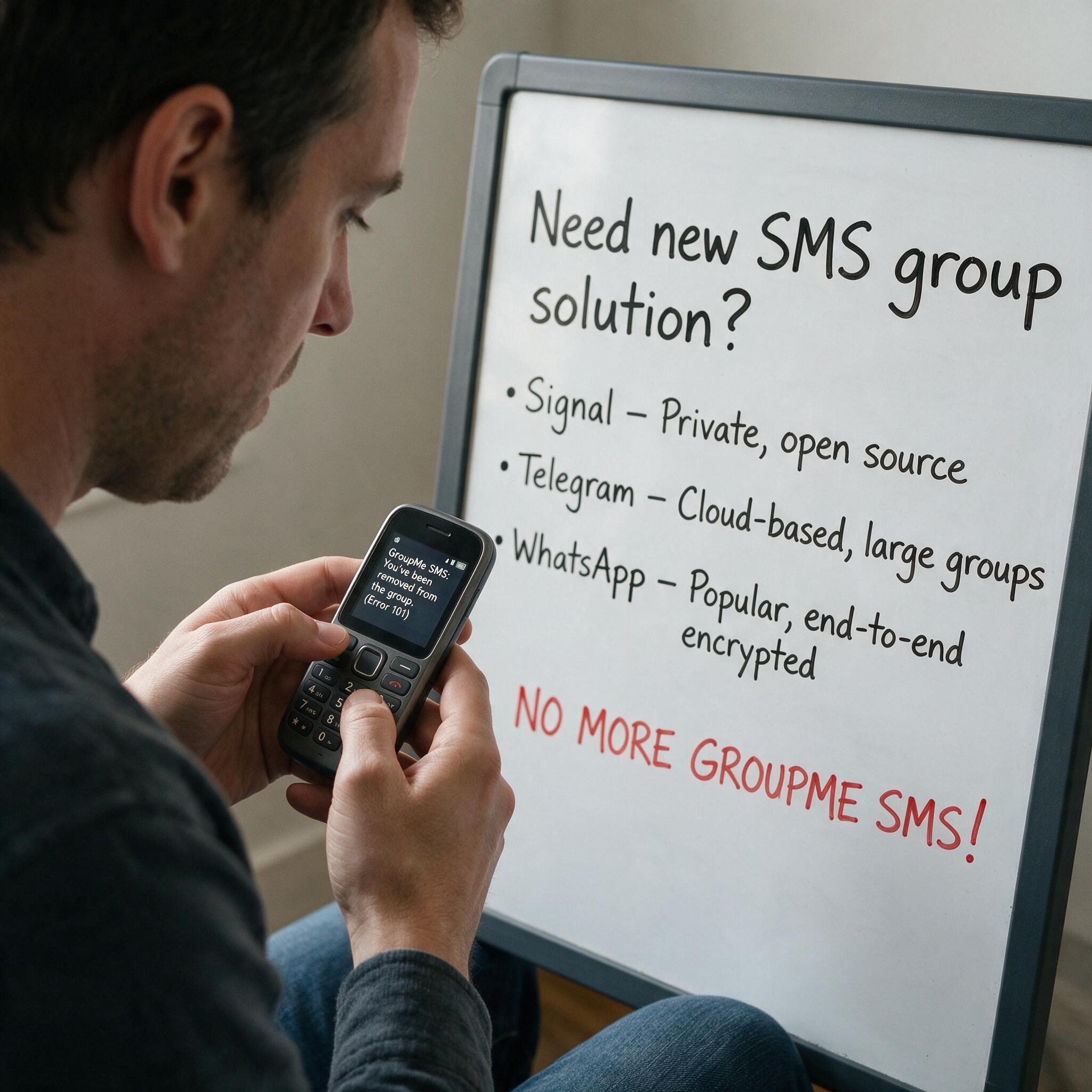
Got Kicked Out of GroupMe? Look to Evant.
Michael PedoeemGot Kicked Out of GroupMe? The Best GroupMe SMS Alternative for Jewish Communities