

Why Donor Relationships Are the Heart of Nonprofit Success
Many nonprofits treat fundraising as a series of one-off transactions. They ask for money, the donor gives, and the interaction ends until the next fiscal quarter. This approach is costly, as donor retention remains a persistent challenge for the sector. Only 20% of first-time donors contribute a second time, a figure that underscores why treating donors as revenue sources rather than partners leads to attrition.
True growth comes from relationship-based fundraising. This requires a shift from sporadic solicitation to proactive, consistent engagement. Modern organizations understand that donors want to feel like participants in a mission, not just ATM machines. When a donor feels connected through impact stories, feedback requests, and timely gratitude, the likelihood of long-term support increases dramatically.
Digital infrastructure is the silent engine behind these relationships. Tools like Evant.app allow organizations to move beyond the friction of manual forms and cluttered email inboxes. By integrating SMS into a broader communication strategy, nonprofits reach supporters where they already are—their phones. While platforms like Mailchimp or generic mass-texting services often struggle to maintain personal touchpoints, Evant.app automates the heavy lifting of CRM data syncing, ensuring every RSVP or thank-you message is accurate and personal.
Consistency matters more than scale. Whether you are using SMS RSVP to confirm attendance or sending personalized updates on project milestones, your goal is to reduce administrative noise. By using technology to facilitate real-time, two-way dialogue, your nonprofit creates a modern, relational experience that keeps supporters engaged year-round.
The 80/20 Rule and Your Top Supporters

A standard observation in development offices is that roughly 80% of total revenue often flows from a dedicated 20% of the supporter base. This is the Pareto Principle in action, and it dictates how your team should prioritize its daily focus. While major donors require high-touch, personalized stewardship, the remaining 80% of your audience still deserves consistent, meaningful communication.
The danger lies in treating every donor interaction as an identical task. When you treat a long-term major supporter and a one-time attendee with the same broad-brush broadcast, you lose the chance to cultivate deep loyalty. Top-tier donors expect (and deserve) personal outreach that acknowledges their specific history with your mission. For this group, a quick manual note or a phone call carries more weight than any template.
For the broader community, efficiency is the priority. Using Evant.app helps you manage this balance by integrating SMS with your CRM to automate routine touchpoints, such as event invitations or impact updates. This ensures your wider list stays informed and engaged without draining staff time. By automating logistical communications for the many, you clear the path for your team to focus their human energy where it yields the most impact for the mission.
The 7-to-1 Touchpoint Ratio that Builds Trust

Many nonprofits make the mistake of reaching out only when it is time to ask for a check. This transactional habit trains supporters to view your notifications as a nuisance, eventually leading to lower open rates and donor attrition. Building trust requires shifting your strategy toward the 7-to-1 touchpoint ratio. This model dictates that for every one financial request, you should provide seven non-solicitation interactions.
What does a non-solicitation touch look like in practice? It is about showing up when you do not need anything. Send an impact story that highlights how a specific program changed a life, or shoot over a quick birthday wish. Invite them to a community event or share a sneak peek of a project progress report. These interactions remind your base that they are partners in a shared mission, not just funding sources.
Consistency is where most organizations stumble. When you communicate at least once a month, you prevent the 'only when they need money' feeling that sours donor loyalty. With tools like Evant, you can manage these sequences without manually tracking every interaction in a spreadsheet. Ultimately, effective nonprofit communication relies on building authentic relationships through these structured, consistent touchpoints. Providing value first ensures that when you do make that rare ask, the community is ready to respond.
Audience Segmentation: Speak Directly to Their Interests

Imagine sending an invitation for a gala to someone who has only ever donated to your disaster relief fund. It feels disconnected. This is exactly why generic, one-size-fits-all messaging often leads to high opt-out rates. When you treat your entire database as a single bucket, you ignore the unique passions that drove people to support you in the first place.
Segmentation allows you to speak to your donors about what they actually care about, whether that is their specific giving history, volunteer status, or past event participation. By grouping supporters based on these attributes, you shift from broad broadcasting to relevant, one-to-one dialogue. When messages align with a donor's personal interest, they are far less likely to see your text as spam and more likely to see it as a valued update.
Using Evant.app helps you manage these segments by integrating directly with your CRM data. Unlike static lists that feel impersonal, this approach ensures your outreach reflects real interaction history. According to research by Giving USA, segmenting based on past feedback can help increase the relevance of your content and keep your audience engaged long-term.
SMS marketing can help improve both retention and attendance when executed this way. It provides a direct line for impact stories or event logistics that recipients actually want to see. As noted by Giving USA, nonprofit texting programs tend to be more effective when they function as two-way channels rather than static broadcast streams. By consistently delivering value tailored to specific donor interests, you turn routine communication into a reliable anchor for your community.
SMS Marketing: A Direct Line to Your Donors
Many nonprofits continue to lean on email newsletters as their primary outreach, ignoring that inbox clutter often sends these updates directly to the trash. If you want to actually reach your supporters, you must meet them where they already spend their time: on their phones.
The data is clear. About 70% of donors view SMS as a good way to capture attention, and 62% explicitly state they want to text with the organizations they support. This is the difference between a broadcast that goes unread and a direct line to your community.
Prioritize Relationship Over Revenue
A common mistake is treating SMS like a digital billboard for donation requests. Instead, use your SMS RSVP capabilities and broader messaging to build rapport through non-solicitation content first. By sharing impactful stories, event logistics, and genuine messages of gratitude, you provide value before ever asking for a gift.
When you use tools like Evant to manage these interactions, you ensure that every text feels like a personal check-in rather than a cold blast. Whether you are sending an operational update about a weather-related closure or sharing a quick video of your mission in action, your focus should always be on sustaining the long-term relationship.
- Event Logistics: Simplify registration with instant confirmation texts and venue reminders.
- Impact Stories: Send short, authentic clips that show donors exactly how their contributions are being used.
- Gratitude: Express immediate, personal thanks after a donation to reinforce the donor's sense of belonging.
- Operational Updates: Keep your community informed with real-time notifications about upcoming meetings or volunteer opportunities.
Compliance remains a critical foundation for this strategy. As outlined in SMS Compliance Basics, you must prioritize transparency and clear opt-out instructions to maintain trust. When you respect your donors' time and boundaries, your SMS list becomes your most valuable asset for meaningful community engagement.
Using SMS to Boost Donor Retention and Event Participation
Most nonprofits lose touch with their supporters because they rely on channels that rarely get opened. Sending a donation appeal to a crowded email inbox is often a lost cause, as deliverability issues can mean up to 90% of your list may never see your message per nonprofitpro.com. By contrast, text messaging can achieve open rates often exceeding 90%, with many recipients reading within three minutes, according to research from Giving USA.
The secret to donor retention isn't just sending more messages, but sending the right ones. SMS platforms that integrate directly with your CRM bridge the gap between broadcast messaging and genuine connection. Instead of generic blasts, you can trigger automated, personalized thank-you messages immediately after a gift, which helps prevent donor attrition by demonstrating instant gratitude.
Streamlining Logistics with SMS
Event attendance often suffers from poor communication leading up to the date. Using an SMS platform that supports RSVP management, your team can manage the entire RSVP lifecycle through SMS, sending reminders and real-time logistical updates directly to donor pockets. This process turns a slow, manual registration task into an instant dialogue.
- Send pre-event reminders with location details to reduce no-shows.
- Provide real-time updates on event changes to maintain attendee trust.
- Use post-event texts to share impact stories, helping donors feel the result of their attendance or contribution.
- Ensure compliance by following SMS compliance standards, such as providing simple opt-out instructions in every thread.
Building Strong Donor Relationships with P2P Texting
Many organizations make the mistake of treating SMS like a megaphone. They send a mass blast to ten thousand people, hoping for a sliver of engagement, only to find that generic messages often trigger an opt-out. That is the broadcast trap.
Peer-to-peer, or P2P, texting is the opposite. Unlike one-to-many broadcasts, P2P texting facilitates one-to-one, personalized conversations between your staff or volunteers and your donors. When a donor receives a message that feels like a genuine note from a real person, they are far more likely to engage. According to research from CallHub, this personal approach is essential for building deeper relationships and gathering actionable feedback.
Evant.app helps organizations move beyond the blast-and-hope mentality by integrating SMS RSVP technology directly into the donor lifecycle. Instead of a dead-end message, you get a living dialogue. You can ask for a quick opinion on a new project or confirm event attendance, and the platform ensures the response is recorded in your CRM automatically. This demonstrates that you are actually listening to your supporters.
When you engage in two-way SMS communication, you stop being a nameless entity and start being a partner your supporters recognize and rely on. As noted by Giving USA, nonprofit texting programs serve as a two-way channel that fosters intimacy and connection. By prioritizing these authentic exchanges over simple donation solicitations, your organization creates a community that feels seen, valued, and ultimately, more committed to your mission for the long term.
Security and Trust: SMS Best Practices
When you send a text message, you are entering a donor's most personal digital space. If your message looks like a generic spam alert, you lose that connection instantly. Building trust starts with how your organization presents itself technically. According to SMS Compliance Basics, nonprofits are subject to rigorous standards, and failing to respect these can lead to fines ranging from $500 to $1,500 per violation.
The foundation of a secure Evant.app campaign lies in how you present your links. Many organizations rely on free, third-party URL shorteners, but these often look suspicious and can trigger spam filters on mobile carriers. Instead, use organization-specific domains for links. This approach ensures donors know exactly who sent the message, reinforcing the authenticity of your call-to-action.
Transparency is the final piece of the security puzzle. You must provide a clear, simple way for supporters to opt-out, such as by replying STOP. While some might fear that making it easy to leave will shrink their list, the opposite is true. Respecting a donor's boundary actually builds long-term trust. When you use a platform like Evant.app that automates these compliance workflows, you save time while ensuring that every communication remains professional, compliant, and deeply respectful of the community you serve.
Creating a Consistent SMS Rhythm without Fatigue
Frequent interruptions are the fastest way to lose a donor's attention. When a nonprofit treats a text message inbox like a megaphone, subscribers stop seeing the communication as a personal update and start seeing it as noise. To maintain a productive connection, organizations should stick to a consistent rhythm, ideally sending 2 to 4 SMS messages per month. This frequency is sufficient to keep your mission top-of-mind without causing message fatigue.
The key to long-term success is balancing your outreach. If every text is a financial ask, you eventually exhaust your list. Instead, mix in non-solicitation content that provides genuine value. Use your SMS channel to share informal, authentic impact stories, event reminders, or simple thank-you notes that confirm a donor's recent contribution. By alternating between updates and requests, you build a relationship defined by trust rather than transaction.
Evant.app helps nonprofits maintain this balance by centralizing communication and donor tracking. While platforms like Mailchimp or standard broadcast services can handle mass text lists, Evant.app allows you to integrate SMS directly with your CRM for smarter segmentation. This ensures that donors receive content relevant to their specific interests, preventing the generic blast-messaging that forces people to reply STOP.
- Prioritize two-way conversations to gather feedback, which keeps donors engaged as active participants.
- Include clear opt-out instructions in every communication to respect donor boundaries and remain compliant with regulations.
- Focus on engagement metrics such as replies and click-through rates rather than just total revenue, as this indicates a healthier, more sustainable community.
Using Opt-Out Strategies to Build Your SMS List
Many nonprofits struggle to build a high-response subscriber list because they view every new connection as a high-friction hurdle. They force supporters through manual forms that demand name, phone, and email, all while the organization's own CRM sits disconnected from the effort.
For your existing donors, the most effective path forward is an opt-out communication strategy. By assuming interest based on an established relationship, you eliminate the friction of asking supporters to re-verify their intent. This approach allows Evant.app to automatically sync your donor database, ensuring your outreach is personal, accurate, and deeply relevant to their giving history.
Strategies for Effective Nonprofit SMS Engagement
Effective nonprofit communication hinges on building authentic relationships through structured, consistent, and inclusive touchpoints. For existing donors, using an opt-out communication strategy is a lower-friction way to build an SMS subscriber list. Combining this with online opt-ins, in-person sign-ups, and text-to-join keywords helps expand reach while respecting donor preferences SMS Compliance Basics: What Nonprofits Need to Know.
Evant.app focuses on the specific data already in your CRM. This creates a VIP experience where the donor feels recognized. When you combine this automated list growth with clear, easy opt-out instructions, you build trust that keeps your engagement high and your churn rates low.
Integrating SMS with Your CRM for Seamless Data
Many nonprofits currently struggle with data silos where their text messaging platform lives in total isolation from their donor database. This leads to the painful reality of manual exports, CSV uploads, and disconnected records that fail to reflect the true state of a supporter relationship.
By integrating SMS platforms with CRM systems, your organization moves beyond basic broadcasting. This integration allows every interaction, from an event RSVP to a post-donation thank-you, to sync automatically. The Evant.app platform turns these touchpoints into actionable insights within your existing donor management flow, ensuring no data point is lost in a spreadsheet.
How can technology and CRM integration streamline event management and SMS communication? Integrating these tools eliminates manual data syncing, ensuring every donor interaction is tracked centrally. This unified view of history and preferences enables highly informed, personalized messaging that adapts to what you already know about a supporter. When donors update their own information via auto-filled forms, data accuracy improves while the administrative burden on your staff vanishes. This transition from manual task management to data-driven strategy is what platforms like Evant.app support.
| Feature | Manual Process | Integrated CRM |
|---|---|---|
| Data Sync | Weekly CSV exports | Real-time update |
| RSVP Tracking | Manual entry | Auto-logged status |
| Donor Updates | Staff updates info | Donor self-service |
Learning from Lapsed Donors: Recapture and Intervention
Most development offices wait until a donor stops giving entirely before taking action. By then, the damage is often done. Research indicates the donor recapture rate for lapsed supporters is only 4%, which makes the work of winning them back an uphill battle.
It is far more effective to identify at-risk donors before they fall off the map. When a regular giver misses their annual gift or stops opening emails, they are signaling a drift in engagement. Waiting for these patterns to resolve themselves leads to attrition.
This is where Evant.app transforms the process. Rather than relying on static lists, you can integrate your CRM data to trigger automated, personalized SMS check-ins the moment an engagement gap appears. Unlike email, where messages are easily ignored, SMS reaches donors in a personal space where they are more likely to respond. A quick, informal text asking for feedback or offering a project update can reconnect a donor while they are still listening.
Tactics for Re-engaging Lapsed Supporters
Effective nonprofit communication hinges on building authentic relationships through structured, consistent, and inclusive touchpoints. Because the donor recapture rate for lapsed donors is low, it is more effective to identify and intervene with at-risk donors before they stop giving. Using data and SMS to spot signs of disengagement and send personalized re-engagement messages helps prevent attrition before it becomes a churn problem.
Bringing It All Together: A Modern, Relational Approach
Success in modern development relies on shifting your mindset from one-off transactional requests to consistent, relationship-based engagement. By focusing on the 80/20 rule, you prioritize your most dedicated supporters, while the 7-to-1 touchpoint ratio ensures they receive plenty of value, stories, and gratitude before you ever make a formal appeal. When you pair these strategies with thoughtful audience segmentation, you stop treating your community as a monolith and start speaking directly to their unique passions.
The power of this approach multiplies when you move beyond generic email blasts. Using SMS marketing as a VIP channel allows for immediate, personal communication that cuts through digital clutter. Features like SMS RSVP transform routine event logistics into high-engagement moments, turning static invitations into active dialogues. Unlike manual processes that rely on clunky spreadsheets, Evant automates the link between your text platform and your donor database.
Integrating these tools ensures that every interaction is informed by past behavior, making your outreach feel human rather than robotic. As you build this consistent rhythm, you will find that retention becomes a natural byproduct of your efforts. When donors feel known, valued, and connected to your mission's daily impact, they are far more likely to remain active, loyal participants in your community for the long term.
Related Blogs



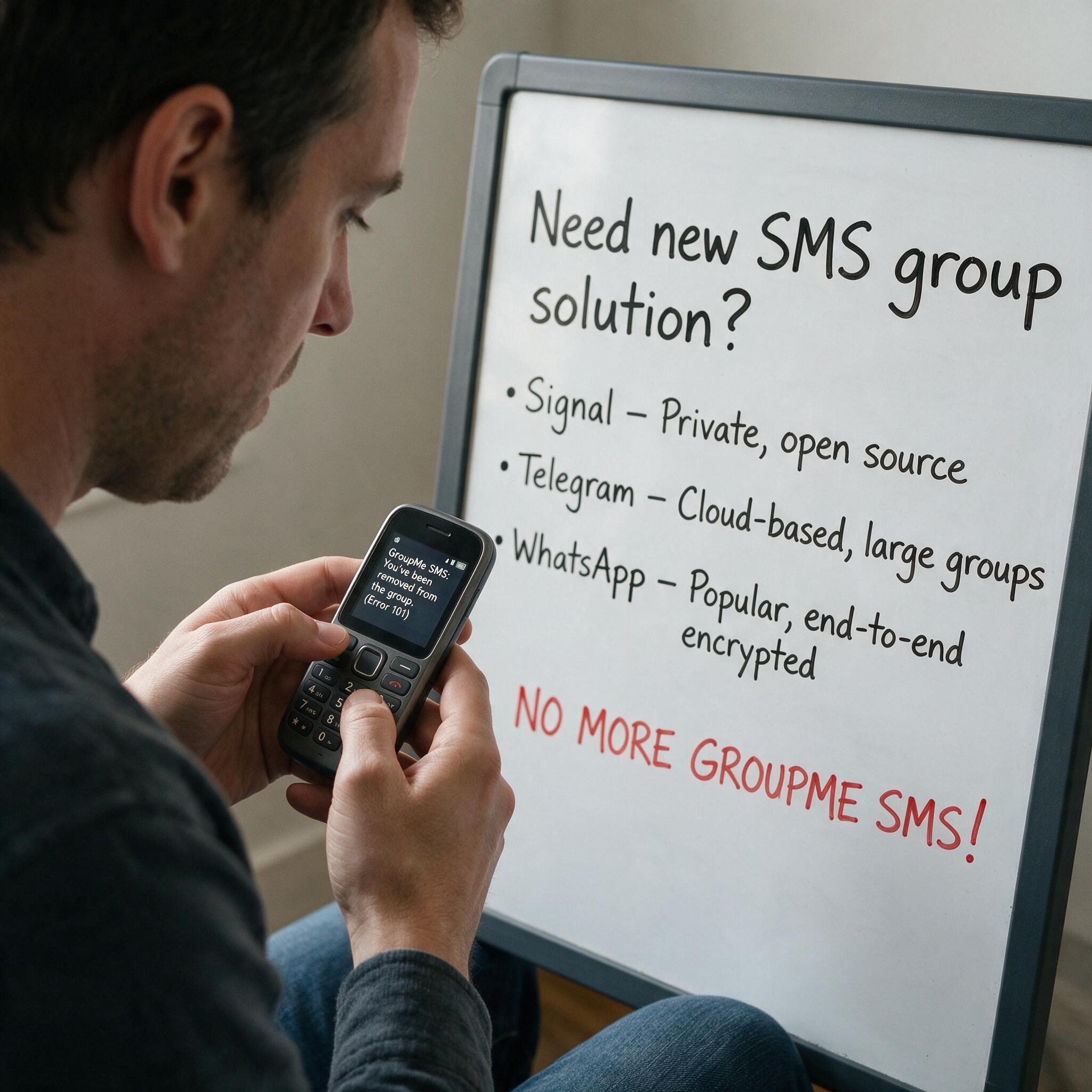
Got Kicked Out of GroupMe? Look to Evant.
Michael PedoeemGot Kicked Out of GroupMe? The Best GroupMe SMS Alternative for Jewish Communities