
Why SMS is Essential for Modern Church Communication
Most churches still rely on aging communication methods like paper bulletins and email newsletters. When church communication depends on an inbox, the results are disheartening. Per 2024 Lifeway research, email open rates for church outreach have plummeted to roughly 25%. You are essentially shouting your message into a crowded room where three out of four people are wearing noise-canceling headphones.
Text messaging changes the math entirely. SMS boasts a 98% open rate, with the vast majority of messages viewed within the first three minutes of delivery. Unlike apps that require a download or emails that get trapped in spam folders, text messages meet congregants where they already are: on their mobile phones. This is a primary reason why 80% of churches now use SMS to reach members.
Adoption alone is not a strategy. Many organizations treat SMS as a digital megaphone, blasting generic announcements to an entire database. This leads to fatigue and high opt-out rates. The modern approach, supported by Evant, shifts the focus toward targeted, relevant engagement. By using SMS to segment your community based on interest, volunteer roles, or life stages, you turn broadcast noise into meaningful connection. Moving from mass-blasting to surgical, automated communication is how you stop wondering why attendance is lagging and start seeing your pews filled again.
High Open Rates Drive Urgency

Most churches still struggle with engagement because they rely on emails that go unopened. While email open rates for church communications have dropped to approximately 25% per LifeWay Research, SMS messaging achieves an open rate of 97%.
This massive gap exists because texting is an inherently immediate channel. It does not require congregants to install a specific app, maintain a social media account, or monitor a cluttered inbox. Messages land directly on the lock screen, where they are typically read within minutes of arrival.
This immediacy is why Evant.app is standardizing how congregations handle logistics. When a sudden storm threatens a Sunday morning service or a room change forces a last-minute shift in venue, you need a channel that guarantees visibility. Unlike social media algorithms that hide posts, a text ensures your volunteer alerts and service updates are seen instantly.
For nonprofits, this speed is a primary benefit. As discussed in SMS Compliance Basics, this channel is effective specifically because of its high open rates compared to other digital media. By adopting a platform that prioritizes tailored SMS, you stop guessing if your community received the message and start knowing they did.
Segmenting Your Congregation for Relevance
Sending a massive text blast to your entire church on a Friday afternoon is a fast way to get blocked. When generic messages land on the phones of people who have no connection to the topic, they eventually view your outreach as noise rather than news.
Effective church audience segmentation changes the dynamic. Instead of blasting everyone, you focus your communication on specific sub-groups: youth, families, small groups, volunteers, or newcomers. By delivering content that actually applies to the recipient, you keep your opt-out rates lower.
This is where Evant.app offers a practical solution. Evant for Pastors pulls real-time data from your church management software to place members into active segments automatically.
Consider the difference in outcome. Instead of asking every congregant to help with nursery duty, you only ping your registered serving teams with their specific shift reminders. You stop wasting the time of your youth participants or families who are not on that rotation, and your volunteers receive the tailored, actionable info they actually need.
- Volunteers receive shift-specific reminders only.
- Newcomers get automated welcome sequences instead of random blasts.
- Small groups receive focused study prompts.
- Youth ministry updates stay visible to parents and leaders.
Personalization Builds Community
Generic blasts feel like digital junk mail because they lack a human touch. When you use member names in texts, you transform a clinical administrative update into a genuine moment of connection and care. This simple shift ensures your message lands as a personal invitation rather than a mass-marketed request.
True effectiveness comes from tailoring content based on attendance history, small group membership, or past events. Instead of sending the same announcement to your entire database, Evant allows you to push relevant updates only to those who actually need them. This targeted approach prevents message fatigue and keeps your community engaged with what matters most to their journey.
Operational efficiency relies on automation that doesn't feel robotic. You can schedule personalized follow-ups for first-time visitors, such as a heartfelt welcome text the day after a church service, or automate birthday wishes and anniversary of faith messages to celebrate personal milestones. These small, consistent gestures build deeper supporter loyalty than any newsletter ever could.
SMS marketing offers nonprofits strong reach through high open rates reported at 97% or higher; per Texting: The Underutilized Tool for Churches, ensuring critical messages are seen almost immediately. By providing a platform for instant communication, organizations can securely deliver urgent updates and drive timely event participation. The channel's inherently personal nature fosters stronger community relationships, enabling two-way conversations that deepen stakeholder engagement. Furthermore, platforms like Evant allow for precise audience segmentation and automated messaging, which help streamline event logistics and administrative workflows. Ultimately, integrating SMS into a strategy transforms static announcements into interactive experiences that boost long-term retention and support.
Automating Event RSVPs and Reminders

Managing event logistics with paper slips or scattered spreadsheet lists is a recipe for frustration. When you rely on fragmented tools, you lose track of who is coming, and your congregation misses crucial updates about parking or schedule shifts. The result is often an empty room and a lot of wasted effort.
This is where Evant.app becomes the engine for your outreach. Instead of manual follow-ups, you can automate your entire registration workflow. By using custom keywords like 'JOIN' or 'SERVE', members can opt-in to specific updates instantly, triggering an automated sequence that feels personal but requires zero admin time.
A standard Sermon Series Bump strategy helps boost attendance by 10 to 15 percent. This cadence typically includes an initial invitation on Wednesday, a weekend planning reminder on Saturday, and a follow-up with a sermon link the following Tuesday. By moving these reminders to SMS, you reach people where they spend their time, as 97 percent of messages are read within 15 minutes per 2024 Lifeway research.
- Send automatic registration confirmations and location details the moment someone signs up.
- Trigger event-day updates, like parking instructions or room changes, sent straight to participant mobile devices.
- Launch multi-step sequences that remind congregants about events, reducing no-show rates through timely nudges.
- Use Evant.app to ensure every touchpoint is captured and managed in one central dashboard.
Compared to generic platforms that just fire off bulk texts, the specialized tools on Evant.app ensure your messages remain compliant and goal-oriented. Keeping your outreach centralized allows your team to focus on ministry rather than battling technical debt, ultimately transforming how your church plans and executes its growth strategy.
Two-Way Conversations Deepen Ties
Most communication in a standard weekly service flows one way. An announcer speaks from the front, a newsletter lands in your inbox, and the congregant is expected to listen. This approach often leaves church leaders guessing about engagement levels. In contrast, the Evant approach focuses on building a bridge back to the leadership team.
When members can reply directly to your messages, the connection transforms from an announcement into a relationship. For instance, when a member sends a prayer request, your team receives it as a private, trackable conversation rather than getting lost in a chaotic group chat environment. This level of pastoral care ensures that no one falls through the cracks during a difficult week.
Modern platforms go beyond simple text exchanges by incorporating automated workflows. You can set up keyword responders that provide instant assistance. A member sends the word PRAYER or HELP, and they immediately receive a nurturing response or instructions on how to reach a staff member. This reduces administrative manual work while ensuring every person feels acknowledged.
Using SMS to gather community feedback after a service is another practice for growth. A quick survey sent via text can capture what parts of a sermon resonated or where volunteers feel supported. Unlike an email survey that sits unopened for days, SMS interactions often see high response rates. By using tools like Evant that integrate with your central database, you stop guessing what your people need and start responding to the specific pulse of your congregation.
Compliance Essentials: TCPA and Opt-In
Every time you send a text, you are entering a space governed by the Telephone Consumer Protection Act. While 501(c)(3) organizations are sometimes afforded flexibility via express consent, treating compliance as an afterthought can create unnecessary risk.
Proactive compliance helps protect the ministry’s reputation and budget. Church leaders should adopt a proactive stance on documentation.
- Implement a double opt-in strategy, requiring recipients to reply to a confirmation message to verify their intent and reduce future unsubscribes.
- Include clear instructions in every message for recipients to reply STOP to opt out or HELP for assistance.
- Honor all opt-out requests immediately by removing those contacts from automated workflows.
- Use Evant.app features to automate compliance and manage subscriber lists centrally, reducing the risk of manual error.
Growing Your SMS List Effectively
Building a healthy subscriber list requires moving beyond manual spreadsheet management to automated pathways. When you rely on scattered paper cards or outdated emails, you lose the chance to build a genuine direct connection with your congregation. Instead, use clear, accessible entry points that make consenting to updates feel like a natural part of their involvement.
- Incorporate keywords like JOIN on social media, worship slide decks, and physical flyers to allow instant opt-ins.
- Print QR codes on your Sunday bulletins and welcome packets, providing a frictionless path for newcomers to scan and subscribe immediately.
- Embed online opt-in forms directly onto your church website, ensuring you display a clear privacy notice so members understand exactly how their data is used.
- Use your chosen platform to trigger an automated welcome sequence, providing first-time subscribers with a helpful introduction to your community.
Efficiency hinges on keeping data clean. When a new attendee texts your keyword, an automated workflow can immediately gather their details. This helps you avoid the common trap of using multiple, disjointed tools that lead to duplicate or inaccurate entries. By consolidating these efforts, you ensure that every person who opts in is correctly mapped to your directory.
What legal requirements must nonprofits adhere to when utilizing SMS text blasting?
Nonprofits must adhere to the Telephone Consumer Protection Act, which mandates that organizations obtain consent from recipients before initiating automated SMS communications. While 501(c)(3) organizations benefit from certain exemptions, such as requiring only express consent rather than express written consent, best practices strongly dictate obtaining clear, documented opt-in permission to ensure supporter trust and compliance. Beyond the TCPA, nonprofits should follow provisions such as the CAN-SPAM Act, which requires transparent sender identification and a simple, honored opt-out mechanism like STOP. Because SMS usage is also governed by industry standards like the CTIA and potential state-level data privacy laws, nonprofits must maintain rigorous list management and privacy practices. Ultimately, ensuring your communications remain compliant protects your organization from significant legal repercussions while maintaining the credibility of your community engagement efforts.
Youth and Volunteer Safety with SMS
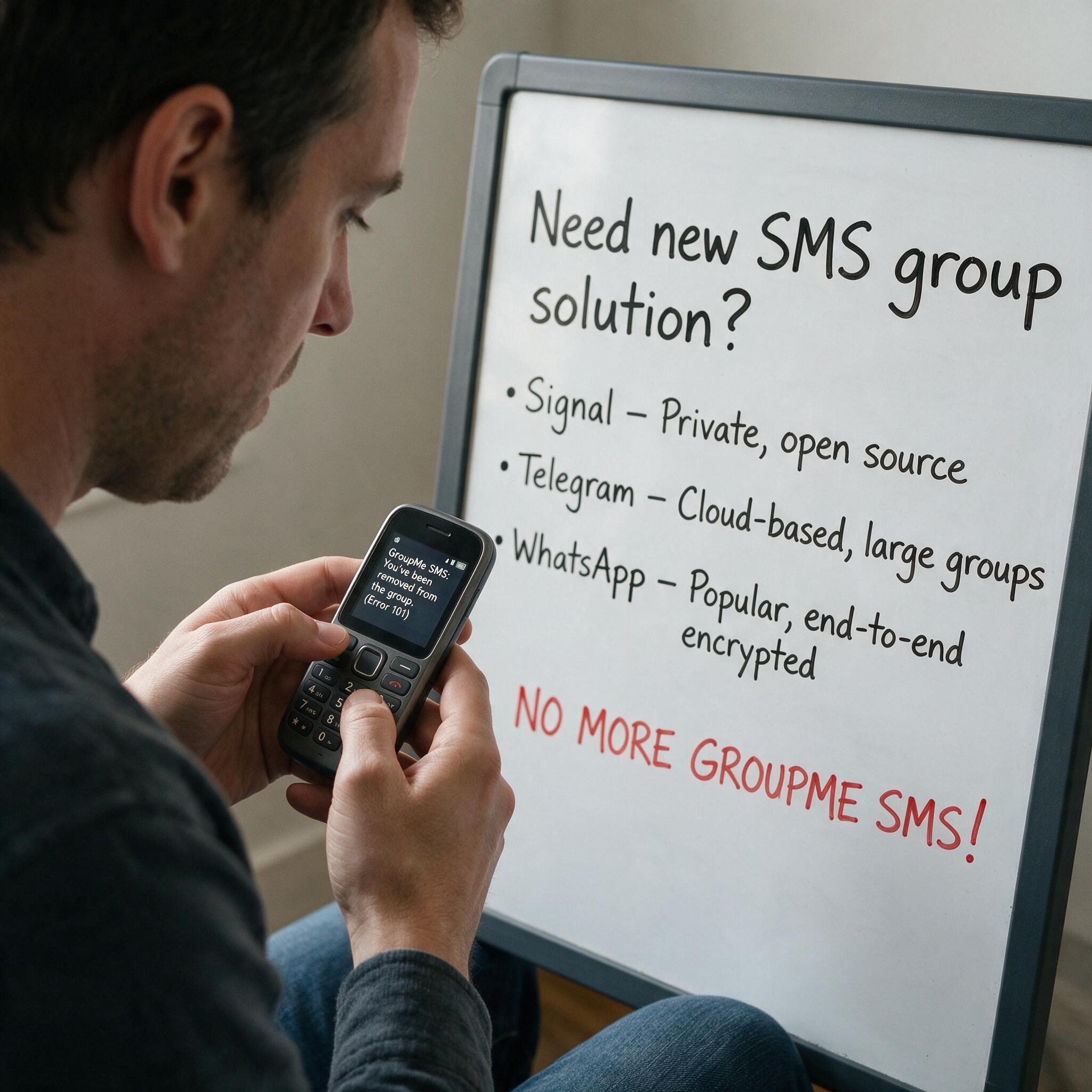
Communicating with minors and volunteers often shifts to informal channels like GroupMe or WhatsApp. While convenient, these platforms lack the institutional oversight needed to ensure safety, making it difficult for leadership to moderate conversations or maintain accountability.
Using Evant ensures that your communication remains structured and professional. Unlike open group chats, specialized SMS platforms provide the necessary leader oversight and parent transparency to keep ministry interactions secure. This ensures that every text is archived and visible to staff, removing the risks associated with private, unmonitored messaging between leaders and minors.
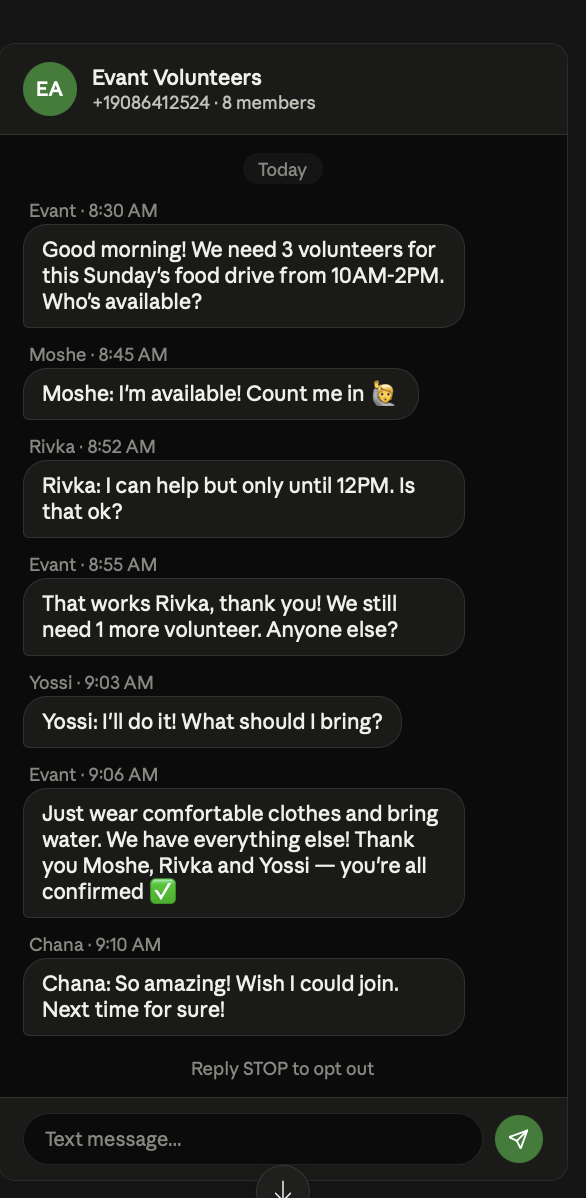
Beyond safety, these tools act as the central nervous system for your team logistics. You can automate volunteer shift reminders and send emergency alerts that reach people instantly. Some systems even feature automated detection of prayer requests, ensuring staff can respond to pastoral needs rather than letting them get lost in a sea of notifications.
- Maintain leader oversight and parent transparency by replacing fragmented messaging apps with controlled platforms.
- Use SMS to handle volunteer scheduling and instant shift reminders.
- Implement emergency alerts to reach volunteers quickly during critical situations.
- Leverage automated content detection to flag and prioritize prayer requests for your team.
Midweek Engagement and Devotional Content
Sunday services are the primary touchpoint for many, but the space between Sundays is where genuine community grows. When you only reach out to ask for a donation or promote an upcoming event, you lose the chance to nurture relationships during the week. Instead of relying on passive newsletter blasts that often go unread, consider using a dedicated SMS platform to deliver meaningful, mid-week touchpoints.
A structured cadence turns your outreach into a reliable resource for your congregation. Try sending a morning devotional on Monday, a prayer prompt on Wednesday to keep the community focused, and a brief reminder about upcoming ministry opportunities on Friday. Unlike personal chat apps that create messy threads, a dedicated SMS tool ensures these messages arrive as individual communications, respecting privacy while fostering connection.
Efficiency hinges on keeping your content accessible. Aim for messages under 160 characters to ensure quick readability, and include a single, clear call-to-action that guides the recipient toward a sermon video or next steps. For visual impact, utilize MMS to send images of scripture or short, encouraging video clips. A centralized hub for your communication strategy ensures every text adds value rather than contributing to the noise.
How can church leaders effectively utilize digital communication software to boost participation? Church leaders can boost participation by integrating SMS messaging into their communication strategy, leveraging its 98% open rate for time-sensitive event reminders, volunteer prompts, and quick RSVPs. By utilizing digital tools that offer centralized data, leaders can transition from broad, impersonal broadcasts to targeted engagement paths that differentiate between new visitors and long-term members. Pairing these tools with interactive digital bulletins and QR codes during services allows congregants to register for events or access resources instantly without friction. Consistent, automated workflows not only reduce the administrative burden on staff but also ensure that every touchpoint reflects the church's identity, keeping the community connected throughout the week. Ultimately, adopting a unified software stack empowers leaders to reach people where they are, transforming passive listeners into active participants.
Simplifying Giving Through Text-to-Donate

Passing a heavy collection plate requires your congregation to have cash on hand. It is an outdated logistical hurdle that often results in missed opportunities for spontaneous generosity. When you shift to a text-to-donate model, you trade physical friction for digital convenience.
Platforms like Evant allow you to embed secure links directly into texts. Instead of navigating a complex website, a donor clicks once and completes their contribution in seconds. This speed matters because the impulse to give is often fleeting.
Beyond the transaction, modern integration matters. If your SMS tool talks to your CRM, each gift automatically logs into the donor's profile. You stop manually tracking who gave what and start using that data to deepen your relationship.
Use this channel to go beyond simple requests. Share a quick video update on a mission project or a thank-you note from a beneficiary. These stories turn a one-time transaction into a recurring commitment. While some generic bulk texting services lack this depth, Evant treats every interaction as a chance to foster long-term stewardship.
What are the primary benefits of using SMS marketing for nonprofit organizations?
SMS marketing offers nonprofits unparalleled reach through exceptionally high open rates, ensuring critical messages are seen almost immediately. By providing a platform for instant, real-time communication, organizations can securely deliver urgent updates and drive timely event participation. The channel’s inherently personal nature fosters stronger community relationships, enabling two-way conversations that deepen stakeholder engagement. Furthermore, modern SMS platforms allow for precise audience segmentation and automated messaging, which significantly streamline event logistics and administrative workflows. Ultimately, integrating SMS into a nonprofit's communication strategy transforms static announcements into interactive experiences that boost long-term retention and support.
Integration with Centralized Church Systems
Most churches attempt to manage outreach using a fragmented collection of static spreadsheets and disconnected email lists. This approach is prone to human error and relies on outdated data that rarely reflects the current state of your congregation. When you manage communication in silos, you lose the ability to maintain a consistent narrative across your ministry channels.
The primary advantage of integrating your SMS platform with a Centralized Church Management System (ChMS) is the elimination of manual data entry. By syncing your SMS tools directly with the ChMS, you avoid the administrative burden of exporting and re-uploading contact lists. Evant simplifies this process by ensuring that communications are sent to current, accurate member profiles automatically. Unlike standalone texting services that require manual list maintenance, linking your messaging directly to your database ensures your church management software always contains reliable attendee information.
Workflow automation changes how your staff allocates time for ministry. You can set triggers so that a volunteer sign-up instantly initiates a confirmation text, or an event registration logs a new guest in your database for automated follow-up sequences. Church technology trends for 2026 highlight that organizations using these automated pathways report higher participation rates because they remove the friction of manual scheduling. When your SMS tool talks to your ChMS, you spend less time managing data and more time building relationships.
This centralized hub ensures your communications are consistent across SMS, email, and app notifications. By anchoring your strategy in top church texting platforms, you build a predictable rhythm of outreach that members recognize as consistent, preventing the fragmentation often seen in communities relying on disparate third-party apps.
Measuring Success and Optimizing Strategy
Most churches fly blind, sending messages without checking if the congregation actually interacts with the content. You can fix this by monitoring critical performance indicators like open rates, click-through rates, opt-out percentages, and reply engagement. These metrics provide the data required to turn your outreach into a reliable, two-way dialogue rather than a series of disconnected blasts.
For the best results, use analytics to track how your community responds to different variables. Conduct A/B testing on your message timing, content length, and calls to action to discover what drives the most interaction. If your data shows high opt-out rates, you are likely missing the mark on frequency, which should remain within the recommended threshold of one to three texts per week.
Go beyond simple delivery metrics by gathering direct feedback through surveys embedded in your SMS flows. This practice ensures your communications remain useful, keeping your audience interested and connected throughout the year. Improving these workflows is a cornerstone of the community engagement strategies that help a congregation thrive.
Transform Communication with Targeted SMS
The gap between Sunday services is where genuine connection happens, yet most churches struggle to bridge it. With 97% of texts read within minutes, SMS is your most direct path to the congregation.
Success requires professional infrastructure. While manual threads lead to compliance lapses and data silos, Evant.app provides the centralized, compliant hub necessary to manage opt-ins, segmentation, and automated reminders securely. Using dedicated tools prevents the personal mobile fatigue that plagues leaders using apps like WhatsApp or GroupMe.
Start your journey with a single targeted campaign. Choose one specific group, such as your volunteer team, and use Evant.app to send personalized, actionable updates. By respecting consent requirements and keeping content concise, you turn simple messages into the engine of a thriving, engaged community.
Related Blogs